Understanding Ounces and Kilograms: The Basics
Ounces (oz) and kilograms (kg) both measure mass—the amount of matter in an object. While they’re measuring the same thing, they come from different systems: ounces belong to the imperial system (popular in the US), and kilograms are part of the metric system (used almost everywhere else).
You’ll need this conversion more often than you might think. Maybe you’re following a European recipe that lists ingredients in kilograms, or you’re shipping a package internationally and need to convert weights. Online shoppers frequently encounter this when buying products from overseas, and anyone tracking nutrition information deals with both systems regularly. If you’ve ever wondered about grams to ounces conversions, the oz to kg calculation works similarly—just on a larger scale.
This guide will show you the exact formula, give you quick reference charts, and walk through real examples that actually matter in your daily life.
The Oz to Kg Conversion Formula Explained
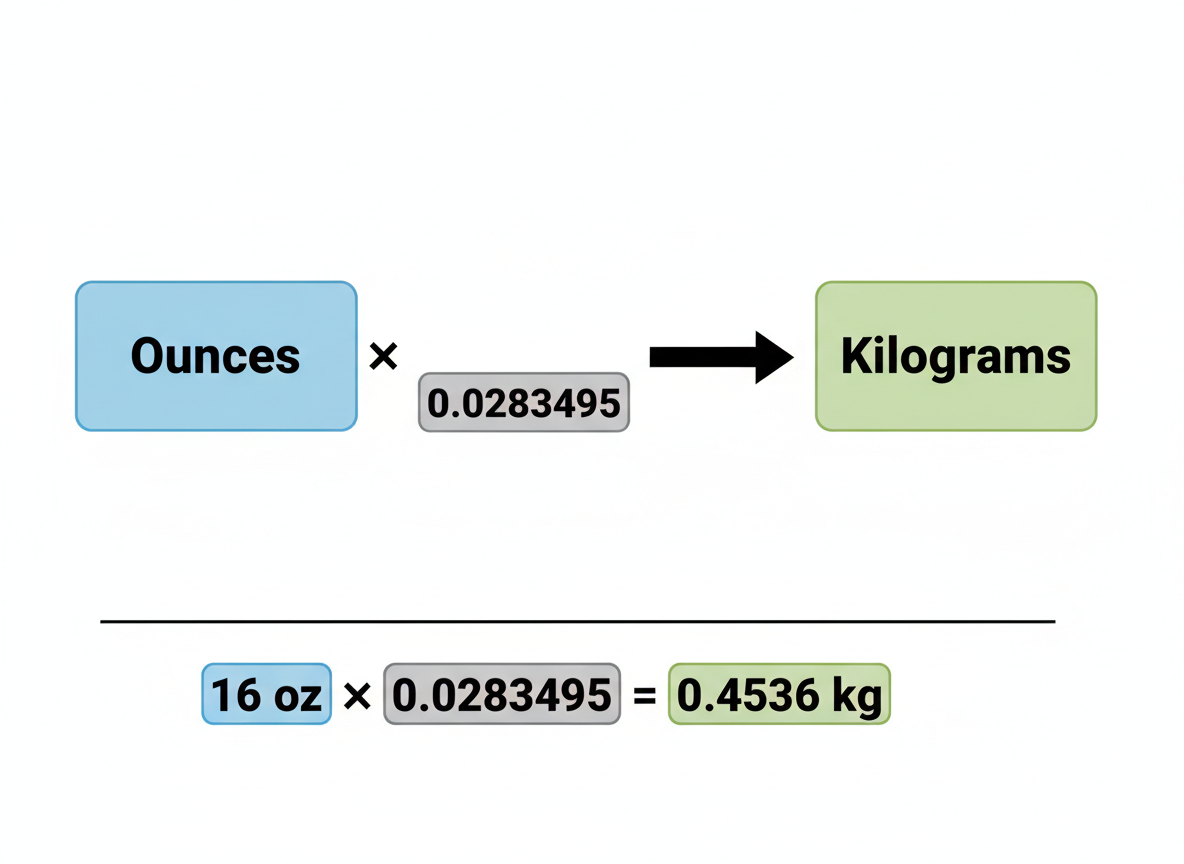
Converting ounces to kilograms is straightforward once you know the magic number. The exact conversion factor is 1 oz = 0.0283495231 kg, though you’ll rarely need that many decimal places in everyday life.
Here’s the simplified formula that’ll handle most situations:
kilograms = ounces × 0.0283495
Let’s walk through a quick example. Say you’ve got 16 ounces and want to convert it to kilograms:
16 oz × 0.0283495 = 0.453592 kg
Need to go the other direction? The reverse formula for kg to oz conversions is equally simple:
ounces = kilograms × 35.274
A handy memory trick: think “ounces are much smaller than kilograms,” so you’re multiplying by a decimal to go from oz to kg. If you can remember that one ounce is roughly 28 grams (or 0.028 kg), you’re in business. Round it to 0.03 for lightning-fast mental math when precision isn’t critical.
Quick Reference: Oz to Kg Conversion Table
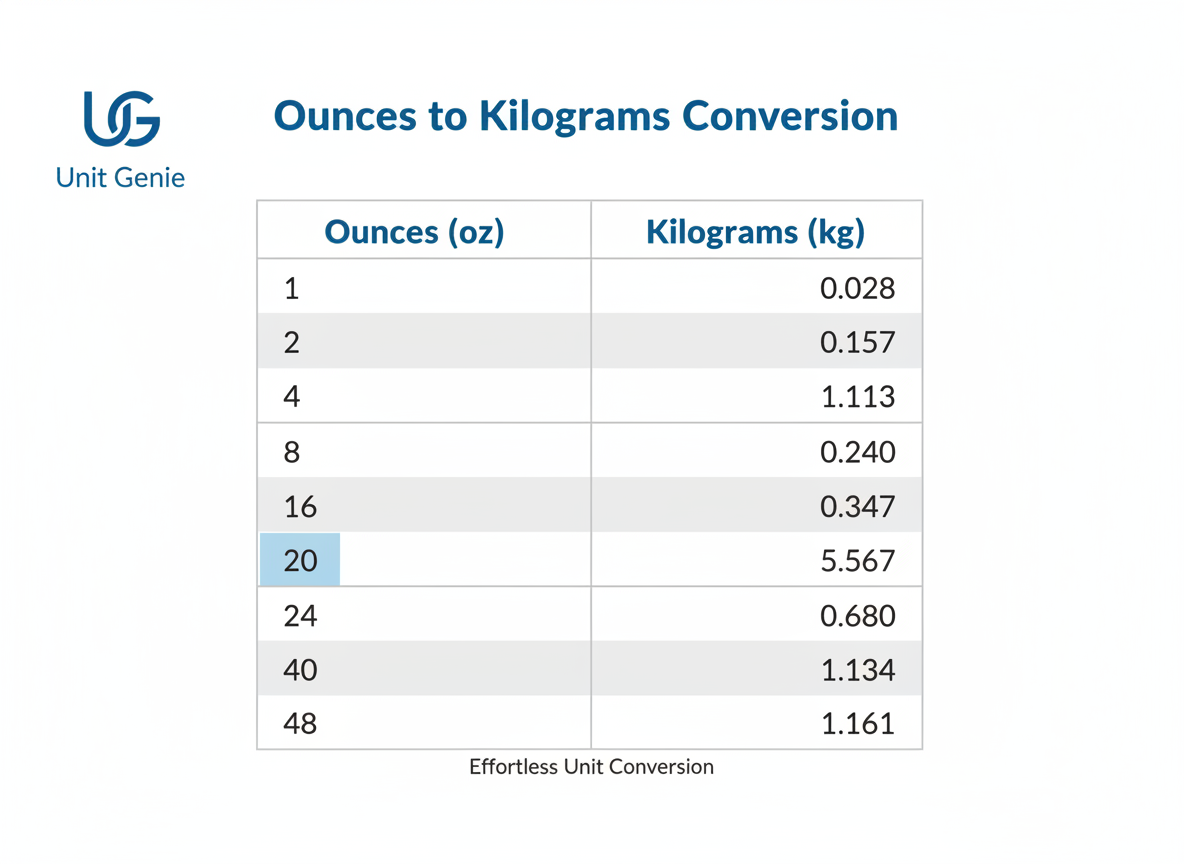
Here’s your go-to conversion table for the most common ounce measurements. We’ve included the values people search for most often, especially when cooking, weighing packages, or measuring ingredients.
| Ounces (oz) | Kilograms (kg) | |————-|—————-| | 1 oz | 0.0283 kg | | 2 oz | 0.0567 kg | | 4 oz | 0.1134 kg | | 8 oz | 0.2268 kg | | 12 oz | 0.3402 kg | | 16 oz | 0.4536 kg | | 24 oz | 0.6804 kg | | 32 oz | 0.9072 kg | | 48 oz | 1.3608 kg | | 64 oz | 1.8144 kg |
Pro tip: Notice that 16 oz equals roughly 0.45 kg—that’s because it’s exactly one pound. If you’re working with larger weights, check out our pounds to kg guide for easier conversions.
Understanding Different Types of Ounces
Here’s where things get interesting: not all ounces are created equal. The avoirdupois ounce (28.35 grams) is what you’ll use in everyday measurements—it’s the standard for food, packages, and body weight. Then there’s the troy ounce (31.1 grams), reserved exclusively for precious metals like gold and silver. Don’t confuse weight ounces with fluid ounces, either. While fluid ounces to ml measures volume for liquids, weight ounces measure mass. This oz to kg conversion uses the avoirdupois ounce because it’s the go-to standard worldwide. Mix these up, and you’ll get wildly inaccurate results—especially when converting larger quantities.
Real-World Applications: When You Need Oz to Kg Conversion
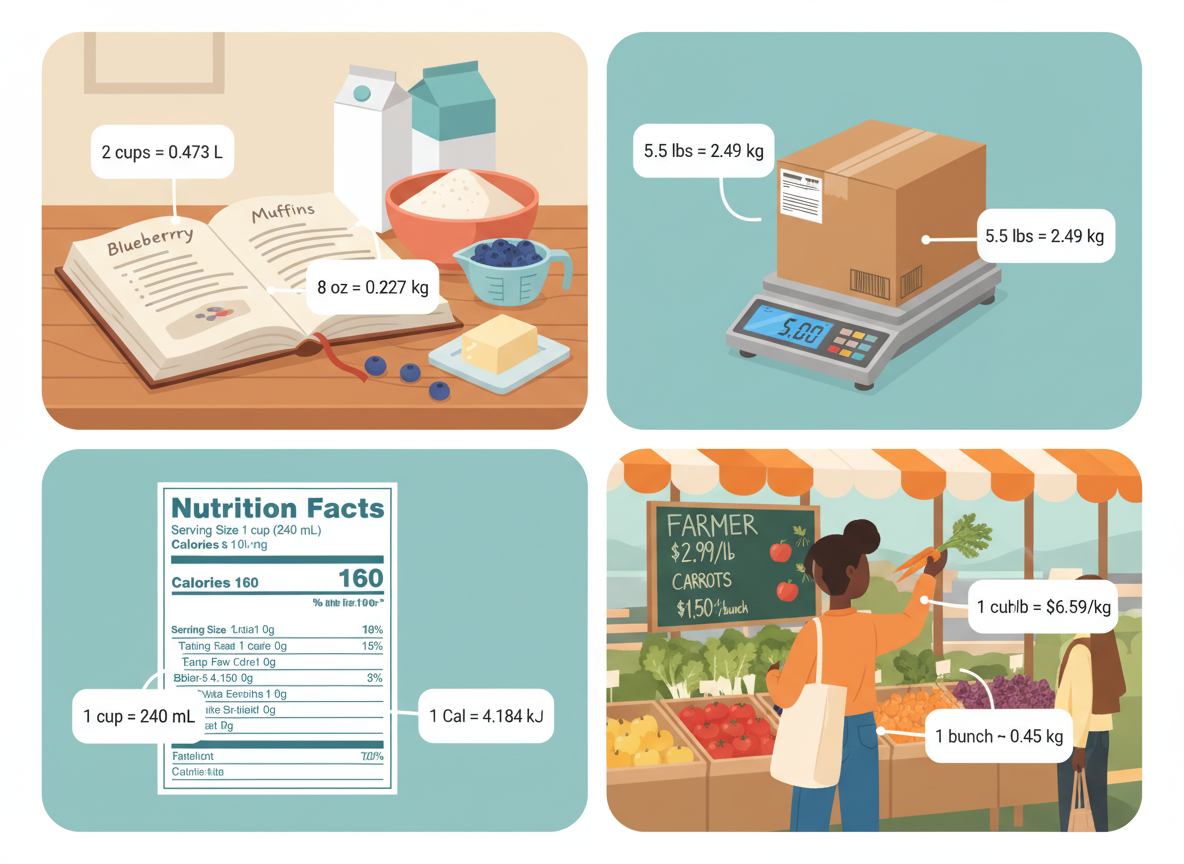
You’ll bump into oz to kg conversions more often than you’d think. In the kitchen, that American pumpkin pie recipe calling for 12 oz of cream cheese translates to roughly 0.34 kg—essential when your measuring tools speak metric. Shipping packages internationally? A 5-pound box (which equals 80 oz or about 2.27 kg) might cost differently depending on whether you’re using USPS or a carrier requiring metric weights.
Food labels get tricky too. That 16 oz protein powder container from the US equals 0.45 kg, helping you compare prices with local brands. Medical professionals need precision when converting dosages, while fitness enthusiasts tracking macros often switch between ounces to pounds and kilograms. Even shopping abroad means understanding that 8 oz of imported coffee is roughly 227 grams—not quite a quarter kilo, but close enough for practical purposes.
Step-by-Step: How to Convert Oz to Kg (With Examples)
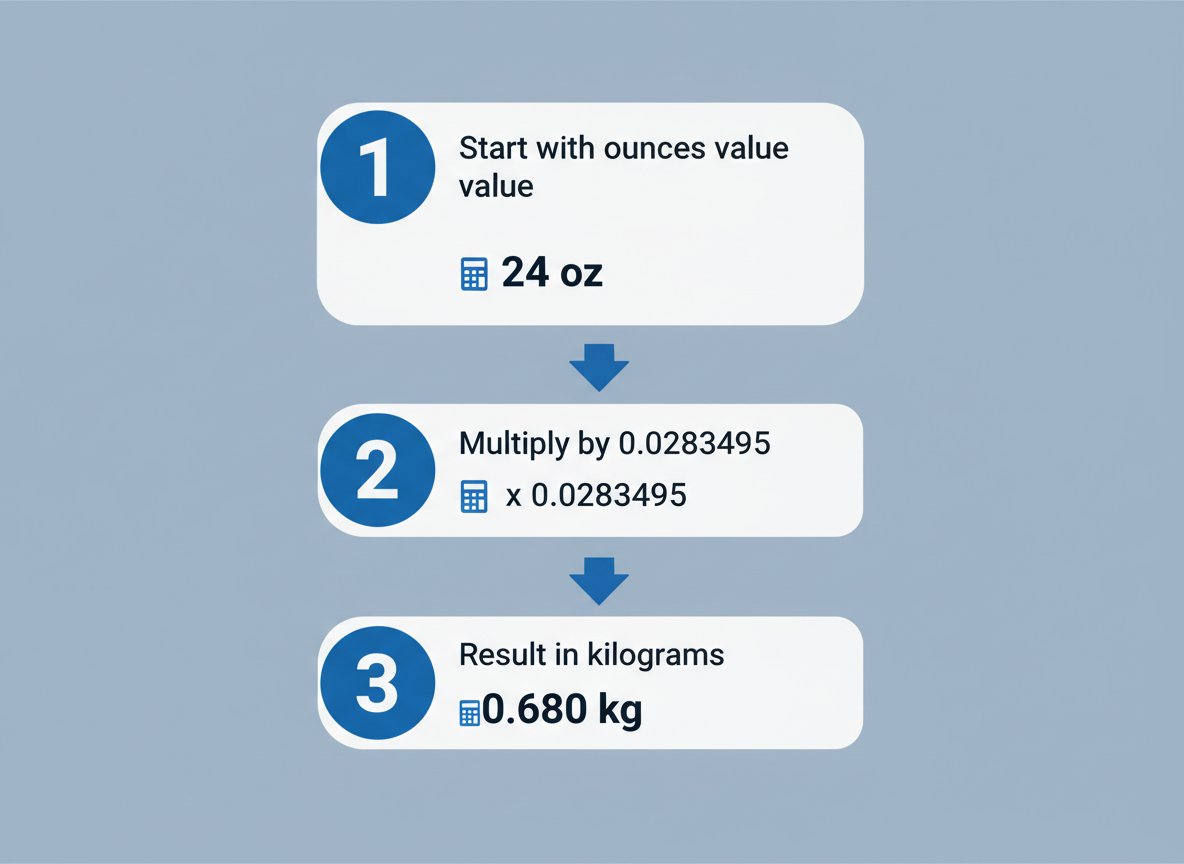
Method 1: Using the conversion formula
Multiply your ounces by 0.0283495. Let’s convert 24 oz: 24 × 0.0283495 = 0.680388 kg (round to 0.68 kg for everyday use).
Method 2: Online calculator
Unit Genie’s converter does the heavy lifting instantly—just type your number and get precise results. Perfect when you’re working with tricky decimals.
Method 3: Quick mental math
Divide ounces by 35 for a rough estimate. Example: 50 oz ÷ 35 ≈ 1.4 kg (actual: 1.42 kg).
More examples:
-
12 oz = 12 × 0.0283495 = 0.34 kg
-
50 oz = 50 × 0.0283495 = 1.42 kg
Avoid these mistakes:
-
Don’t confuse ounces with fluid ounces (they’re different measurements)
-
Round only your final answer, not intermediate steps
-
When converting to smaller units like kg to grams, remember there are 1,000 grams per kilogram
Cooking & Recipe Conversions: Oz to Kg for the Kitchen
Kitchen conversions trip up even experienced cooks when switching between imperial and metric. Here’s what you’ll use most: 8 oz of flour equals 0.227 kg, 16 oz of butter (one pound) converts to 0.454 kg, and 32 oz of sugar becomes 0.907 kg. Baking demands precision since even small variations affect texture and rise—think cakes and pastries. Regular cooking allows more flexibility. When converting entire recipes, work systematically through each ingredient and round sensibly (0.454 kg becomes 450g). A quality digital kitchen scale that measures in 1-gram increments makes everything easier. Many ingredients work better measured by weight anyway—you can also check our cups to grams guide for volume-to-weight conversions that’ll save you time.
Precision and Rounding: Getting Accurate Conversions
You don’t need ten decimal places for a lasagna recipe, but you certainly do for pharmaceutical dosing. That’s why knowing when precision matters can save you time (and potentially lives). For cooking, rounding to two decimal places works perfectly fine. Scientific applications? You’ll want at least four decimal places. Medical settings often require even more precision, especially when dealing with pediatric doses or controlled substances. Unit Genie automatically adjusts precision based on your input—we use up to six decimal places for professional work and sensible rounding for everyday tasks. Here’s a practical tip: if your measurement tolerance is ±5%, two decimal places suffice. For applications requiring ±0.1% tolerance, you’ll need four or more. Want to learn more about measurement precision? Check out our metric conversion guide for detailed insights on accuracy across different systems.
Frequently Asked Questions (FAQ)
How many kg is 1 oz? One ounce equals 0.0283495 kilograms. It’s a small amount, but this exact conversion factor is what you’ll use for all your calculations.
How do I convert 16 oz to kg? Multiply 16 by 0.0283495 to get 0.4536 kg. That’s exactly one pound, which might also help if you’re converting lbs to kg.
Is 8 oz the same as 0.25 kg? Not quite. Eight ounces equals about 0.227 kg, not 0.25 kg. That’s a common mix-up that can throw off your measurements.
What’s the difference between oz and fluid oz? Ounces measure weight, while fluid ounces measure volume. They’re not interchangeable unless you’re measuring water (where 1 fl oz ≈ 1 oz).
Can I use the same conversion for troy ounces? No. Troy ounces (used for precious metals) weigh about 31.1 grams, making them roughly 10% heavier than regular ounces.
How many ounces are in a kilogram? About 35.274 ounces equal one kilogram for the reverse conversion.
Why do US and metric systems use different measurements? Historical reasons—the US stuck with imperial units while most countries adopted the metric system for standardization.
What’s the easiest way to remember oz to kg conversion? Think “roughly 28 grams per ounce” or remember that 16 oz equals about half a kilogram.
Do I need a calculator or can I estimate oz to kg? Quick estimates work for everyday use, but grab a calculator when precision matters.
Are nutrition labels in oz or kg more accurate? Both are accurate—they’re just different units for the same measurement.