
Understanding 1 1/8 oz to Grains Conversion
The quick answer: 1 1/8 ounces equals 492.1875 grains.
If you’re working with grains, you’re dealing with one of the oldest weight units still in common use today. Originally based on a single grain of barley, this tiny measurement now plays a surprisingly big role in modern life.
You’ll encounter grains most often when loading ammunition, weighing precious metals, or measuring pharmaceutical compounds. A grain equals exactly 1/7000th of a pound, which makes it perfect for measuring small quantities with precision. When you’re converting fractional ounces like 1 1/8 oz, getting the exact grain equivalent matters—whether you’re comparing gold jewelry prices, preparing medication doses, or calculating bullet weights for reloading.
The conversion might seem odd at first. Why grains instead of grams? The answer lies in tradition and industry standards. Certain fields have used grains for centuries, and switching would create more confusion than it’s worth. Understanding how to convert between ounces and grains gives you fluency in both modern and traditional measurement systems.
The Conversion Formula: How to Calculate 1 1/8 oz to Grains
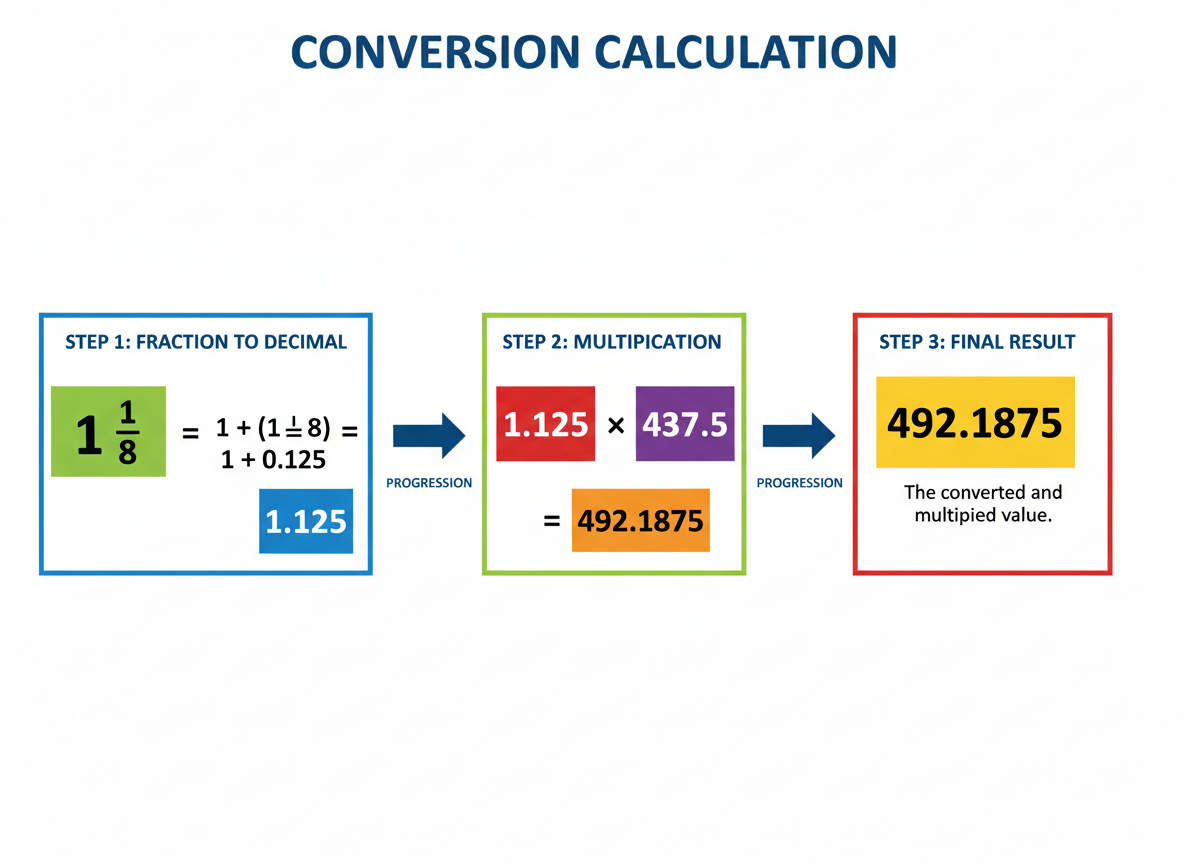
Let’s break down the math behind converting 1 1/8 ounces to grains. The foundation you’ll need is the standard conversion ratio: 1 ounce equals 437.5 grains.
First, handle that mixed fraction. Converting 1 1/8 to a decimal is straightforward—you’re working with 1 + 1/8, which equals 1.125 ounces. Think of it like measuring ingredients when you’re converting between cups and liters—the principle of handling fractions stays the same.
Here’s the step-by-step calculation:
1.125 oz × 437.5 grains/oz = 492.1875 grains
That’s your answer: 492.1875 grains.
Now, you might wonder about all those decimal places. The precision matters depending on your application. If you’re reloading ammunition, you’d likely round to 492.2 grains for practical purposes. For pharmaceutical calculations, keeping the full 492.1875 grains could be necessary.
The beauty of this formula is its simplicity. Once you’ve converted your mixed fraction to a decimal, it’s just one multiplication away from your answer. Whether you’re measuring powder charges, calculating chemical compounds, or working on any project requiring grain measurements, this formula gives you consistent, reliable results every time.
Quick Reference: Common Fractional Ounce to Grain Conversions
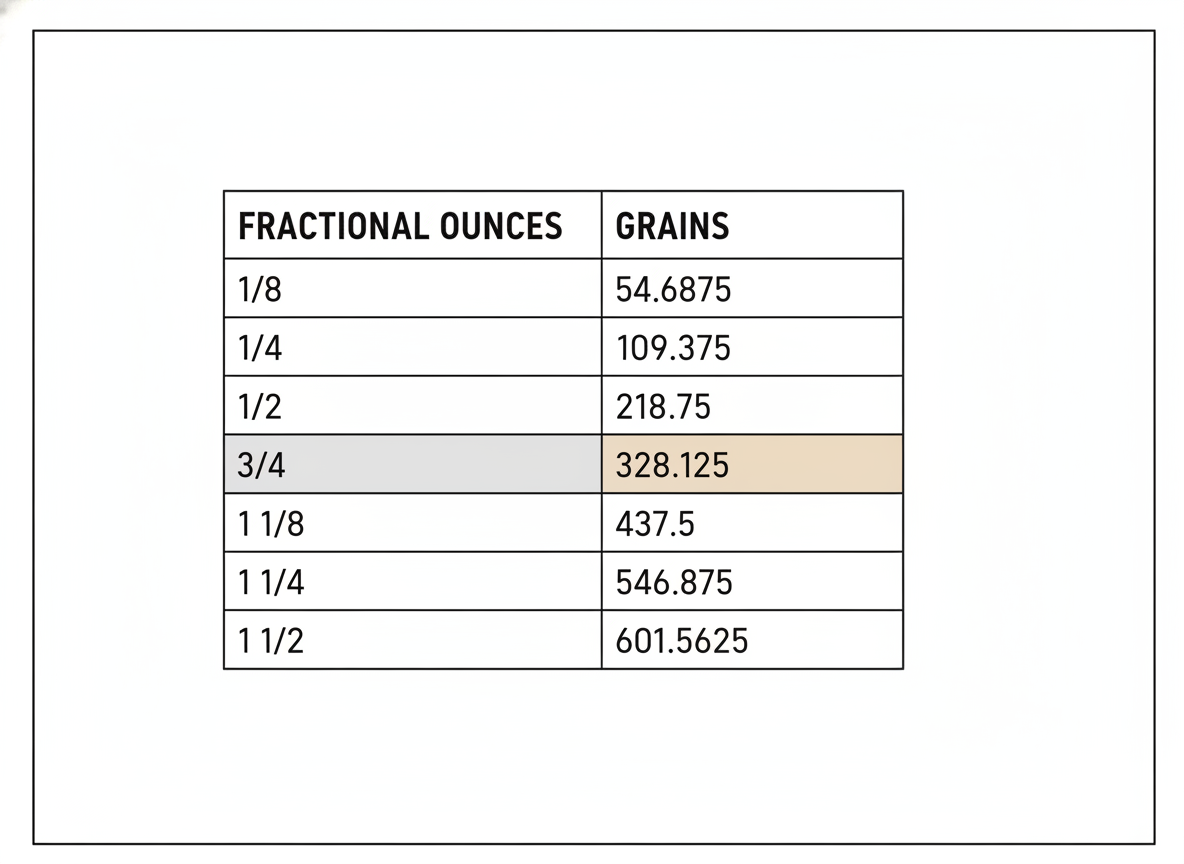
Here’s a handy reference table for fractional ounce conversions you’ll actually use:
| Ounces | Grains |
|——–|——–|
| 1/8 oz | 54.6875 gr |
| 1/4 oz | 109.375 gr |
| 1/2 oz | 218.75 gr |
| 3/4 oz | 328.125 gr |
| 1 oz | 437.5 gr |
| 1 1/8 oz | 492.1875 gr |
| 1 1/4 oz | 546.875 gr |
| 1 1/2 oz | 656.25 gr |
Our target conversion—1 1/8 oz equals 492.1875 grains—sits right in the middle of this range. You’ll notice these calculations give you precise decimal values, but in real-world applications, you might round to the nearest tenth or whole grain depending on your needs.
For instance, 492.1875 grains rounds to 492.2 grains for most practical purposes. In fields requiring extreme precision, you’d keep the full value. If you’re working with larger measurements and need to convert between different weight systems, check out our complete oz to kg conversion guide for additional reference.
Real-World Applications: When You Need to Convert 1 1/8 oz to Grains
Converting 1 1/8 oz to grains matters most in industries where precision can’t be compromised.
Ammunition reloading stands out as the primary use case. Reloaders measure gunpowder charges in grains because even small variations affect accuracy and safety. A typical rifle cartridge might use anywhere from 40 to 70 grains of powder, so understanding these conversions becomes second nature.
Precious metals trading relies heavily on grain measurements too. Jewelers and gold dealers weigh diamonds, gold, and silver using grains alongside troy ounces. When you’re buying or selling valuable materials, that level of detail protects both parties.
Pharmaceutical compounding represents another field where grains still appear. Pharmacists preparing custom medications need exact dosages, and some formulas still reference grains in historical texts or specialized preparations.
Why does this ancient unit persist? Grains predate most modern measurements, and certain professions built their standards around it centuries ago. Changing those established systems would mean rewriting regulations, retraining professionals, and replacing equipment. Similar to how we handle tiny volumes in precise scenarios—like converting 0.1 mL to liters—these industries stick with what works reliably.
Avoirdupois vs. Troy Ounces: Understanding the Difference
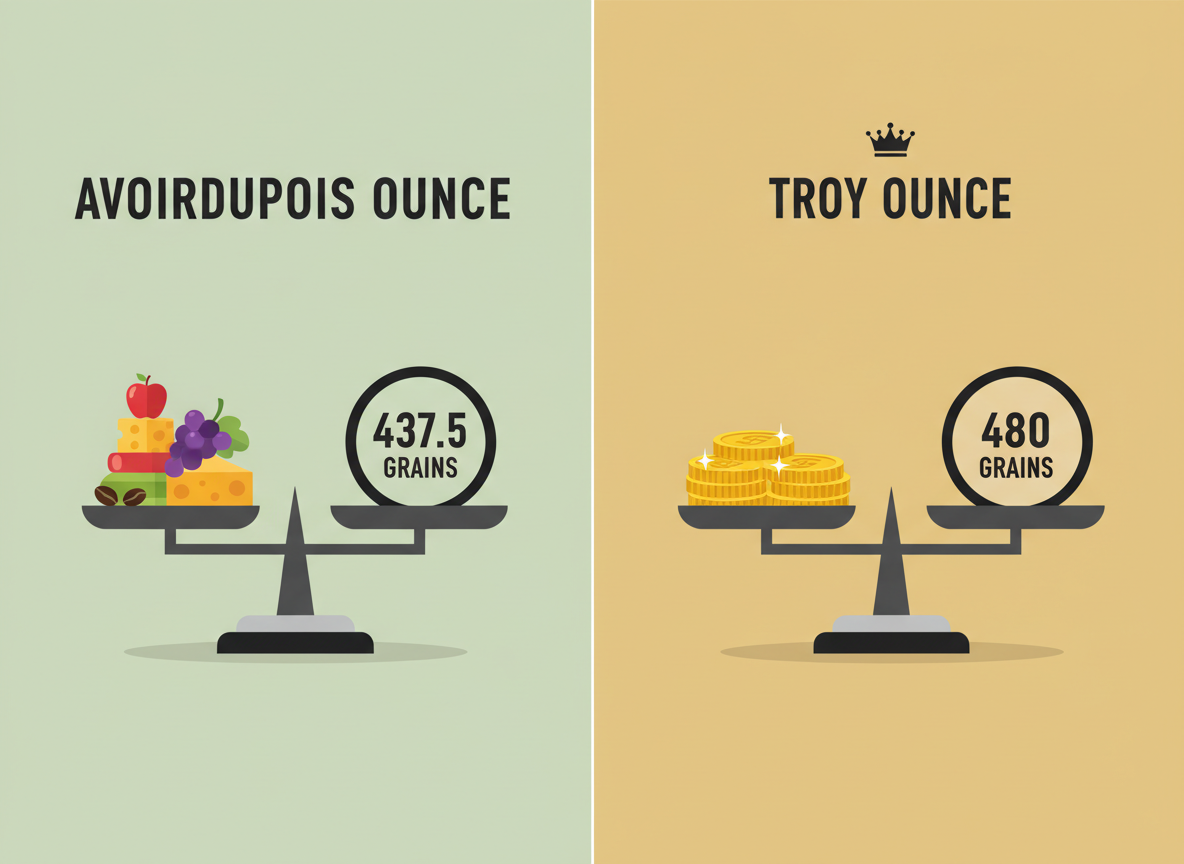
Here’s where things get interesting. Not all ounces weigh the same in grains.
The standard avoirdupois ounce you’ll find on kitchen scales contains exactly 437.5 grains. That’s what we’ve been using throughout this article—and it’s the system for everyday weight measurements.
However, the troy ounce, used exclusively for precious metals like gold and silver, packs 480 grains. That’s a significant difference of 42.5 grains per ounce.
Why does this matter? If you’re converting 1 1/8 troy ounces, you’d get 540 grains instead of our 492.1875 grains. That’s nearly a 10% difference—enough to seriously affect precious metal valuations.
When to use each system:
- Avoirdupois: food, body weight, general measurements
- Troy: gold, silver, gemstones, pharmaceuticals
Unless you’re specifically dealing with precious metals or certain medications, you’ll always want the avoirdupois system. It’s the default for virtually everything else. Getting this wrong can lead to expensive mistakes, especially when money’s on the line.
Using Unit Genie for Instant 1 1/8 oz to Grains Conversion
Unit Genie makes converting fractional ounces ridiculously simple. Just type “1 1/8” or “1.125” into the ounce field, select grains as your target unit, and you’ll instantly see your result: 787.5 grains. No waiting, no ads cluttering your screen, and best of all—completely free.
What sets Unit Genie apart is how it handles these conversions. You’ll get interactive visualizations that actually help you grasp the relationship between units, making the numbers more than just abstract figures. If you’re working with international colleagues, the multi-language support means everyone on your team can use it in their preferred language.
The precision features ensure you’re getting accurate results every time, whether you’re measuring gunpowder for reloading or ingredients for pharmaceutical compounding. It’s like having a conversion expert in your pocket, minus the awkward small talk.
Tips for Accurate Grain Conversions
Start by converting mixed fractions to decimals—it’ll save you headaches. For 1 1/8 oz, turn it into 1.125 oz before multiplying by 437.5. This simple step prevents calculation mistakes.
When working with reloading or precise measurements, use full precision rather than rounding mid-calculation. Round only your final answer. For example, keep all decimal places during multiplication, then round to the nearest tenth grain if needed.
Watch out for common errors: mixing up grains with grams (they’re completely different!), or accidentally using 28.35 instead of 437.5 for grain conversions. Double-check which unit you’re converting to.
Verify your work by converting back to ounces. If 492.1875 grains doesn’t give you roughly 1.125 oz when divided by 437.5, something went wrong.
Digital calculators like Unit Genie handle the math instantly and eliminate human error. Still, understanding the formula helps you spot when results don’t make sense—similar to how checking conversions works for measurements like 0.1 inch to mm.
Frequently Asked Questions (FAQ)
How many grains are in 1 1/8 ounces?
There are 787.5 grains in 1 1/8 ounces (avoirdupois). This equals exactly 1.125 ounces × 437.5 grains per ounce.
What is the formula to convert ounces to grains?
Multiply the number of ounces by 437.5. For example: 1.125 oz × 437.5 = 787.5 grains.
Why are grains still used as a unit of measurement?
Grains remain standard in ammunition, pharmaceuticals, and precious metals because they provide precise measurements for small quantities. It’s one of the oldest units still in use today.
Is 1 1/8 oz the same in avoirdupois and troy systems?
No. Troy ounces weigh more than avoirdupois ounces. While 1 1/8 avoirdupois ounces equals 787.5 grains, the same measurement in troy would equal 840 grains.
How do I convert other fractional ounces to grains?
Convert your fraction to a decimal first, then multiply by 437.5. For instance, 3/4 oz = 0.75 × 437.5 = 328.125 grains.
What industries commonly use grain measurements?
Shooting sports, reloading, pharmacology, jewelry making, and archery frequently work with grains.
Can I use Unit Genie for other weight conversions?
Absolutely! Unit Genie handles all weight conversions including grams, kilograms, pounds, and more.