
0.1 mm Equals 100 Microns: Your Quick Answer
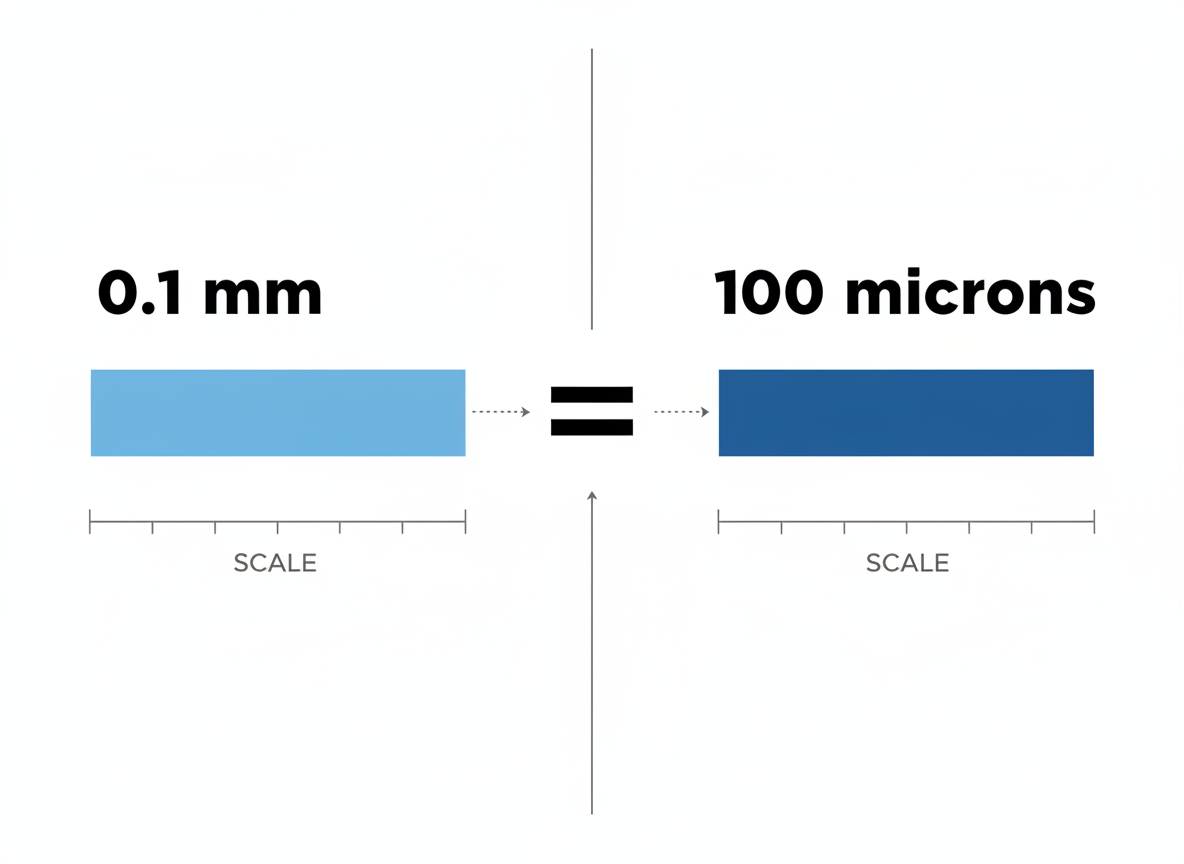
Here’s the straightforward answer: 0.1 millimeter equals exactly 100 microns (µm). The conversion’s simple because 1 millimeter always contains 1,000 microns. Think of it like breaking a dollar into cents—except here, you’re working with measurements that matter in semiconductor manufacturing, medical devices, and precision engineering. Whether you’re checking tolerance specifications or comparing microscopic dimensions (similar to converting between centimeters and millimeters), Unit Genie delivers instant, accurate conversions when precision counts.
Understanding Millimeters and Microns
A millimeter represents one-thousandth of a meter, while a micron (or micrometer) goes even smaller at one-millionth of a meter. Here’s the simple math: every millimeter contains exactly 1,000 microns. Engineers and machinists typically work in millimeters for practical measurements, but scientists and manufacturers prefer microns when precision matters—think cell biology or semiconductor fabrication. Similar to how volume conversions work with microliters, understanding these tiny increments helps ensure accuracy in technical work.
Real-World Applications of 0.1 mm (100 Microns)
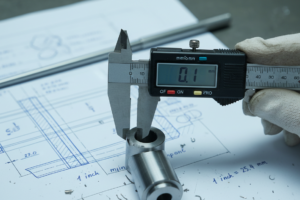
Understanding 0.1 mm in microns matters across diverse fields. In precision engineering, it’s a standard manufacturing tolerance for machined parts—think bearings and seals that need exact fits. Biologists use this scale to measure large cells and tissue samples under microscopes. Semiconductor fabs maintain tolerances tighter than 100 microns when etching circuits, while surgeons rely on this precision during delicate procedures. You’ll also find this measurement in coating specifications, where paint, chrome plating, or protective films need specific thickness. Similar to converting 0.1 Bar to PSI for pressure applications, these micron conversions ensure accuracy across industries.
Frequently Asked Questions (FAQ)
How do you convert 0.1 mm to microns?
It’s straightforward—just multiply by 1,000. Since 1 millimeter equals 1,000 microns, 0.1 mm × 1,000 = 100 microns. There’s no complex calculation involved, making this conversion quick and reliable every time.
Is 100 microns the same as 0.1 mm?
Yes, they’re exactly equivalent. 100 microns and 0.1 mm represent the same distance—just expressed in different units. Think of it like saying “half a dollar” versus “50 cents.” Same value, different terminology.
What objects are approximately 100 microns in size?
Human hair typically measures 70-100 microns in diameter, making it a perfect reference point. Fine sand particles also fall around this range, as do many pollen grains. It’s roughly the thickness of a sheet of standard printer paper too.
Why use microns instead of millimeters?
Microns give you better precision when working at microscopic scales. Saying “75 microns” sounds cleaner than “0.075 mm” and reduces decimal errors. Scientists, engineers, and medical professionals prefer microns for anything involving cellular structures, coatings, or filter specifications. Similar to how you’d use microliters instead of milliliters for tiny liquid volumes, microns make sense for small-scale measurements.
How precise is this conversion?
It’s mathematically exact—no rounding required. The relationship between millimeters and microns is a defined constant (1 mm = 1,000 µm), so 0.1 mm will always equal precisely 100 microns. You won’t lose accuracy through this conversion process.