What is 1 Liter? Understanding the Metric Volume Unit
A liter is the standard metric unit for measuring volume, and you’ll find it everywhere—from water bottles to cooking recipes. Think of it as the metric system’s answer to the quart. Here’s what makes it straightforward: 1 liter equals exactly 1,000 milliliters or 1 cubic decimeter (that’s a 10cm × 10cm × 10cm cube). Most of the world uses liters daily, but if you’re converting recipes or working across measurement systems, you’ll need to understand how liters translate to fluid ounces, cups, pints, and quarts. Whether you’re scaling up recipes from 1 1/2 liters to cups or simply reading a European recipe, mastering liter conversions makes everything easier.
1 Liter to Fluid Ounces: US vs Imperial Measurements
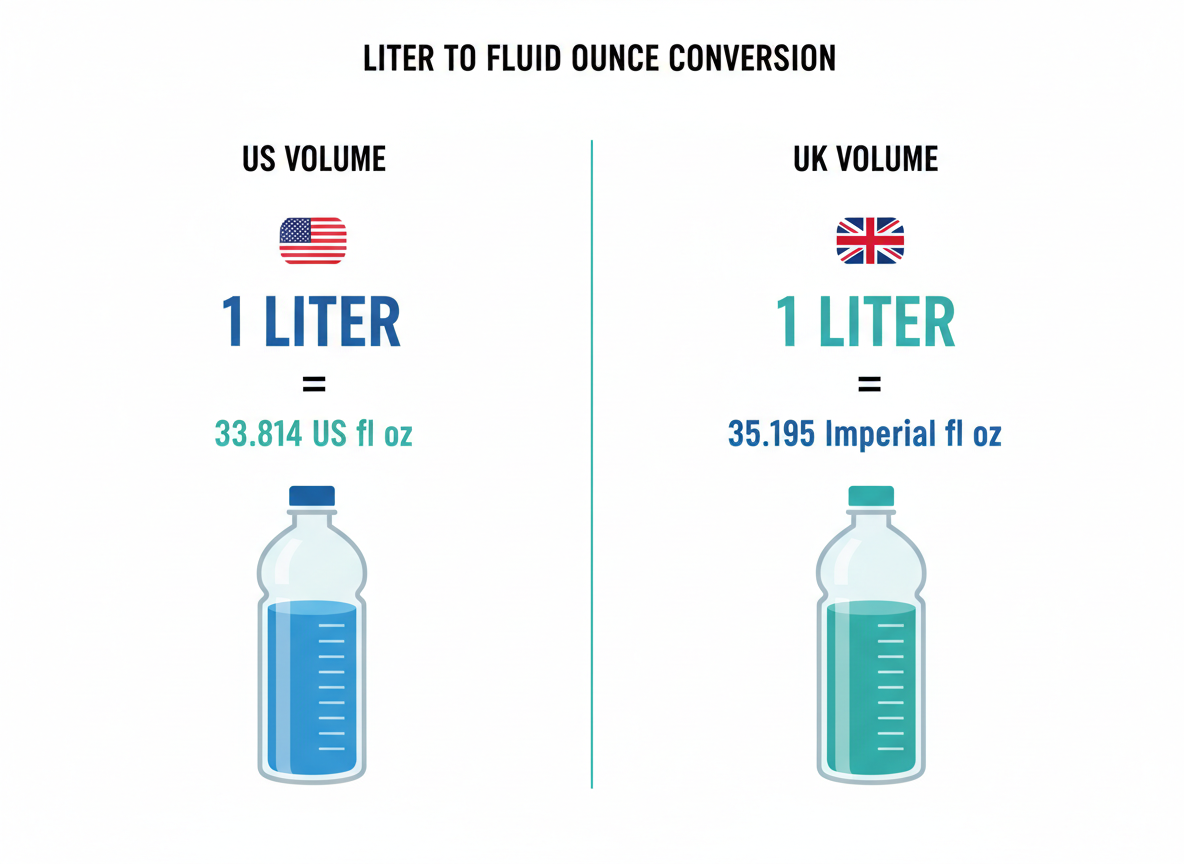
Here’s where things get interesting: one liter equals 33.814 US fluid ounces, but 35.195 Imperial (UK) fluid ounces. That’s nearly a 1.4-ounce difference, and it matters more than you’d think.
The split happened because the US and UK use different definitions for fluid ounces. The US version is slightly larger, which means fewer ounces per liter. If you’re following a British recipe or buying imported products, check which measurement system you’re working with.
Quick conversion formula: Multiply liters by 33.814 for US fl oz, or by 35.195 for Imperial fl oz.
Why does this matter? Product labels, cocktail recipes, and cooking instructions often mix metric and imperial measurements. Getting this wrong can throw off your measurements—similar to converting between quarts and liters in recipes. When precision counts, knowing which fluid ounce you’re dealing with saves headaches.
1 Liter in Everyday Containers: Real-World Examples
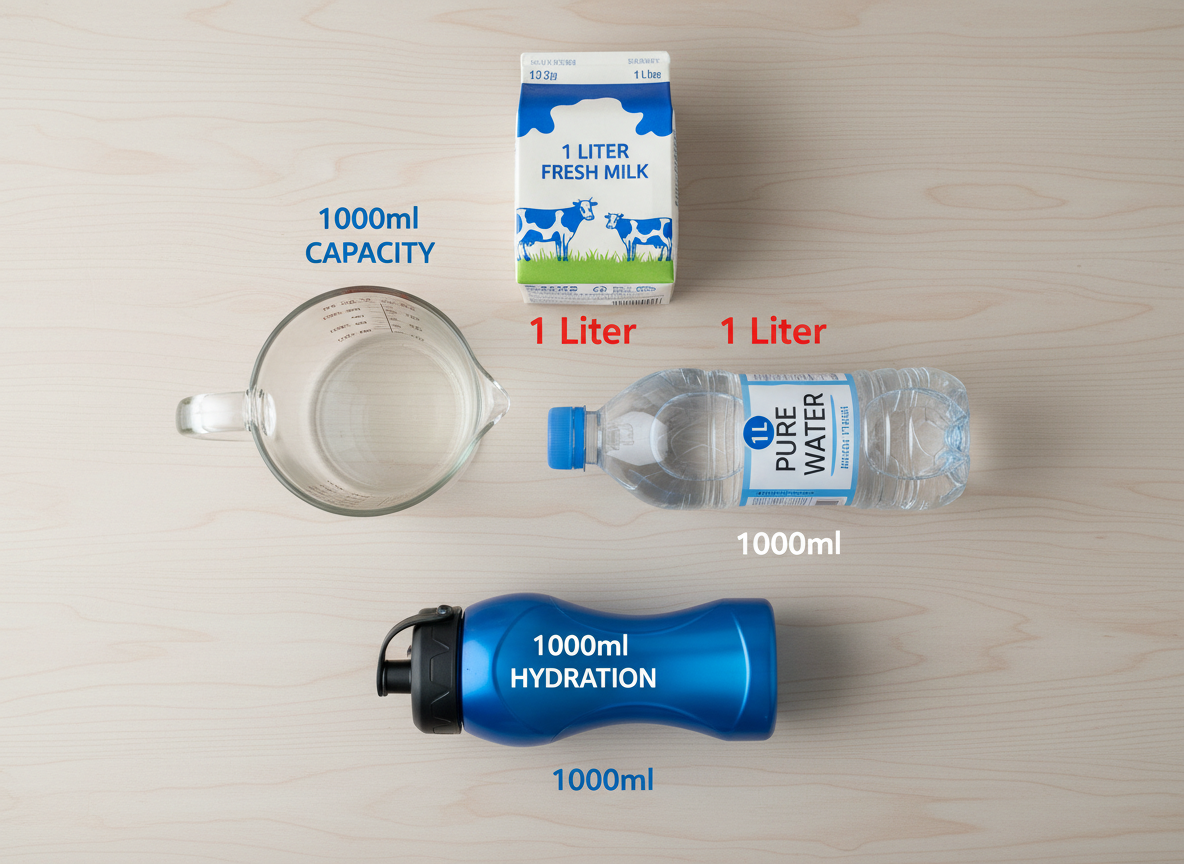
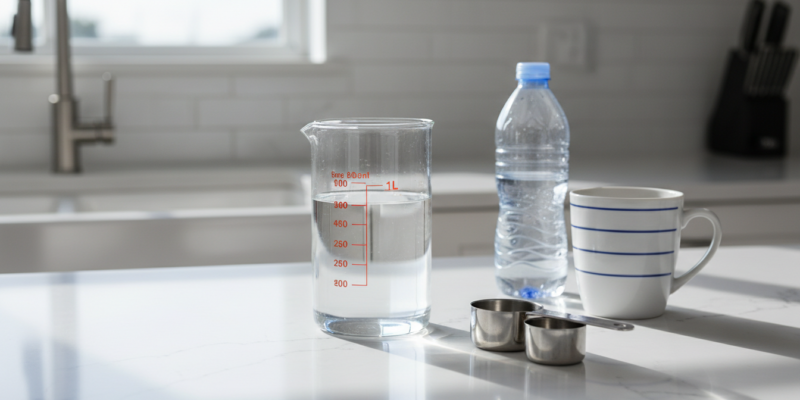
Picture the large water bottle you grab at the convenience store—that’s typically 1 liter. It’s the perfect size to understand this common volume measurement. Most standard milk cartons and juice containers you’ll find at the grocery store also hold exactly 1 liter, making them handy reference points.
Soda bottles tell an interesting story: while the classic family-size option is 2 liters (double our reference), wine bottles usually hold 750ml—that’s three-quarters of a liter. Your kitchen measuring jug probably has 1-liter markings along the side, which comes in handy when you’re converting cups to liters for recipes.
Sports bottles range from 500ml (half a liter) up to a full liter, depending on your hydration needs. Once you recognize these everyday containers, you’ll never struggle to visualize a liter again.
Quick Conversion Reference: 1 Liter to Common Units
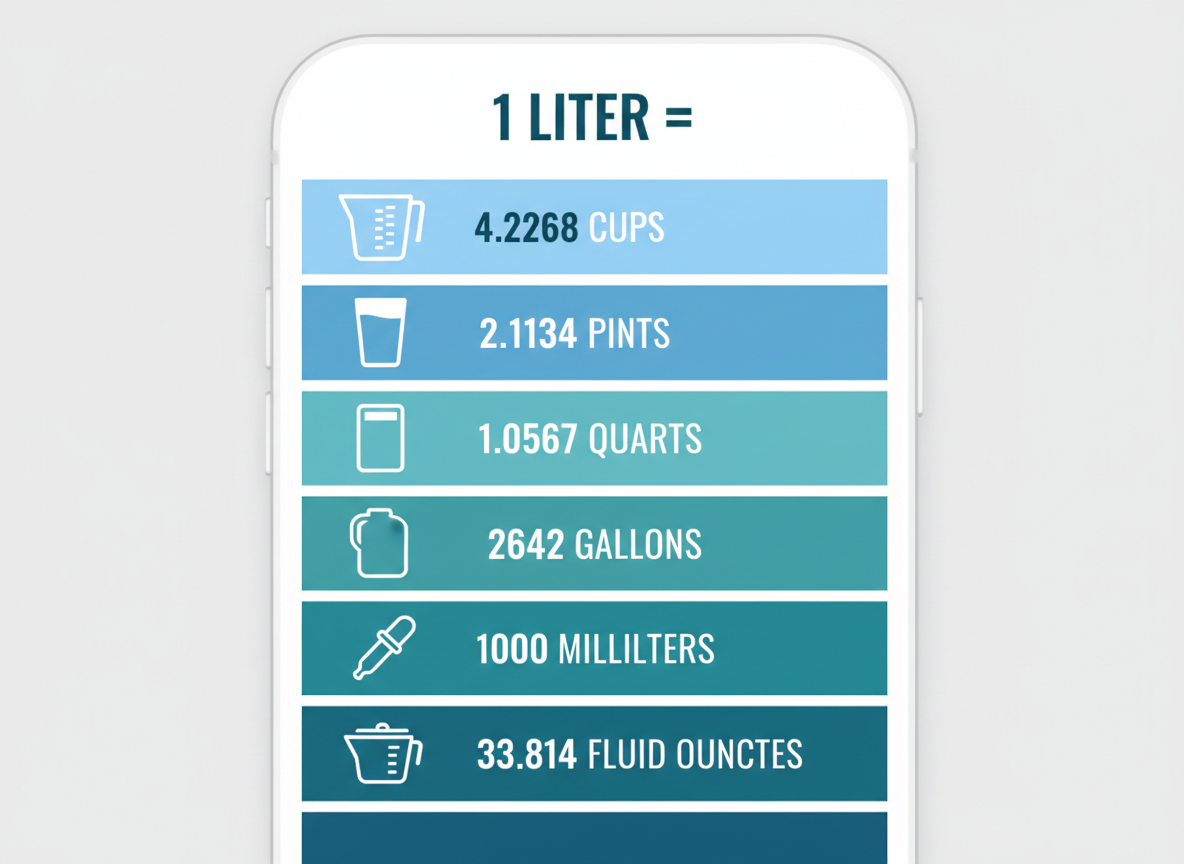
Here’s your go-to reference for converting 1 liter into the measurements you’ll actually use:
| 1 Liter Equals | Value |
|——————-|———–|
| US Cups | 4.227 cups |
| US Pints | 2.113 pints |
| US Quarts | 1.057 quarts |
| US Gallons | 0.264 gallons |
| Milliliters | 1,000 ml |
Bookmark this table for quick kitchen conversions. Working with smaller amounts? Check out our guide on converting 1 1/3 cup to liters for precise measurements when scaling recipes.
Practical Tips for Converting and Estimating 1 Liter
Here’s a memory trick that’ll stick: 1 liter equals about 4 cups—actually 4.23, but rounding to 4.25 cups gives you cooking-worthy accuracy. For quick estimates, think of 1 liter as roughly 34 ounces, similar to three 12-ounce soda cans. Travelers, take note: TSA’s 3.4-ounce limit translates to 100 milliliters, meaning you’d need 10 of those travel bottles to equal a liter. When shopping internationally, knowing these conversions helps you compare prices and sizes instantly. Precision matters for baking and scientific work—that’s when you’ll want exact figures. For smaller volumes, check out Unit Genie’s 0.1 mL to liter converter for precise measurements. The biggest mistake? Confusing fluid ounces with weight ounces. They’re not interchangeable, even though they share a name. For everyday cooking and estimating, though, slight variations won’t derail your recipe.
When to Use Liters: Global Context and Applications
Most countries worldwide rely on liters as their standard volume measurement. The U.S. maintains mixed usage, though industries like pharmaceuticals and automotive are increasingly metric-friendly. Scientists and medical professionals universally prefer liters for their precision—you’ll see IV bags marked in milliliters and lab solutions in liters.
Car enthusiasts know engine displacement (like a 2.0-liter engine) and fuel economy in liters per 100 kilometers. Modern recipe sites often provide both measurements, making international cooking easier. Health experts recommend daily water intake in liters, typically 2-3 liters for adults. When working with larger volumes, you might need to convert between liters and kiloliters for industrial applications.
Frequently Asked Questions About 1 Liter Conversions
How many bottles of water equal 1 liter?
One standard large water bottle equals 1 liter, or you’ll need two typical 16.9-ounce bottles to reach that amount.
Is 1 liter the same as 32 ounces?
Not quite—1 liter equals about 33.8 fluid ounces, so it’s slightly more than 32 ounces.
How many glasses of water are in 1 liter?
You’ll get roughly four standard 8-ounce glasses from 1 liter.
What’s the difference between US and UK measurements for 1 liter?
While a liter stays the same, US and UK fluid ounces differ in size—US ounces are slightly larger. This matters when converting between systems.
Can I use 1 quart instead of 1 liter in recipes?
They’re close but not identical. Since 1 liter equals 1.057 quarts, you can substitute in most recipes without major issues, though exact baking might need precision.
How do I measure 1 liter without a measuring cup?
Use everyday items as references: a large water bottle, four coffee mugs, or about two standard drinking glasses. For smaller volumes like when working with laboratory measurements in microliters, you’ll need proper equipment.