

Quick Answer: How Many Hours in 1 Day?
1 day equals 24 hours. It’s that simple. This fundamental conversion shapes how we schedule everything from work shifts to medication timing. Whether you’re calculating project deadlines, planning travel itineraries, or converting time zones, understanding this relationship matters. In this article, you’ll discover the conversion formula, real-world applications across different fields, and how Unit Genie’s instant conversion tool makes time calculations effortless. We’ll also explore related conversions, like converting days to seconds, to give you a complete picture of time measurement.
The Simple Conversion Formula
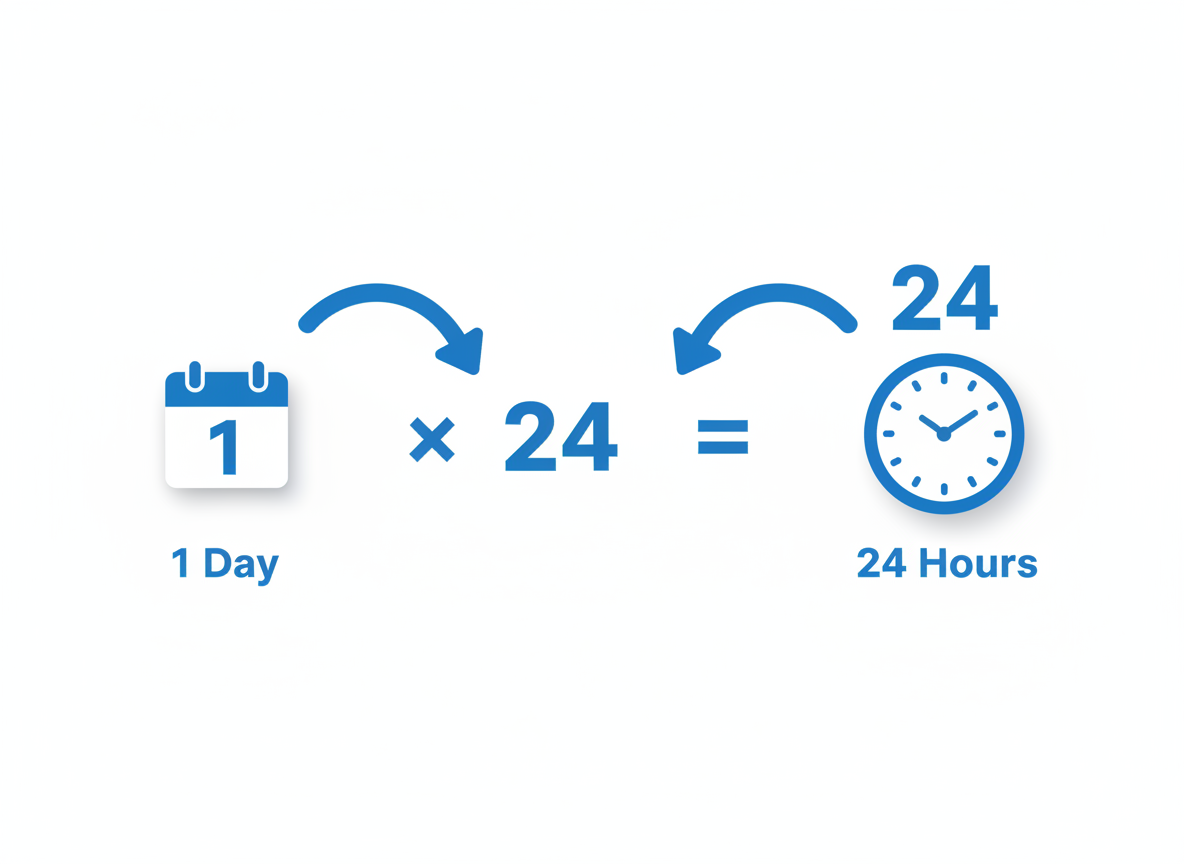
Converting days to hours is straightforward: Days × 24 = Hours. Since each day contains 24 hours, 1 day equals exactly 24 hours.
Let’s try some examples. For 1.5 days: 1.5 × 24 = 36 hours. For 2.5 days: 2.5 × 24 = 60 hours.
Need to go the other way? The reverse formula is Hours ÷ 24 = Days. So 48 hours becomes 48 ÷ 24 = 2 days.
Want to break it down further? Check out how to convert 1 day in seconds for even more precise time calculations.
Real-World Applications: When You Need This Conversion
Understanding how to convert 1 day to hours matters in everyday situations. Project managers use this conversion to track billable hours—a three-day project equals 72 hours of work time. Freelancers often flip their day rates into hourly rates to compare client offers fairly. When you’re calculating payroll, converting days worked into hours ensures accurate paychecks. Students planning study schedules can break down daily goals into manageable hourly chunks. Even travelers benefit from this conversion when crossing time zones or planning itineraries around 24-hour periods. Whether you’re billing a client or organizing your week, knowing that each day contains exactly 24 hours keeps your calculations precise.
Business Days vs. Calendar Days in Hours
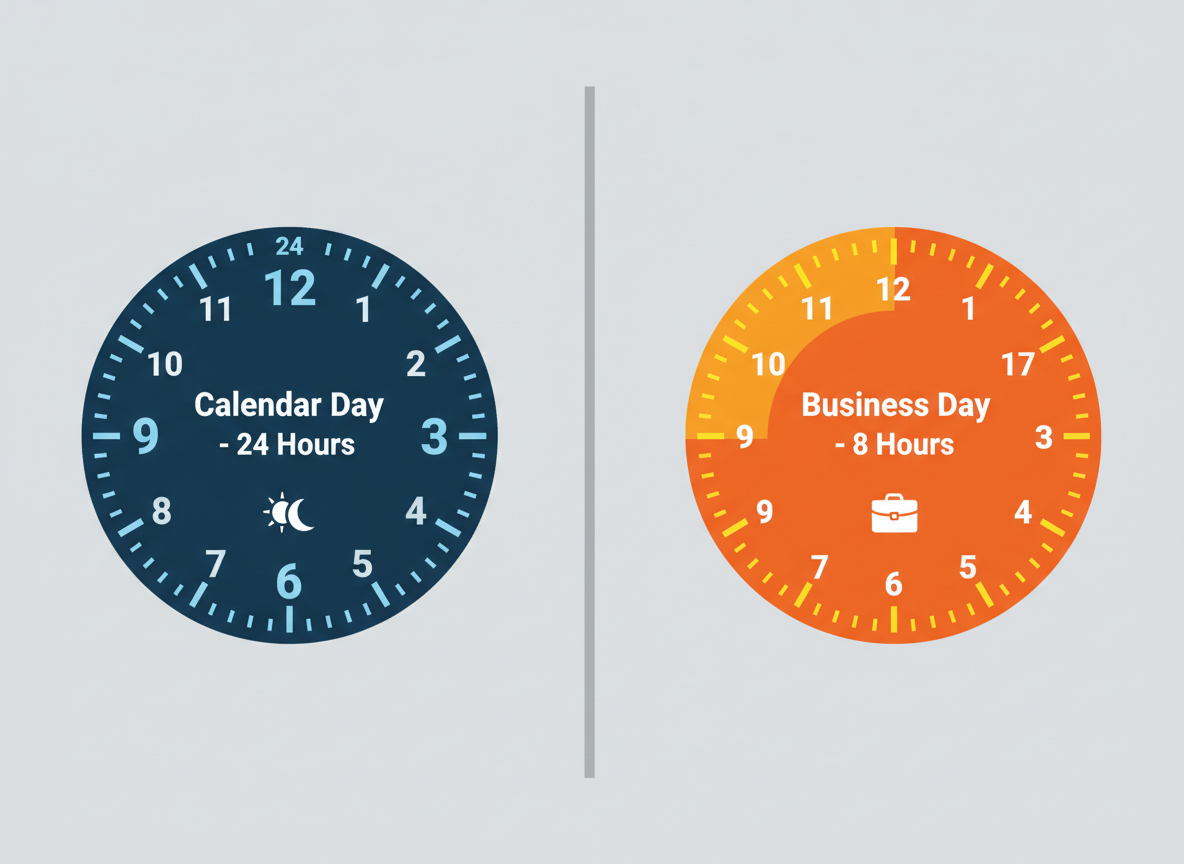
Here’s where things get tricky. A calendar day always equals 24 hours, but a business day? That’s typically just 8 hours. If your boss says a project will take “three business days,” she means 24 working hours, not 72 total hours.
This matters for deadlines. A healthcare worker on 12-hour shifts thinks differently about project timing than someone working standard 9-to-5. Retail managers often plan around 7-day weeks, while office teams assume Monday-through-Friday schedules. When converting 1 day to hours for work estimates, always clarify which type of “day” you’re actually discussing.
Quick Reference Conversion Table
Here’s a handy table for converting days to hours. Notice how 1 day equals exactly 24 hours—it’s the foundation for all these conversions:
| Days | Hours | |——|——-| | 0.25 | 6 | | 0.5 | 12 | | 0.75 | 18 | | 1 | 24 | | 1.5 | 36 | | 2 | 48 | | 3 | 72 | | 4 | 96 | | 5 | 120 | | 6 | 144 | | 7 | 168 |
Bookmark this table for quick lookups, or multiply any day value by 24 to get your answer instantly.
Why Are There 24 Hours in a Day?
The 24-hour day traces back to ancient Egyptian astronomers who divided night into 12 hours based on star patterns, then matched it with 12 daylight hours. The Babylonians loved their base-60 system (which gave us 60 minutes and 60 seconds), while Egyptians preferred counting in twelves—probably because 12 divides easily by 2, 3, 4, and 6. Though Earth’s rotation defines our day’s length, the number 24 itself is purely human invention. Different cultures measured time their own ways for centuries until global communication demanded standardization in the modern era.
Using Day-to-Hour Conversions in Digital Tools
You’ll find day-to-hour conversions built into most digital workflows. In Excel or Google Sheets, simply use `=A124` where A1 contains your days value. Developers can write quick functions: Python’s `hours = days 24` or JavaScript’s `const hours = days * 24`. Time tracking software automatically handles these conversions behind the scenes. While these methods work, Unit Genie’s instant calculator saves you from writing formulas or code—just enter your value and get results immediately.
Frequently Asked Questions (FAQ)
How many work hours are in 1 day? A standard workday contains 8 hours, but a full calendar day has 24 hours. Don’t confuse business hours with total hours!
How do I calculate 1.5 days in hours? Simply multiply: 1.5 × 24 = 36 hours. The formula works for any decimal amount.
Does 1 day always equal 24 hours? Almost always, yes. Daylight saving time shifts clocks forward or backward by one hour twice a year, making those specific days 23 or 25 hours long. Leap seconds occasionally add one second to keep atomic clocks aligned with Earth’s rotation, but this rarely affects daily calculations. For everyday purposes, stick with 24 hours. Need even more precision? Check out our guide on converting 1 day to seconds for detailed breakdowns.
How many hours are in a business day? Typically 8 hours, though this varies by industry and country. Some businesses operate on 9 or 10-hour shifts.
What about converting hours back to days? Divide the number of hours by 24. For example, 72 hours ÷ 24 = 3 days. It’s the reverse of our main formula.