
150 Grain to Milligrams: Quick Answer
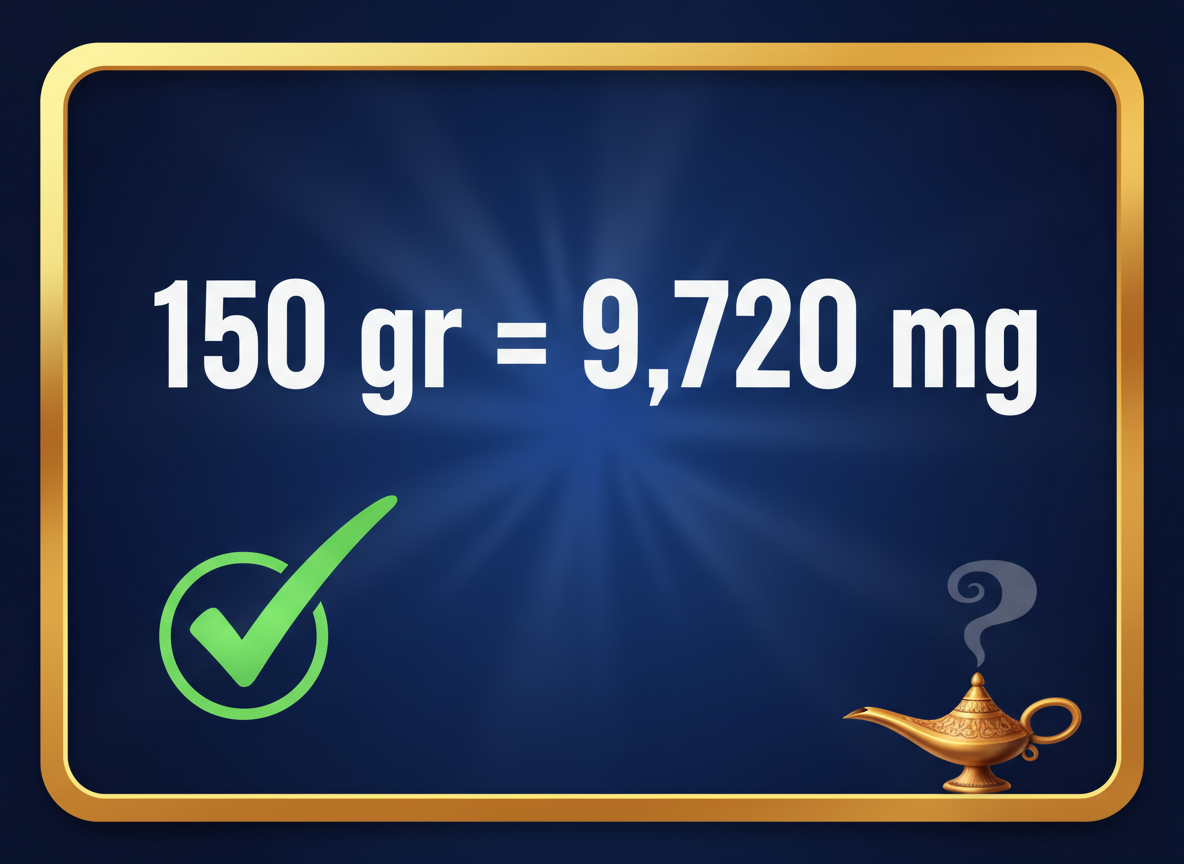
150 grains equals 9,720 milligrams (or 9.72 grams). The grain is one of the oldest units of mass, dating back to ancient agricultural measurements based on a single kernel of wheat. You’ll typically encounter 150-grain measurements in ammunition specifications—particularly for handgun and rifle bullets—and occasionally in pharmaceutical contexts. Getting this conversion right matters significantly for safety and precision, whether you’re reloading ammunition or working with specialized medication dosages. For related conversions in the grain measurement system, you can check out our guide on converting ounces to grains. Understanding these relationships helps you work confidently across different measurement systems.
Understanding the Grain Unit
The grain measurement dates back centuries, originally based on the weight of a single cereal grain. Despite its ancient origins, you’ll still find grains used today in ammunition manufacturing, pharmacy compounding, and precious metals trading. One grain equals exactly 64.79891 mg in the metric system. The pharmaceutical industry relies on grains for precise dosing, while ammunition specs like “150 grain” bullets remain standard. For related conversions, check out our 1 1/8 oz to Grains calculator. This historical unit persists because entire industries built their standards around it.
The Conversion Formula Explained
The standard conversion ratio is straightforward: 1 grain = 64.79891 mg. To convert any grain value to milligrams, you’ll use this formula:
grains × 64.79891 = milligrams
Let’s work through 150 grain:
150 × 64.79891 = 9,719.8365 mg (or approximately 9,720 mg)
That’s it! The calculation takes seconds once you’ve got the ratio memorized. Whether you’re measuring pharmaceutical doses or comparing bullet weights, this formula handles conversions reliably. For more conversion techniques, check out our 100 cm to m guide to see similar approaches with different units.
Real-World Applications of 150 Grain
You’ll encounter 150 grain measurements most often in ammunition. This weight has become a sweet spot for popular rifle cartridges like .308 Winchester and .30-06 Springfield, offering balanced accuracy and stopping power. Handgun enthusiasts also recognize 150 grain bullets in larger calibers.
In pharmaceuticals, grain measurements appear in traditional medications, particularly older formulations where apothecary units persist. Aspirin once came standardized at 5 grains (about 325 mg), showing how these measurements shaped modern dosing.
Precision matters differently across applications. Bullet manufacturers maintain tolerances within fractions of a grain—consistency directly affects ballistics and safety. Medical contexts demand even stricter accuracy. A slight miscalculation could mean an underdose or dangerous overdose, making proper conversion absolutely necessary.
When converting measurements, double-check your math. If you’re working with ammunition, remember that manufacturers list weights in grains for good reason—it’s the industry standard. For medical applications, always verify with a healthcare professional before administering anything. Just like converting 0.1 mL to microliters requires precision in lab work, grain-to-mg conversions aren’t something you want to estimate.
Frequently Asked Questions
How many mg is 150 grain exactly?
150 grain equals 9,719.52 milligrams. That’s the precise conversion using the standard factor where 1 grain = 64.79891 mg. You’ll see this measurement pop up frequently in ammunition specifications and pharmaceutical formulations.
What is 150 grain commonly used for?
You’ll encounter 150 grain most often in ammunition—it’s a popular bullet weight for .308 Winchester and 7.62×51mm NATO rounds. It offers a sweet balance between velocity and stopping power. In pharmaceuticals, grain measurements still appear on some older prescriptions, though milligrams have become the standard.
Is grain measurement still relevant today?
Yes, but it’s pretty niche. The firearms industry still uses grains religiously for bullet and powder weights. Some traditional pharmacies reference it for historical formulations, and jewelers occasionally use it for precious stones. For most scientific and medical work, though, we’ve moved to metric units like milligrams. If you’re working with other unit conversions, check out our guide on 1.1 kW to HP for power measurements.
How do I convert other grain values to mg?
Simple—multiply any grain value by 64.79891. So 100 grain × 64.79891 = 6,479.891 mg, and 200 grain × 64.79891 = 12,959.782 mg. The formula stays consistent regardless of the number. Need to convert mg back to grains? Divide by 64.79891 instead. Unit Genie handles these calculations instantly if you’d rather skip the math.