Understanding 0.1 mm to Micron Conversion
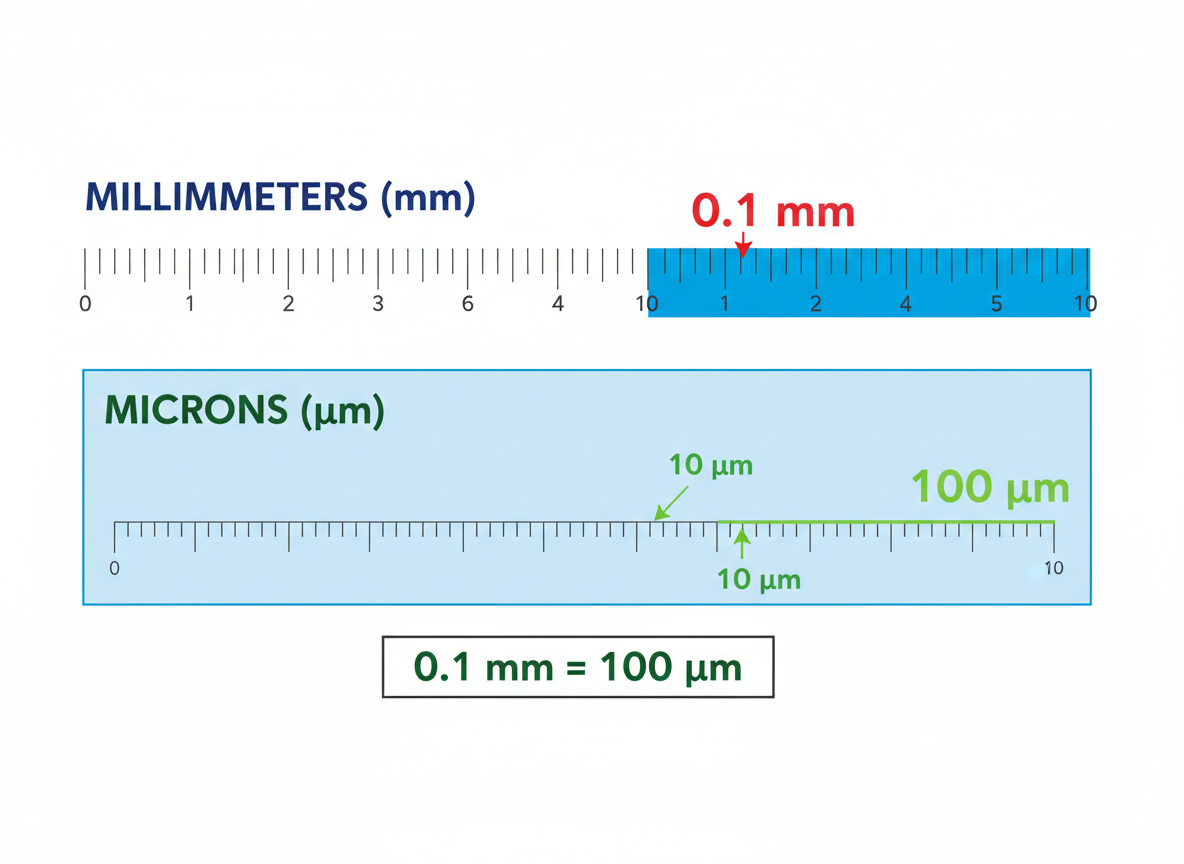
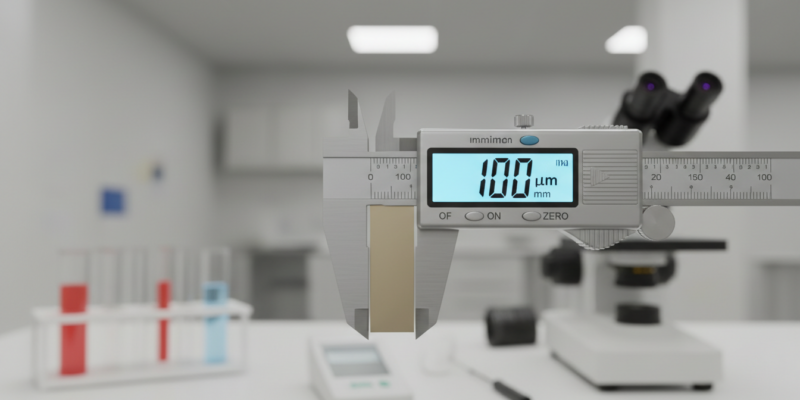
When you’re working with precision measurements, you’ll often need to convert 0.1 mm to microns. Here’s what you need to know: 0.1 millimeters equals exactly 100 microns. While that might sound simple, this conversion plays a vital role across multiple fields.
Both millimeters and microns belong to the metric system, making conversions straightforward. A millimeter (mm) is one-thousandth of a meter, while a micron (μm)—officially called a micrometer—is one-millionth of a meter. That means one millimeter contains 1,000 microns.
This specific measurement matters more than you’d think. Engineers use it when specifying machining tolerances, medical professionals rely on it for analyzing cell sizes, and scientists need it for microscopy work. Students studying these fields will encounter this conversion repeatedly.
The formula itself is beautifully simple: multiply millimeters by 1,000 to get microns. So 0.1 mm × 1,000 = 100 microns. You can verify this instantly using our 0.1 mm to Microns conversion calculator, which handles the math while you focus on your work.
The Conversion Formula: 0.1 MM to Microns
Converting 0.1 mm to microns is refreshingly straightforward once you understand the basic relationship. Here’s the essential formula: 1 millimeter equals exactly 1000 microns (or micrometers, if you prefer the technical term).
To convert 0.1 mm to microns, simply multiply by 1000:
0.1 mm × 1000 = 100 microns
That’s it. Your 0.1 millimeter measurement becomes 100 microns every single time.
Why exactly 1000? It comes down to metric prefixes. The prefix “milli-” means one-thousandth (1/1000), while “micro-” means one-millionth (1/1,000,000). Since a micrometer is one-millionth of a meter and a millimeter is one-thousandth of a meter, there’s precisely a 1000x difference between them.
Think of it like climbing down a ladder: one meter breaks into 1000 millimeters, and each millimeter breaks into 1000 micrometers. You’re moving three decimal places to the right with each step.
This same principle applies across metric conversions. Just as we use consistent multipliers for length measurements, similar conversions exist for volume—like converting 0.1 mL to microliters, where the relationship remains beautifully consistent.
Keep this 1000× multiplier in your mental toolkit, and you’ll breeze through mm-to-micron conversions whenever precision matters.
Real-World Applications of 0.1 MM (100 Microns)
Understanding 0.1 mm or 100 microns becomes fascinating when you see where this measurement matters most. In semiconductor manufacturing, engineers work with chip layers and circuit patterns at exactly this scale—creating the technology that powers your smartphone and laptop. These tiny dimensions determine processing speed and efficiency.
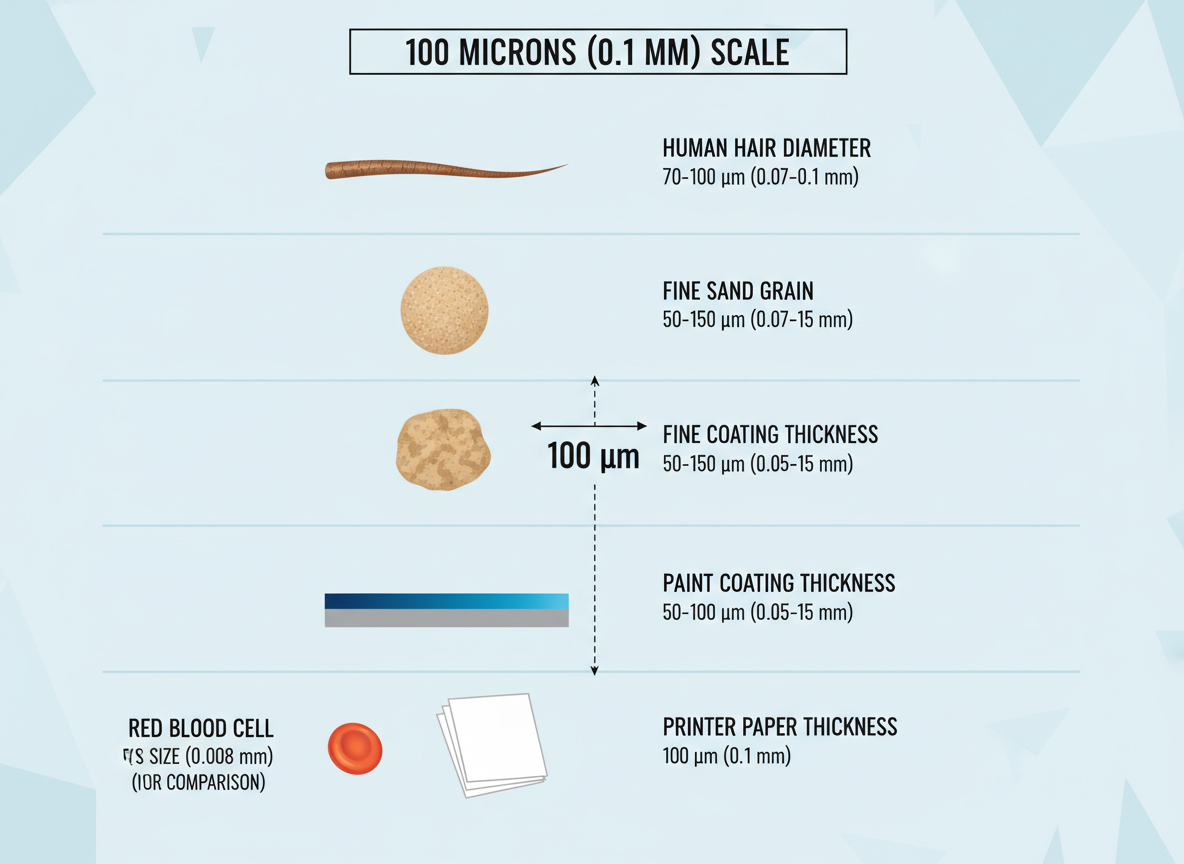
Cell biology offers a relatable reference point: a human hair typically measures 70-100 microns in diameter. That’s right—0.1 mm is about as thick as a single strand of your hair. Scientists studying cell structures routinely work at this scale, examining tissue samples and cellular components that fall within this range.
Precision machining shops specify tolerances in 100-micron increments for critical components. Surface finish measurements at this level determine whether parts fit together smoothly or fail under stress. The difference between acceptable and rejected parts often comes down to measurements at this scale.
Medical applications rely heavily on 100-micron precision. Surgical instruments need exact dimensions for minimally invasive procedures, while diagnostic tools measure tissue samples with micron-level accuracy. Biopsy needles and catheter walls are manufactured to these specifications.
Filter technology uses 100-micron ratings to capture specific particle sizes. Water filters, air purifiers, and industrial filtration systems are all rated by what they can trap—and 100 microns represents a common threshold for removing visible contaminants.
The paint and coating industry measures film thickness in microns to ensure proper coverage and durability. Too thin, and the coating fails; too thick, and you’re wasting material. Just as precision matters when converting between different measurements (like understanding volume conversions for liquid applications), getting film thickness right at 100 microns ensures product quality across countless industries.
Micron vs Micrometer: Understanding the Terminology
Here’s something that confuses people: micron and micrometer are exactly the same unit. Both refer to one millionth of a meter (1 μm), just like how you might measure liquids in different units like cups and liters depending on where you’re from.
The official story goes back to 1967, when the International System of Units decided “micrometer” should replace “micron.” They wanted consistency in naming across all units. Makes sense, right?
But here’s the twist: nobody really listened. Manufacturing, filtration, and textile industries kept using “micron” because it’s shorter, easier to say, and everyone already knew what it meant. Old habits stick around, especially when they work perfectly fine.
You’ll see the symbol μm everywhere—that’s the Greek letter mu followed by an m. Whether someone calls it a micron or micrometer, they’re talking about the same thing. When you’re converting 0.1 mm, you’ll get 100 μm (or 100 microns, if you prefer the traditional term).
Precision and Tolerance Guidelines for 100 Micron Measurements
When you’re working with 0.1 mm (100 micron) measurements, precision isn’t just nice to have—it’s everything. The difference between 99 and 101 microns can mean the difference between a perfect fit and a rejected part.
Significant figures matter here. If you measure 0.1 mm, you’re implying accuracy to the nearest tenth of a millimeter. Your measuring tools need to support that claim. Digital micrometers typically offer ±2 micron accuracy, while standard calipers might only give you ±10 microns. Choose tools that match your needs.
Different industries have wildly different tolerance standards. Medical device manufacturers often work within ±5 micron tolerances for implants, while aerospace components might require ±10-25 microns. Research labs frequently demand even tighter precision, sometimes under ±1 micron.
Watch out for common measurement errors: temperature fluctuations expand materials, improper tool calibration throws off readings, and simple human error when reading scales. Always calibrate instruments regularly and control environmental conditions when possible.
Know when to round and when precision counts. For quality control documentation, keep exact measurements. For general engineering calculations, rounding to reasonable values works fine. Just like converting pressure units requires understanding context, micron measurements demand situational awareness. Unit Genie’s calculator maintains full precision until you decide what’s appropriate for your specific application.
Related Measurement Conversions and Scale Context
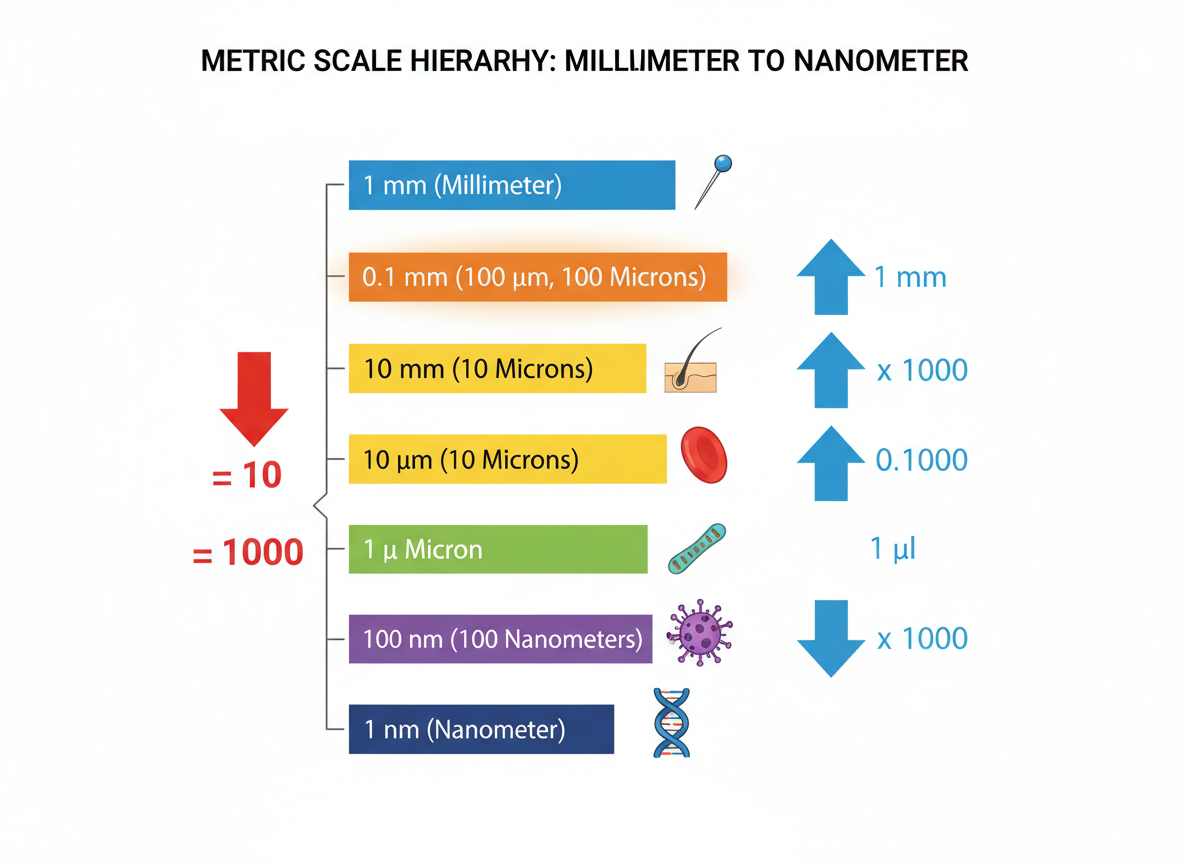
When you’re working with 0.1 mm (100 microns), it helps to understand where this sits in the bigger picture of small measurements. Those 100 microns actually equal 100,000 nanometers—a scale that matters in semiconductor manufacturing and materials science.
Here’s a quick reference table for nearby values:
| Millimeters | Microns | Nanometers |
|————-|———|————|
| 0.05 mm | 50 µm | 50,000 nm |
| 0.1 mm | 100 µm | 100,000 nm |
| 0.2 mm | 200 µm | 200,000 nm |
| 0.5 mm | 500 µm | 500,000 nm |
Think of it this way: a human hair (about 70 microns) is slightly thinner than 0.1 mm. A red blood cell? That’s roughly 7-8 microns—ten times smaller. And bacteria typically range from 1-10 microns, making them barely visible at this scale.
Understanding these relationships becomes second nature once you see them side by side. Similar to how you might need precise conversions between small liquid volumes like 0.1 mL to liters, getting comfortable with length measurements at different scales saves time and prevents errors.
For instant calculations across any measurement scale, Unit Genie’s conversion calculator handles everything from nanometers to kilometers with a single click. No more manual multiplication or digging through conversion charts.
Frequently Asked Questions
How many microns is 0.1 mm?
Exactly 100 microns. This is a straightforward mathematical conversion since one millimeter contains 1,000 microns. You’ll find this measurement frequently in manufacturing specs, filtration ratings, and precision engineering documents.
Is 0.1 mm the same as 100 micrometers?
Yes, they’re identical. Microns and micrometers are two names for the same unit of measurement. Scientists typically use “micrometers” while engineers and industrial professionals often say “microns.” Either way, you’re talking about 0.001 millimeters.
What tools measure 0.1 mm or 100 microns accurately?
Digital micrometers offer excellent accuracy for this range, typically reading to 0.001 mm or 1 micron. Precision digital calipers work well for less critical applications. Optical microscopes with calibrated scales provide measurement capabilities for extremely fine work. Lab-grade instruments like laser interferometers deliver the highest accuracy when tolerances are especially tight.
Why is 0.1 mm to micron conversion important?
Manufacturing tolerances, filtration specifications, coating thicknesses, and medical device standards all rely on precise micron measurements. A water filter rated at 100 microns removes different particles than one rated at 50 microns. Similarly, paint thickness specifications often require measurements in this range. Understanding these conversions helps you select the right products and verify quality standards. Just as knowing how to convert between grains and milligrams matters for medication dosing, micron conversions affect product performance.
How do I convert other mm values to microns?
Multiply any millimeter value by 1,000. For example, 2.5 mm equals 2,500 microns. It’s simple math that Unit Genie handles instantly.
What’s the difference between micron and millimeter?
A micron is 1,000 times smaller than a millimeter. Think of it this way: you’d need to stack 1,000 human hairs (each about 100 microns thick) to reach 10 cm.
Can I see 100 microns with the naked eye?
Barely. Human vision typically resolves objects around 40-100 microns under perfect conditions. You might spot it as a tiny speck, but you won’t see any detail without magnification.