

What is 0.1 Inch in Millimeters?
0.1 inch equals exactly 2.54 millimeters. This conversion comes up more often than you’d think—whether you’re comparing drill bit sizes, checking thickness specifications for materials, or working with technical drawings that mix measurement systems. The formula’s straightforward: multiply any inch value by 25.4 to get millimeters. So for 0.1 inch, that’s 0.1 × 25.4 = 2.54 mm. You’ll find this particular conversion helpful when switching between imperial and metric systems, which happens constantly in manufacturing, engineering, and DIY projects. For more general inch to mm conversions, the same principle applies across all measurements.
The Conversion Formula Explained
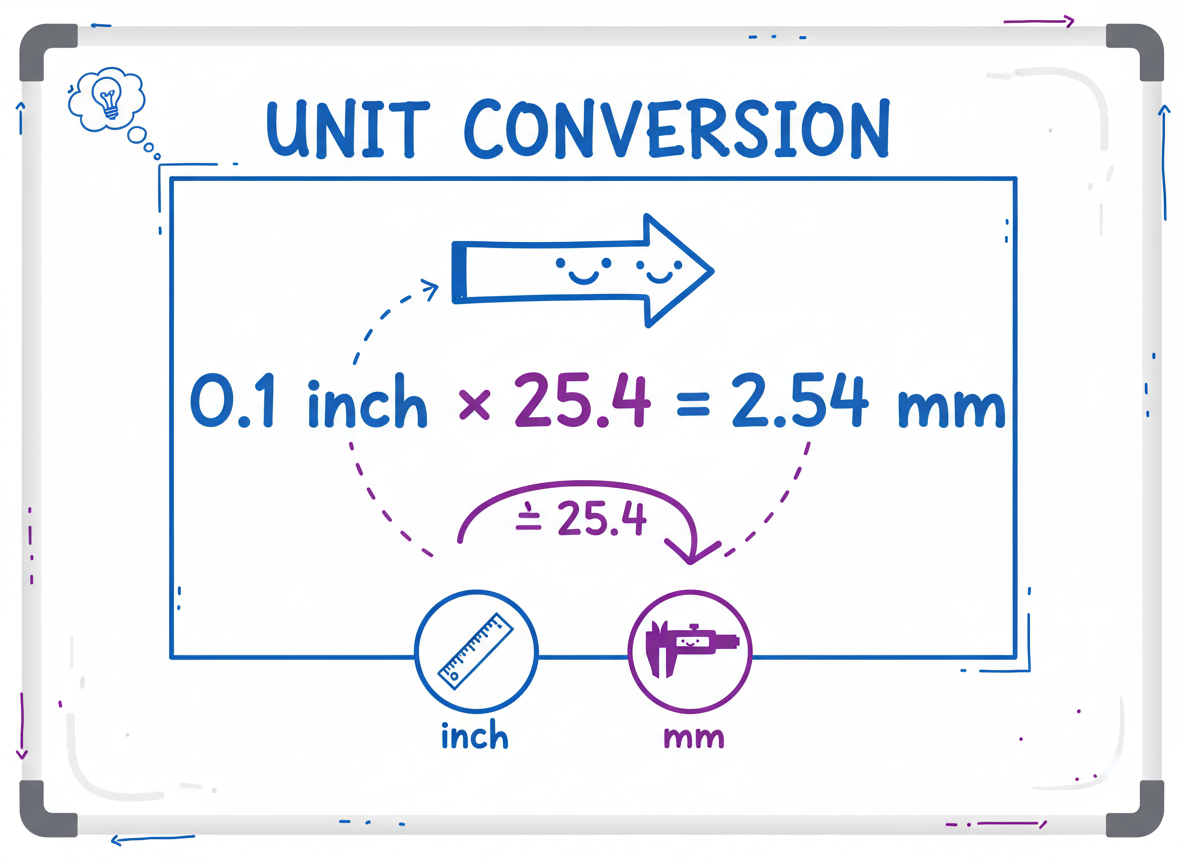
Converting inches to millimeters is straightforward once you know the magic number: 25.4. Here’s the basic formula: inches × 25.4 = millimeters.
For 0.1 inch, you’ll multiply 0.1 × 25.4 = 2.54mm. That’s it!
Want to go the other way? Just divide: 2.54mm ÷ 25.4 = 0.1 inch. The number 25.4 exists because there are exactly 25.4 millimeters in one inch—it’s the internationally agreed-upon standard that bridges the imperial and metric systems. If you’re working with larger measurements, our mm to inch converter handles those too.
Real-World Objects That Measure 0.1 Inch
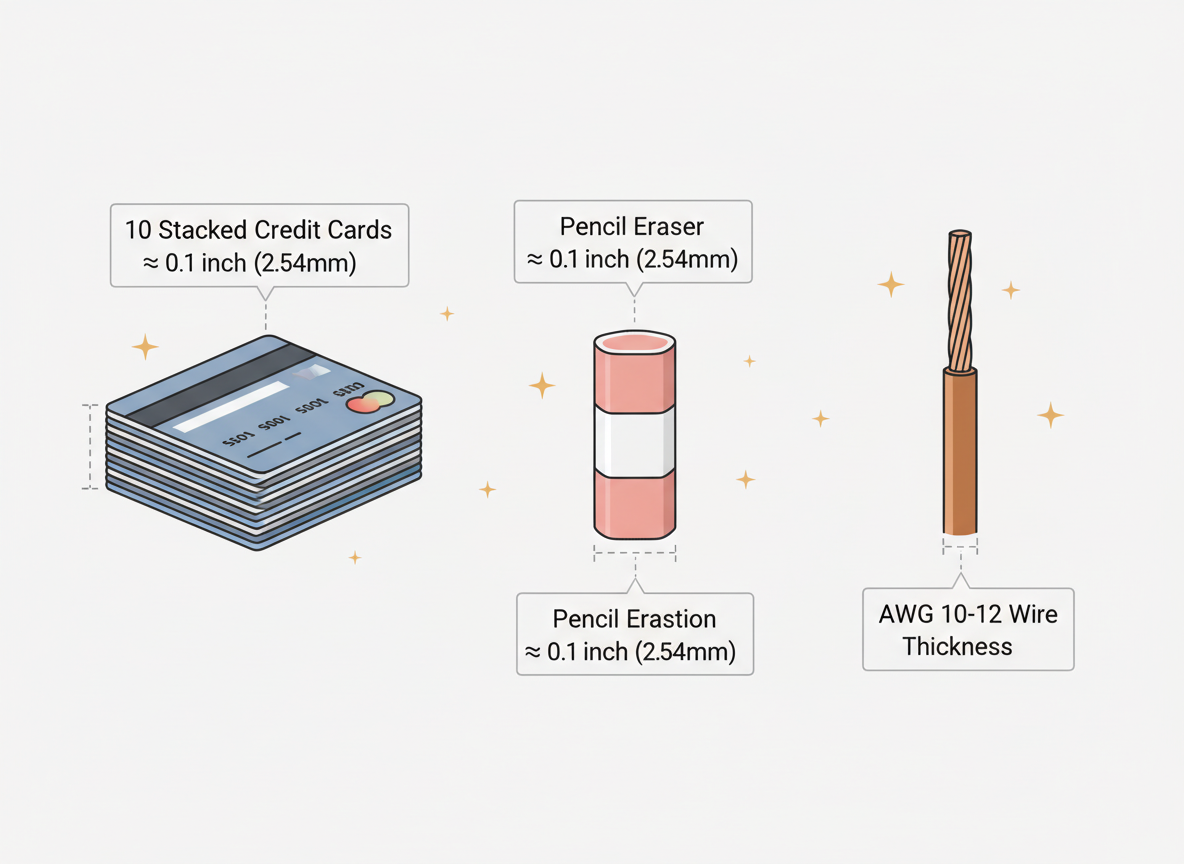
Understanding 0.1 inch (2.54 mm) becomes easier when you compare it to everyday items. Stack two credit cards, and you’ll get pretty close to this measurement. A standard pencil eraser’s thickness also falls right around this range. If you work with electronics, you’ll recognize this as AWG 11 wire diameter. Modern smartphone screen glass typically measures between 0.08 and 0.12 inches thick, making it another handy reference point. These thickness measurements help you visualize small dimensions that matter in construction, manufacturing, and DIY projects.
Industry Applications for 0.1 Inch Conversions
Converting 0.1 inch (2.54mm) matters across multiple industries. PCB designers rely on this precision for component spacing and trace widths in electronics manufacturing. CNC machinists use these measurements for tight tolerances in parts production. Jewelry makers need this accuracy when setting stones or creating intricate metalwork. Medical device manufacturers specify components down to fractions of millimeters for FDA compliance. In 3D printing, layer heights often use similar measurements—and if you’re working with broader dimensions, check our inches to centimeters guide for additional conversions you’ll encounter in technical drawings and blueprints.
Quick Reference: 0.1 Inch Increments Conversion Table
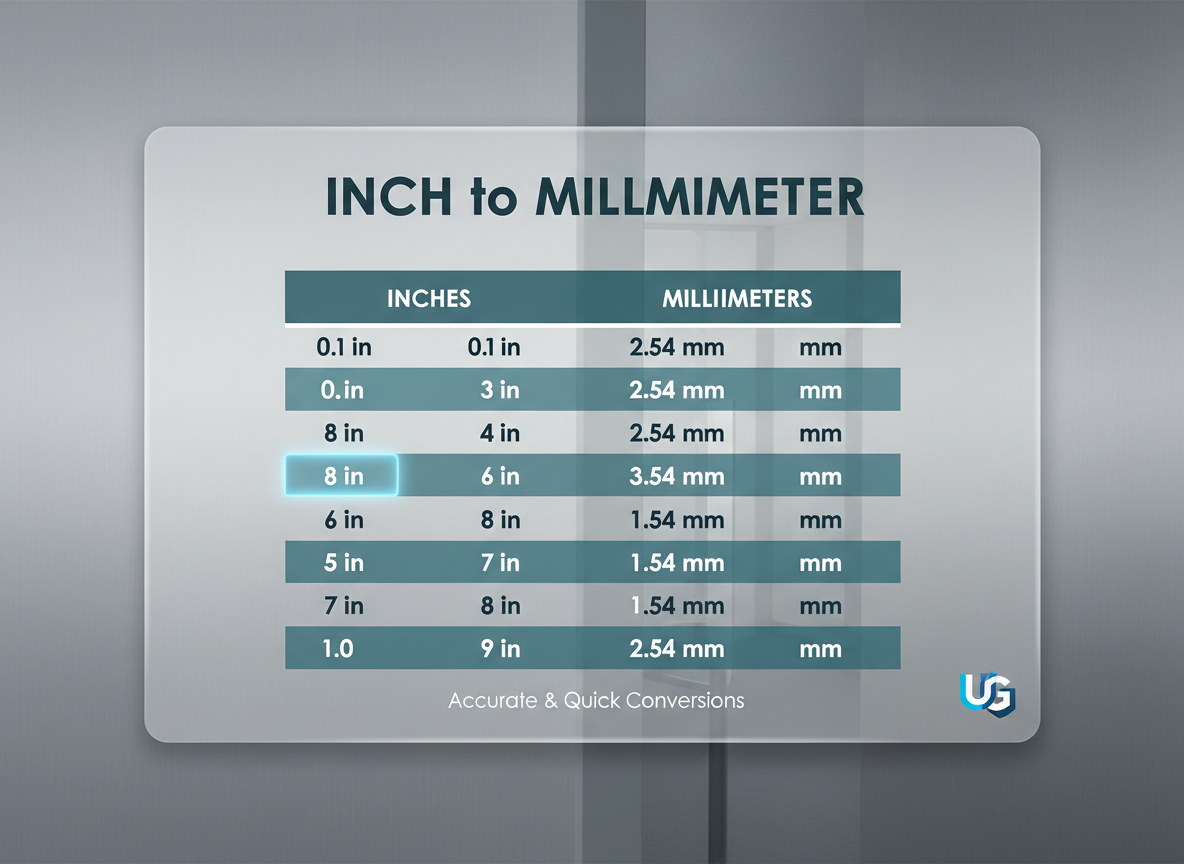
Here’s your go-to conversion table for 0.1 inch increments:
| Inches | Millimeters | |——–|————-| | 0.1 | 2.54 | | 0.2 | 5.08 | | 0.3 | 7.62 | | 0.4 | 10.16 | | 0.5 | 12.7 | | 0.6 | 15.24 | | 0.7 | 17.78 | | 0.8 | 20.32 | | 0.9 | 22.86 | | 1.0 | 25.4 |
Notice the pattern? Each 0.1 inch adds exactly 2.54mm. Once you’ve memorized that 0.1 inch equals 2.54mm, you can quickly multiply for any decimal measurement. For instance, 0.3 inches? That’s simply 2.54 × 3 = 7.62mm. If you’re working with centimeters to inches conversions too, you’ll find similar patterns that make mental math easier.
Precision and Rounding Guidelines
When you’re converting 0.1 inch to mm, context matters. For everyday projects, 2.5mm works fine—it’s easier to remember and measure. But manufacturing blueprints demand the full 2.54mm precision. Academic work? Stick with 2.54mm to avoid losing points. Industrial tolerances often specify ±0.1mm or tighter, where that extra 0.04mm actually counts. Here’s a tip: round only your final answer, never intermediate calculations. For detailed guidance on handling different metric conversions, Unit Genie offers tools that maintain accuracy throughout your workflow.
Frequently Asked Questions (FAQ)
Is 0.1 inch exactly 2.54mm?
Yes! The conversion is mathematically precise. Since 1 inch equals exactly 25.4mm by definition, 0.1 inch equals exactly 2.54mm. There’s no rounding involved in this calculation.
What is 2.54mm in inches?
That’s 0.1 inch. It’s simply the reverse of our main conversion. If you’re working between metric and imperial measurements regularly, memorizing this pair makes quick conversions easier.
How do I convert 0.1 inch to cm?
Multiply by 2.54, then divide by 10 (since there are 10mm in a cm). So 0.1 inch equals 0.254 cm. You can also think of it as 25.4mm ÷ 10 = 2.54cm.
Why do we use 25.4 as the conversion factor?
It’s the official definition. In 1959, English-speaking countries agreed that 1 inch would equal exactly 25.4mm. Before then, slight variations existed between countries. Similar standardization happened with other measurements like feet to meters.
What’s the difference between 0.1 inch and 2.5mm?
There’s a 0.04mm difference. While 0.1 inch equals 2.54mm, people sometimes round to 2.5mm for simplicity. That tiny 0.04mm gap doesn’t matter for casual DIY projects but could be significant in precision manufacturing.
Can I round 2.54mm to 2.5mm?
It depends on your tolerance requirements. For home projects, sketches, or estimates, rounding to 2.5mm works fine. But for engineering drawings, medical devices, or scientific equipment, stick with 2.54mm. When precision matters, those extra hundredths count.


[…] the simple formula and show you how this measurement appears in everyday situations. If you need smaller measurements, check out 0.1 inch conversions […]