Quick Answer: 1/2 Cup Equals 0.118 Litres
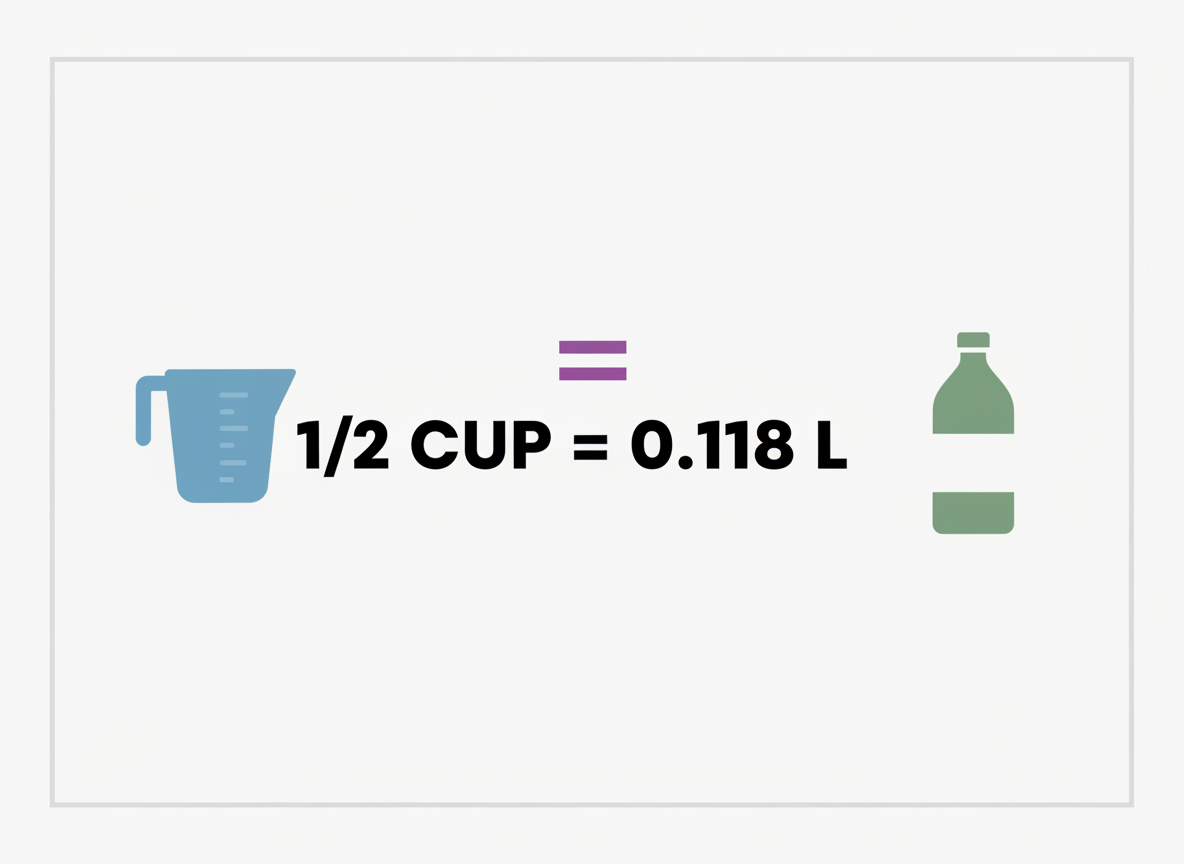
1/2 cup (US) equals 0.118294 litres, or roughly 0.12 L for everyday use. This conversion comes up constantly when you’re following international recipes or working with metric measurements in your kitchen. Whether you’re baking European pastries or converting American recipes, knowing this number saves time and prevents measuring mishaps. Unit Genie gives you these conversions instantly—no calculator needed. It’s worth noting we’re talking about US customary cups here, which differ slightly from metric cups used in some countries.
Understanding the Conversion Formula
Here’s how the math works: 1 US cup equals 0.236588 litres. So when you halve that, you get 0.236588 ÷ 2 = 0.118294 litres. For everyday cooking, you can round this to 0.12 L or 118 mL—close enough for most recipes.
But here’s the thing: precision matters when you’re baking bread or making delicate pastries. That tiny decimal difference can affect how your dough rises or how your batter sets. If you’re working with other measurements like converting 1 1/3 cup to milliliters, the same principle applies—accuracy counts when chemistry’s involved.
Quick Reference: Common Cup to Litre Conversions
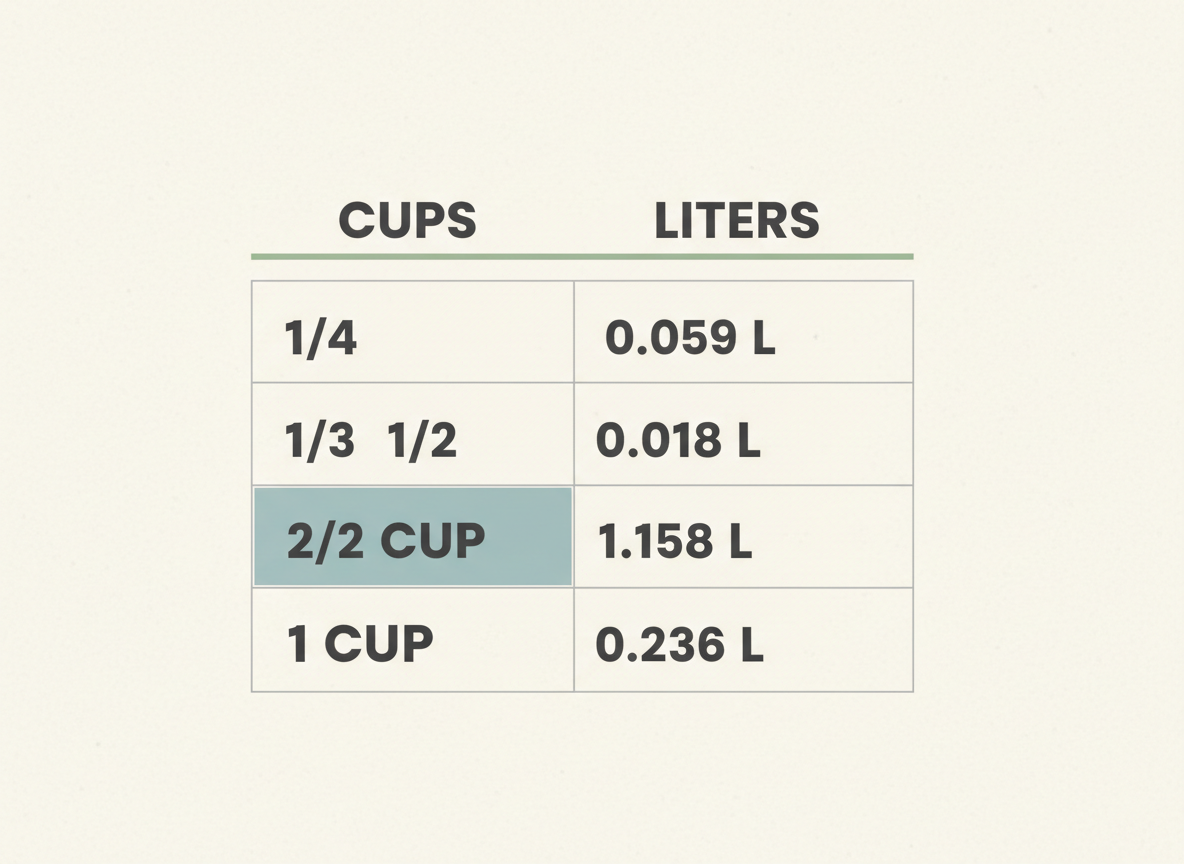
Here’s your go-to conversion table for the most common measurements:
| Cup Measurement | Litres (Precise) | Litres (Rounded) |
|—————–|——————|——————|
| 1/4 cup | 0.059 L | 0.06 L |
| 1/3 cup | 0.079 L | 0.08 L |
| 1/2 cup | 0.118 L | 0.12 L |
| 2/3 cup | 0.158 L | 0.16 L |
| 3/4 cup | 0.177 L | 0.18 L |
| 1 cup | 0.237 L | 0.24 L |
The 1/2 cup measurement is particularly handy since it appears in countless recipes. For quick reference, just remember it’s roughly 0.12 litres.
Important note: These conversions use the US cup standard (236.6 mL). If you’re working with metric cups (250 mL), your values will be slightly different. Need help with other fractional measurements? Check out our 1 1/3 cup to liters guide for more conversions.
Practical Kitchen Examples Using 1/2 Cup
You’ll use half a cup (0.118 L) more than you think. It’s the perfect amount of milk for pancake batter, vegetable oil in muffins, or water for cooking rice for two people. In everyday terms, it’s roughly the size of a tennis ball or fills a small yogurt container halfway.
Don’t have a half-cup measure? Fill a standard coffee mug about one-third full, or use two 1/4 cup measures. You can also eyeball it using tablespoons—eight tablespoons equal half a cup.
When adapting international recipes, 120 ml in a metric recipe is essentially your half cup. The tiny 2 ml difference won’t affect most dishes. For precise conversions across different volumes, check out our 1 Liter Conversion Guide for comprehensive measurement help.
US Cups vs. Metric Cups: What’s the Difference?
Here’s where things get tricky: a US cup equals 236.588 mL (0.237 L), while metric cups used in Australia, New Zealand, and Canada measure exactly 250 mL (0.25 L). That 13.5 mL difference might seem small, but it adds up when you’re doubling recipes. Check if your recipe mentions “imperial,” “US,” or “metric” measurements. Australian recipes often specify metric cups, while American ones default to US standard. When converting larger volumes like 1 1/2 liters to cups, knowing which system you’re using matters.
Frequently Asked Questions
Is 1/2 cup the same as 0.5 litres?
No, not even close. Half a cup equals 0.118 litres, which is about one-eighth of 500 mL. That’s a massive difference that’ll ruin most recipes.
How many millilitres is 1/2 cup?
Exactly 118.294 mL, though most cooks round to 118 mL for simplicity. This precision matters when you’re doubling recipes or working with concentrated ingredients.
Can I use a kitchen scale instead of measuring cups?
Absolutely. Just convert volume to weight based on your ingredient. Water’s easy—118 mL equals 118 grams. Flour weighs about 60 grams per half cup, while sugar’s closer to 100 grams. For other measurements like 1 1/8 cup conversions, the same weighing principle applies.
Does 1/2 cup measurement change for dry vs. liquid ingredients?
The volume stays 118 mL either way, but your measuring technique should change. Liquids need eye-level checking at the meniscus, while dry ingredients require spooning and leveling.
What if my recipe says ‘1 2 cup’?
That’s shorthand (or a typo) for 1/2 cup—half a standard cup measure.