Quick Answer: 0.1mg to Grams Conversion
0.1 milligrams equals 0.0001 grams. That’s it—simple and precise.
This tiny measurement matters more than you’d think. Pharmacists use it to measure active ingredients in medications, lab technicians rely on it for chemical experiments, and supplement manufacturers need it for dosing accuracy. When you’re dealing with substances where even a fraction of a milligram can make a difference, getting this conversion right isn’t just helpful—it’s essential.
The formula? Divide milligrams by 1,000 to get grams (or multiply by 0.001). Just like converting between kilograms and pounds, understanding the relationship between these units gives you confidence in your measurements.
Understanding the Conversion: Milligrams vs Grams
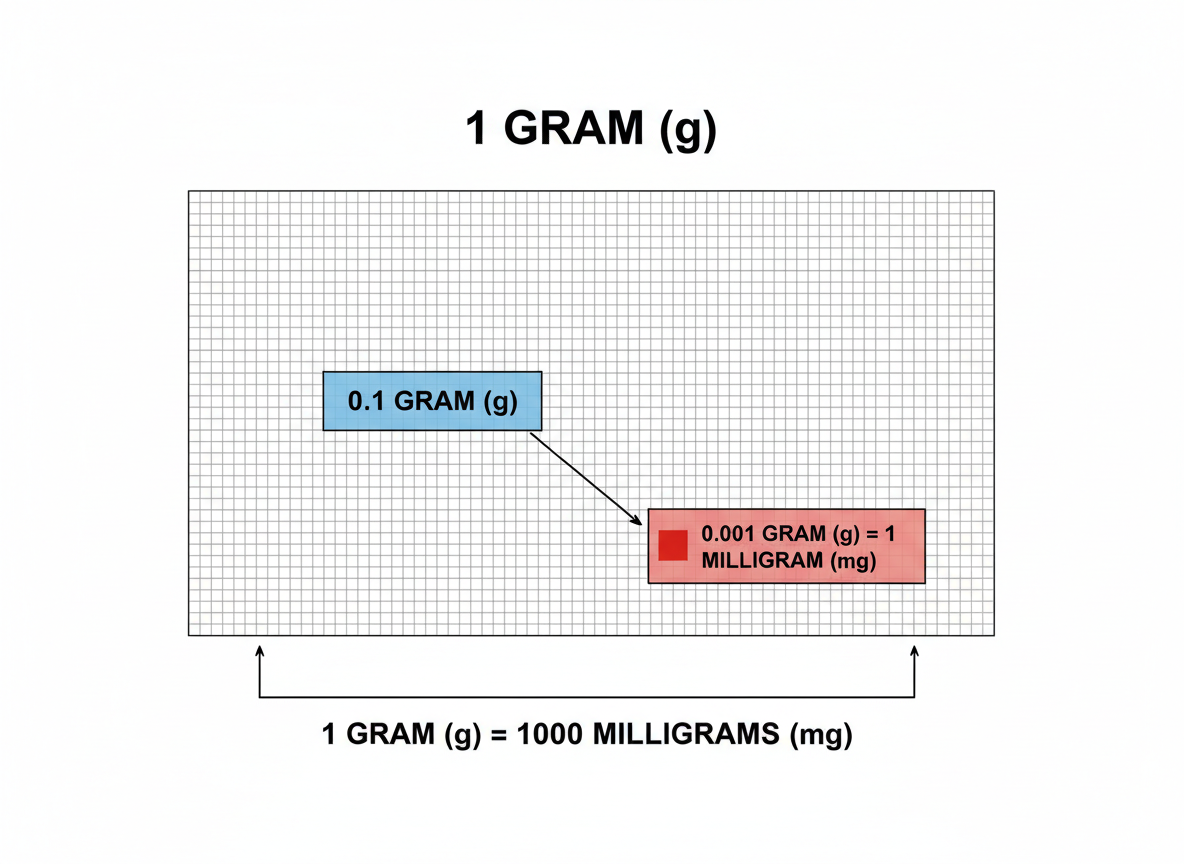
The metric system makes converting between milligrams (mg) and grams (g) straightforward. Here’s the simple relationship: 1 gram equals 1,000 milligrams. Think of it like dollars and cents—just as 1,000 cents make a dollar, 1,000 milligrams make a gram.
Milligrams work perfectly for tiny measurements where grams would be impractical. You’ll find them everywhere in medicine (pill dosages), chemistry (precise compound measurements), and nutrition (vitamin content). Grams, meanwhile, are better suited for everyday kitchen measurements, jewelry weights, and portion sizes.
This decimal-based system means converting is as easy as moving the decimal point three places. Similar to how you might convert between centimeters and millimeters, the metric system’s consistent structure keeps calculations simple and error-free.
The Conversion Formula Explained
Converting 0.1mg to grams is straightforward once you know the formula: milligrams ÷ 1000 = grams. Here’s how it works for our example:
0.1 mg ÷ 1000 = 0.0001 g
That’s it! You can also use a handy shortcut: move the decimal point three places to the left. Starting with 0.1, shift left three times to get 0.0001. This mental math trick works for any milligram-to-gram conversion.
Think of it like converting pounds to ounces (similar to our 0.16 lbs to oz guide)—you’re just working with a different ratio. Since 1 gram contains 1,000 milligrams, you’re essentially finding what fraction of a gram your milligrams represent. With 0.1mg, you’re dealing with one ten-thousandth of a gram.
Real-World Applications of 0.1mg Measurements
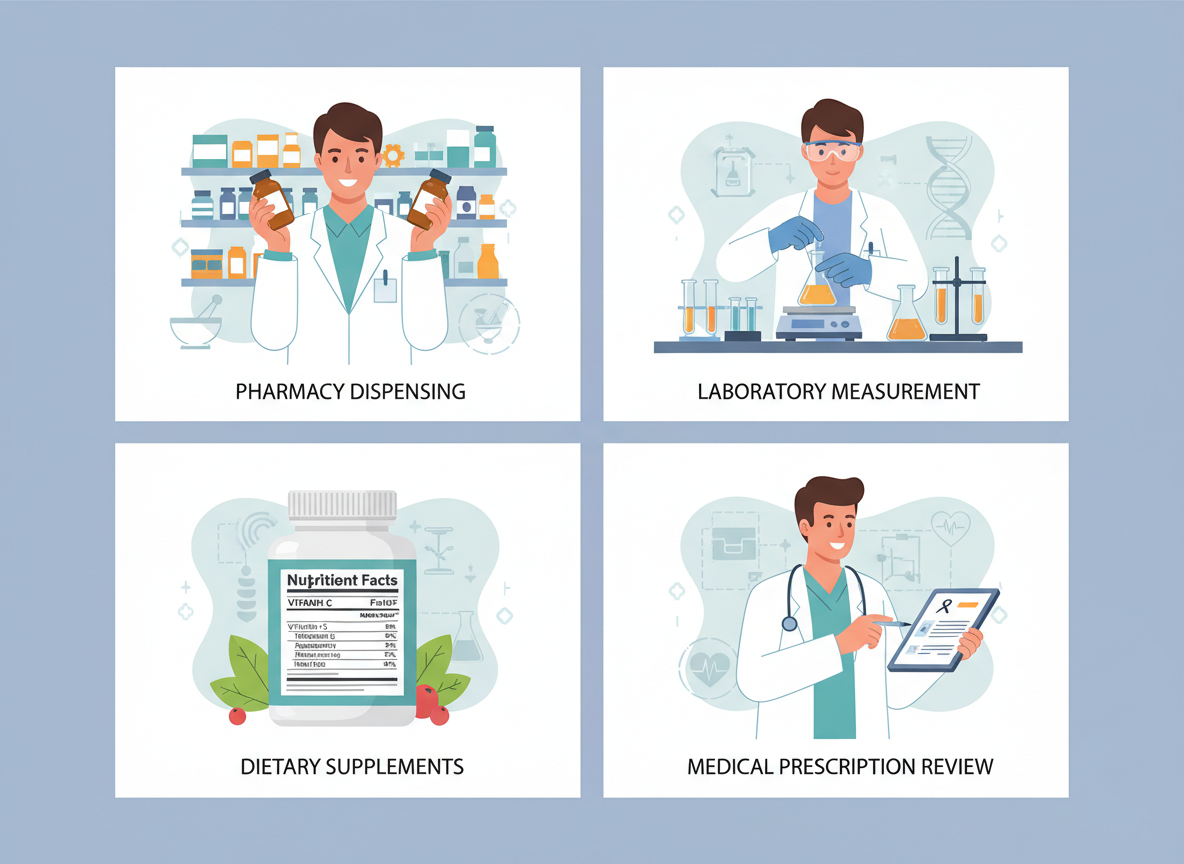
Understanding 0.1mg to g conversions matters in several high-stakes fields where precision saves lives. Pharmaceutical companies formulate medications like thyroid hormone pills (levothyroxine) in 0.025mg to 0.3mg doses—tiny amounts where even 0.1mg makes a difference in how you feel. Supplement manufacturers carefully measure minerals like selenium and chromium at these microscopic levels, since exceeding recommended doses can cause harm.
Laboratory scientists routinely weigh chemical reagents at 0.1mg accuracy when developing new compounds or running experiments. Forensic experts analyze trace evidence—think DNA samples or microscopic fibers—measured in fractions of a milligram. These measurements require the same attention to detail as converting between weight units accurately, where small errors create big problems. Hormone replacement therapy also depends on these minuscule measurements to balance body chemistry properly.
Precision and Rounding Considerations
When converting 0.1mg to g, you’ll get 0.0001g—but should you write it that way? It depends on your field. Pharmaceutical work demands full decimal precision since even tiny variations matter for dosages. Scientific research typically follows significant figures rules, maintaining 1 or 2 sig figs for this measurement.
A common mistake? Rounding too early in multi-step calculations. Always keep full precision until your final answer. Just like getting conversions right in cooking matters for recipes, accuracy here affects results.
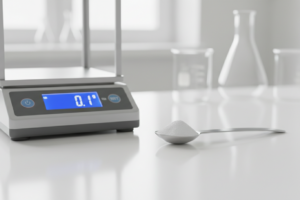
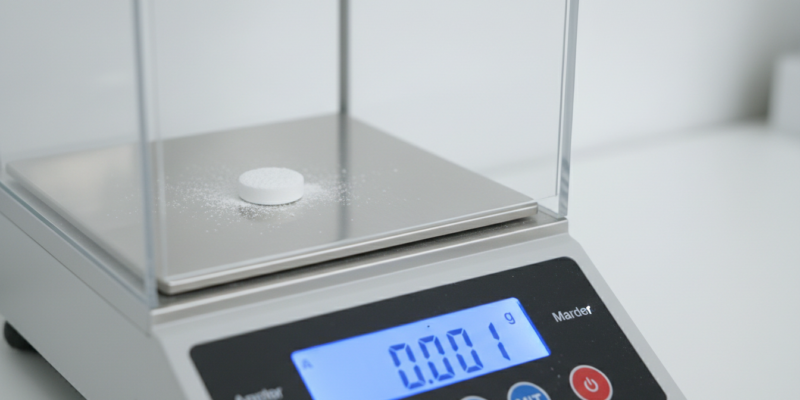
For actually measuring 0.1mg, you’ll need an analytical balance—standard kitchen scales won’t cut it. These precision instruments typically measure to 0.01mg or better, ensuring your conversions translate into real-world accuracy. Skip the guesswork and use proper equipment.
Common Conversion Errors to Avoid
Decimal point placement trips up even careful converters. Moving the decimal three places to the left for mg to g conversions seems simple, but it’s easy to shift four places accidentally—turning 0.1mg into 0.00001g instead of 0.0001g.
Another frequent mistake? Confusing milligrams with micrograms (mcg). Since 1mg equals 1,000mcg, mixing these up creates thousand-fold errors. Medical professionals know this one can be serious.
Rounding too early throws off accuracy, especially in multi-step calculations. If you’re converting 0.1mg to grams, then to another unit (like converting between time units such as days to hours), keep full precision until the final step.
Here’s a pro tip: always reverse-check your answer. Convert your result back to the original unit. If 0.0001g doesn’t give you 0.1mg when multiplied by 1,000, something’s wrong.
Frequently Asked Questions
How many grams is 0.1 milligrams?
0.1mg equals 0.0001g. Just move the decimal point three places left or divide by 1,000.
Is 0.1mg the same as 0.0001g?
Yes, they’re identical. Both represent one ten-thousandth of a gram—just expressed in different units.
What can I measure with a 0.1mg precision scale?
You can weigh medication doses, jewelry components, chemical reagents, or precious gemstones. These scales work great for anything requiring extreme accuracy.
How do I convert grams back to milligrams?
Multiply by 1,000. So 0.0001g × 1,000 = 0.1mg. It’s the reverse of what we did earlier.
What’s the difference between mg, g, and mcg?
From smallest to largest: mcg (microgram), mg (milligram), g (gram). Each step up multiplies by 1,000.
Do I need a special scale to measure 0.1mg?
Absolutely. You’ll need an analytical balance—standard kitchen scales can’t detect such tiny amounts.
When would I encounter 0.1mg measurements in daily life?
Prescription medications, vitamin supplements, and laboratory work commonly use these measurements. You might also see them in jewelry specifications or precision measurements like converting meters to yards where accuracy matters.