How Many Seconds Are in 1 Day?
Here’s your answer: 1 day = 86,400 seconds.
This conversion comes up more often than you’d think. Whether you’re writing code that tracks user sessions, planning project deadlines down to the second, or working through scientific calculations, knowing this number matters. The math is straightforward: 24 hours × 60 minutes × 60 seconds = 86,400 seconds. Just like understanding volume conversions helps in everyday measurements, mastering time conversions makes technical work smoother. Let’s break down exactly how this formula works and when you’ll actually need it.
The Math Behind 86,400 Seconds
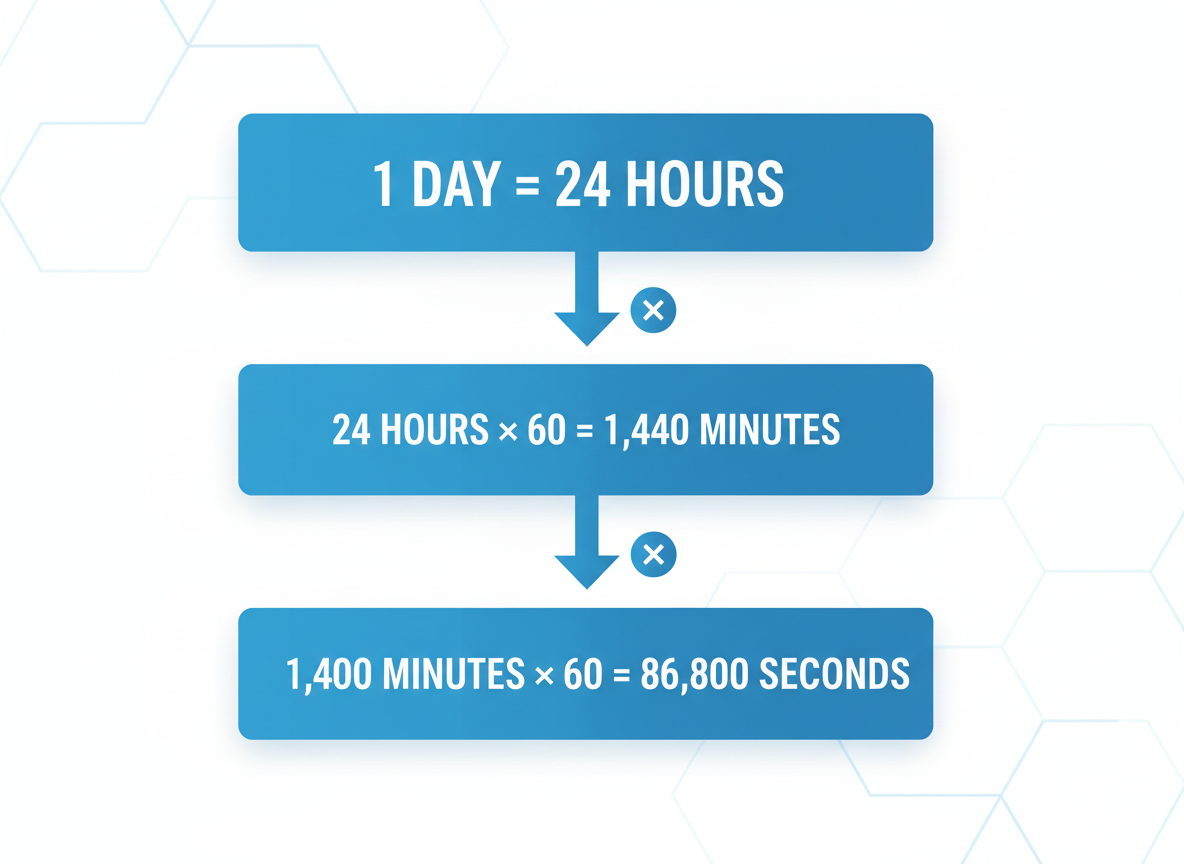
Here’s how you get from one day to 86,400 seconds. Start with the basics: 1 day = 24 hours. Pretty straightforward.
Next, convert those hours to minutes: 24 hours × 60 minutes = 1,440 minutes in a single day.
Finally, turn those minutes into seconds: 1,440 minutes × 60 seconds = 86,400 seconds. That’s your answer.
Want a quick memory trick? Just remember the 24-60-60 pattern. It’s the same sequence we use for time everywhere—24 hours, 60 minutes per hour, 60 seconds per minute.
This conversion follows SI (International System of Units) standards, which scientists and engineers worldwide use for consistency. Similar to how we convert measurements like centimeters to millimeters, time conversions rely on standard multipliers that keep everyone on the same page.
Real-World Applications: When You Need This Conversion
You’ll bump into this conversion more often than you’d think. Software developers rely on it constantly for Unix timestamps, which count seconds since January 1, 1970. API rate limits often cap requests at “X per 86,400 seconds” instead of “per day.” Session timeouts? Usually programmed in seconds.
Project managers calculate time budgets down to the second for complex deliverables. Scientists running timed experiments need precision—mixing chemicals for exactly 1.5 days means knowing that’s 129,600 seconds. Fitness trackers compute your calorie burn per second to show real-time stats. Financial algorithms calculate interest accrual in seconds for high-frequency trading.
Even conversions like weight measurements benefit from understanding time-based calculations when tracking progress over specific periods.
Quick Reference: Common Time Periods in Seconds
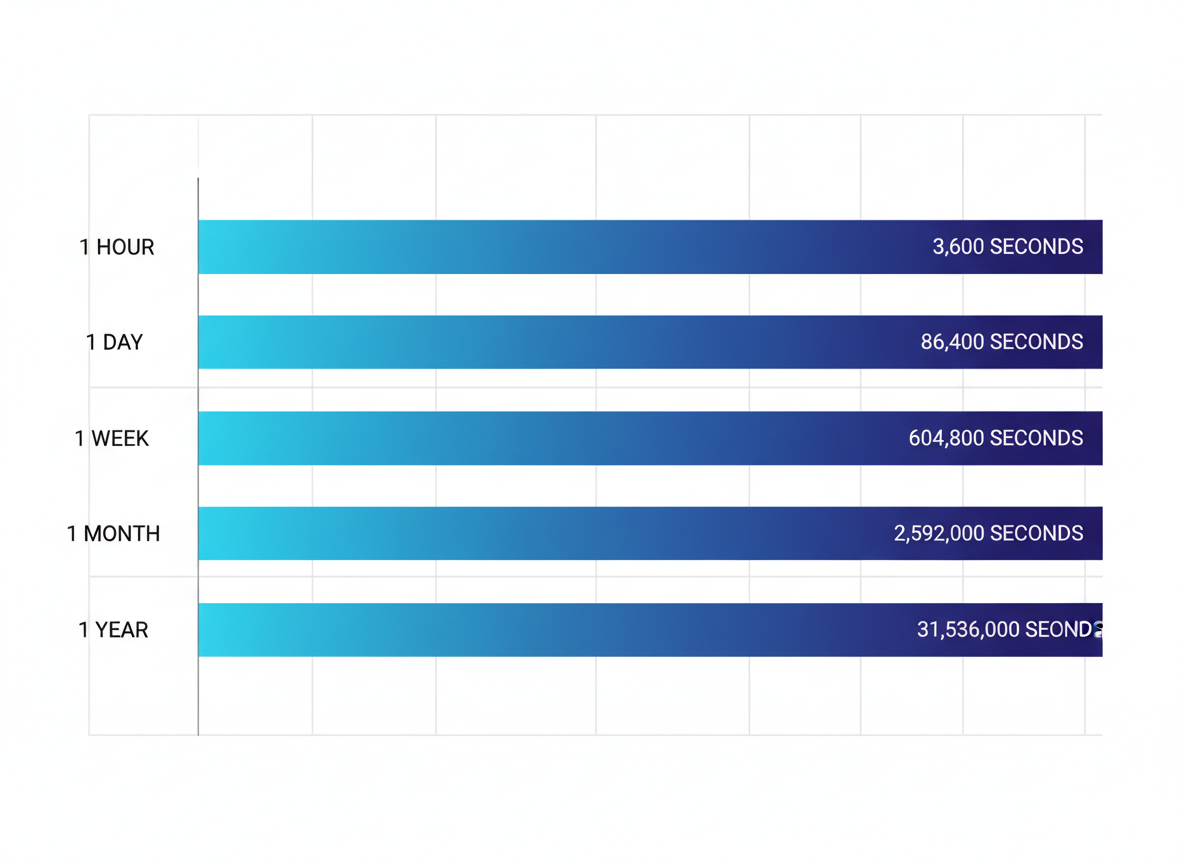
Here’s a handy breakdown of frequently used time periods converted to seconds:
| Time Period | Seconds |
|————-|———|
| 1 hour | 3,600 |
| 1 work day (8 hours) | 28,800 |
| 1 day (24 hours) | 86,400 |
| 1 week (7 days) | 604,800 |
| 1 month (30 days) | 2,592,000 |
| 1 year (365 days) | 31,536,000 |
Save this table for quick reference whenever you’re working with time conversions. Whether you’re calculating data rates, programming time delays, or just satisfying your curiosity, these numbers come in handy more often than you’d think. For other precision conversions like 0.1 mm in microns, Unit Genie’s got you covered.
Using the Day to Seconds Converter
Unit Genie’s converter makes finding out how many seconds are in a day completely effortless. Just enter “1” in the day field, and you’ll instantly see 86,400 seconds—no ads, no waiting, no hassle. The tool works flawlessly on your phone or desktop, and it’s available in multiple languages for users worldwide. You can even flip the conversion around to transform seconds back into days. Whether you’re calculating time conversions or exploring other measurements like Curie to Bq conversions, Unit Genie delivers accurate results the moment you need them.
Frequently Asked Questions
How many seconds are in 1 day exactly?
One day contains exactly 86,400 seconds. This comes from 24 hours × 60 minutes × 60 seconds.
Does a day always equal 86,400 seconds?
In standard timekeeping, yes. However, Earth’s rotation isn’t perfectly constant. Scientists occasionally add “leap seconds” to keep atomic clocks synced with Earth’s rotation. These rare adjustments mean some days technically have 86,401 seconds, though this won’t affect everyday calculations.
How do I convert days to seconds in Excel or programming?
In Excel, multiply by 86400: `=A186400`. In Python: `days 86400`. For more complex conversions between units, check out resources like our grain to mg conversion guide.
What about daylight saving time?
Daylight saving doesn’t change how many seconds are in a day—it just shifts clock time forward or backward by an hour. The Earth still completes one full rotation.
How many seconds are in 2 days? 7 days? 30 days?
- 2 days = 172,800 seconds
- 7 days = 604,800 seconds
- 30 days = 2,592,000 seconds