Quick Answer: 0.1 MPa to kPa Conversion
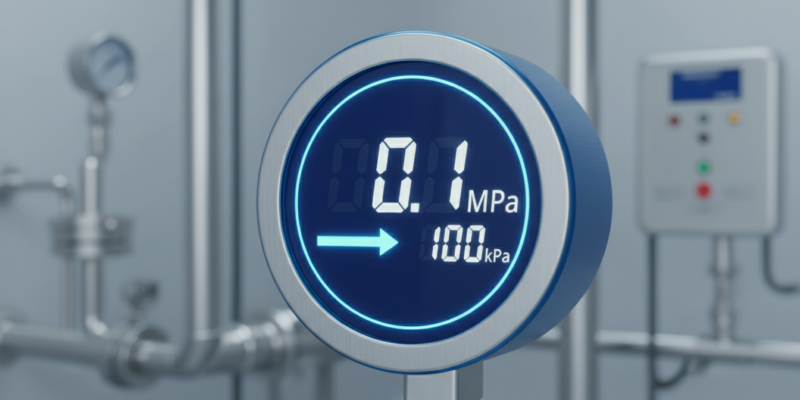
0.1 MPa equals 100 kPa. The conversion’s straightforward: multiply any MPa value by 1,000 to get kilopascals. This conversion pops up constantly in engineering specs, tire pressure ratings, and hydraulic systems where you’ll see both units used interchangeably. Need to convert to other pressure units? Check out our 0.1 MPa to Bar conversion guide too. Unit Genie’s calculator below handles these conversions instantly, so you won’t need to grab your calculator every time.
Understanding MPa and kPa: Pressure Units Explained
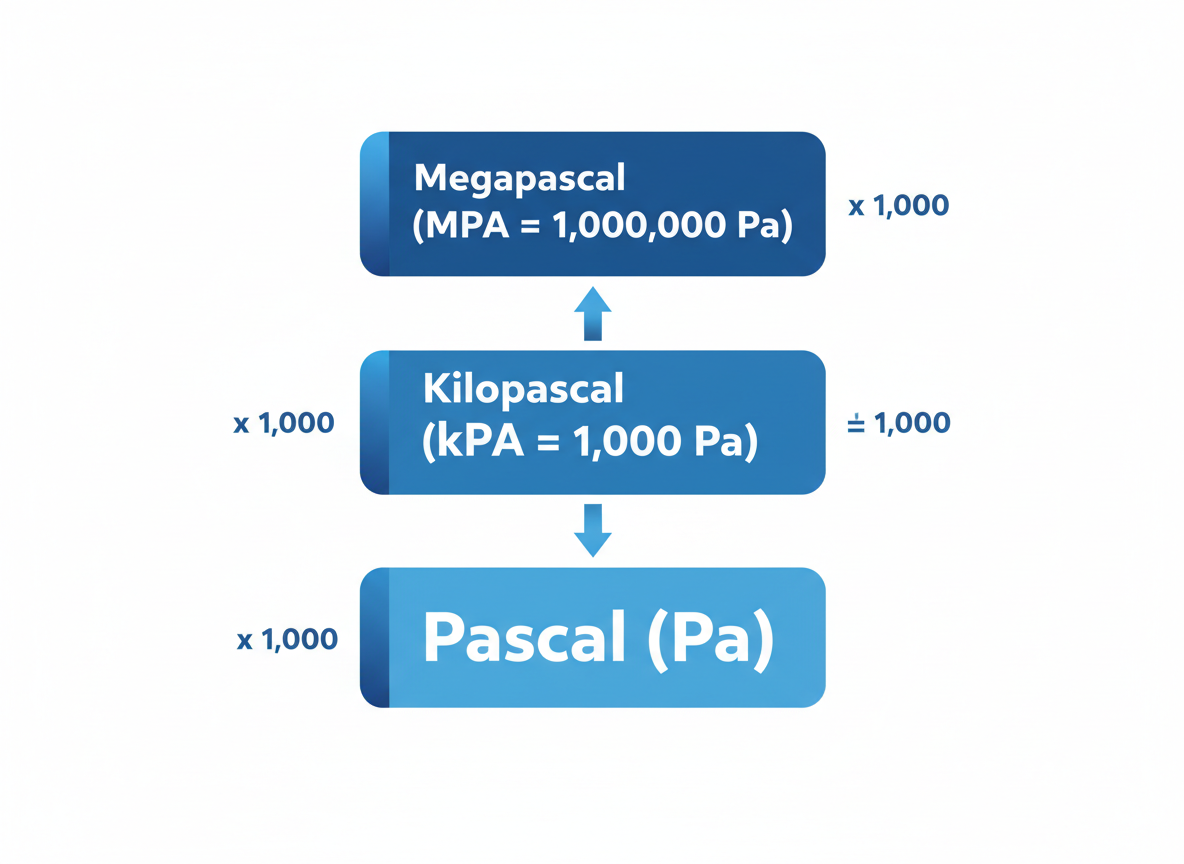
The pascal (Pa) is the SI unit for pressure, named after French mathematician Blaise Pascal. It measures force per unit area—specifically, one newton per square meter.
Here’s how the metric system scales up from there:
Kilopascal (kPa) = 1,000 Pa. You’ll find this unit on tire pressure gauges and weather reports. It’s practical for everyday measurements.
Megapascal (MPa) = 1,000,000 Pa. Engineers prefer this for high-pressure applications like hydraulic systems, material testing, and structural analysis.
So when you’re converting 0.1 MPa to kPa, you’re moving down three decimal places in the metric ladder. The relationship is straightforward: 1 MPa equals 1,000 kPa.
Engineers choose different scales based on what they’re measuring. Using kPa for tire pressure (around 200-250 kPa) makes more sense than decimals in MPa. For pressure conversions to bar units, the same logic applies—match the scale to your application.
Conversion Formula and Calculation Method
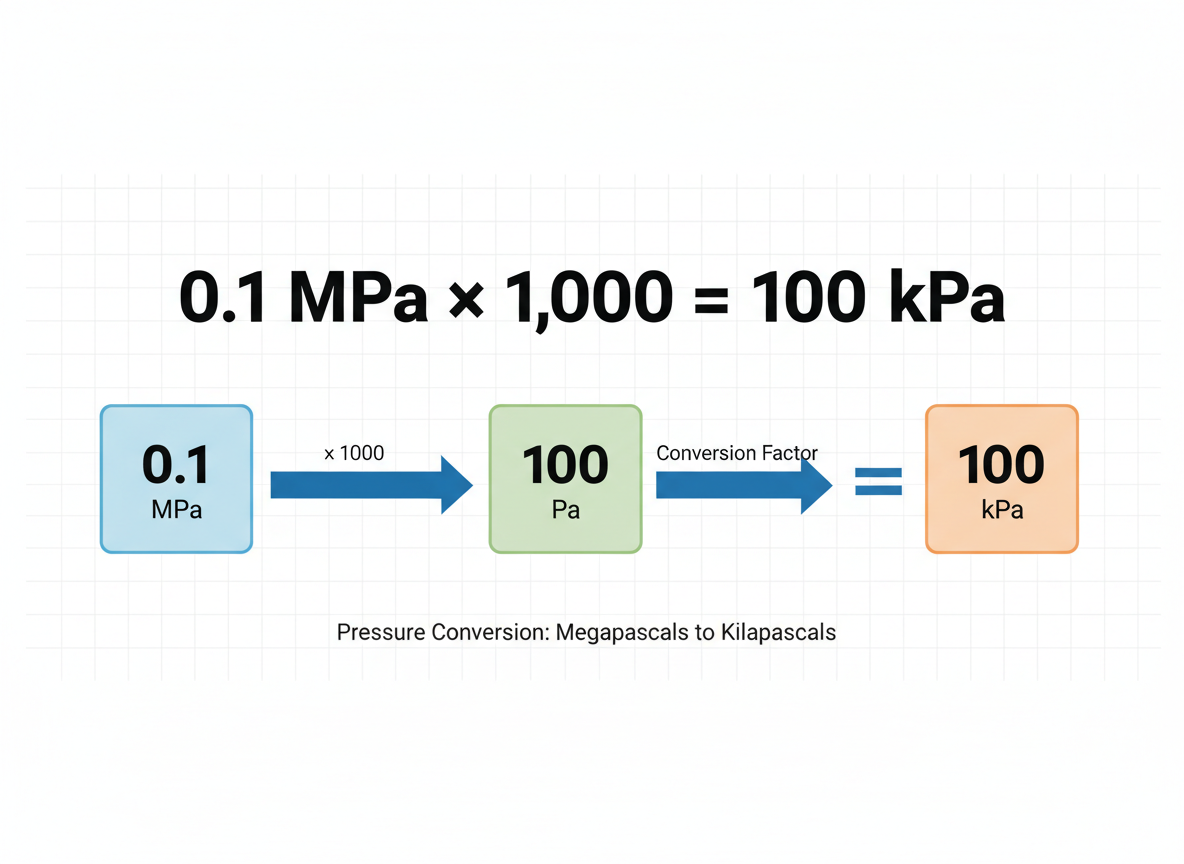
The formula for converting MPa to kPa is straightforward: kPa = MPa × 1000.
Here’s how it works for 0.1 MPa:
– 0.1 MPa × 1000 = 100 kPa
We multiply by 1000 because “kilo” means one thousand—so one kilopascal equals one thousand pascals, while one megapascal equals one million pascals. Since there are 1,000 kilopascals in every megapascal, multiplication by 1000 bridges that gap.
For the reverse conversion (kPa to MPa), simply divide by 1000: MPa = kPa ÷ 1000. So 100 kPa ÷ 1000 = 0.1 MPa.
Mental math tip: Just move the decimal point three places to the right when converting MPa to kPa, or three places left for kPa to MPa.
Real-World Applications of 0.1 MPa (100 kPa)
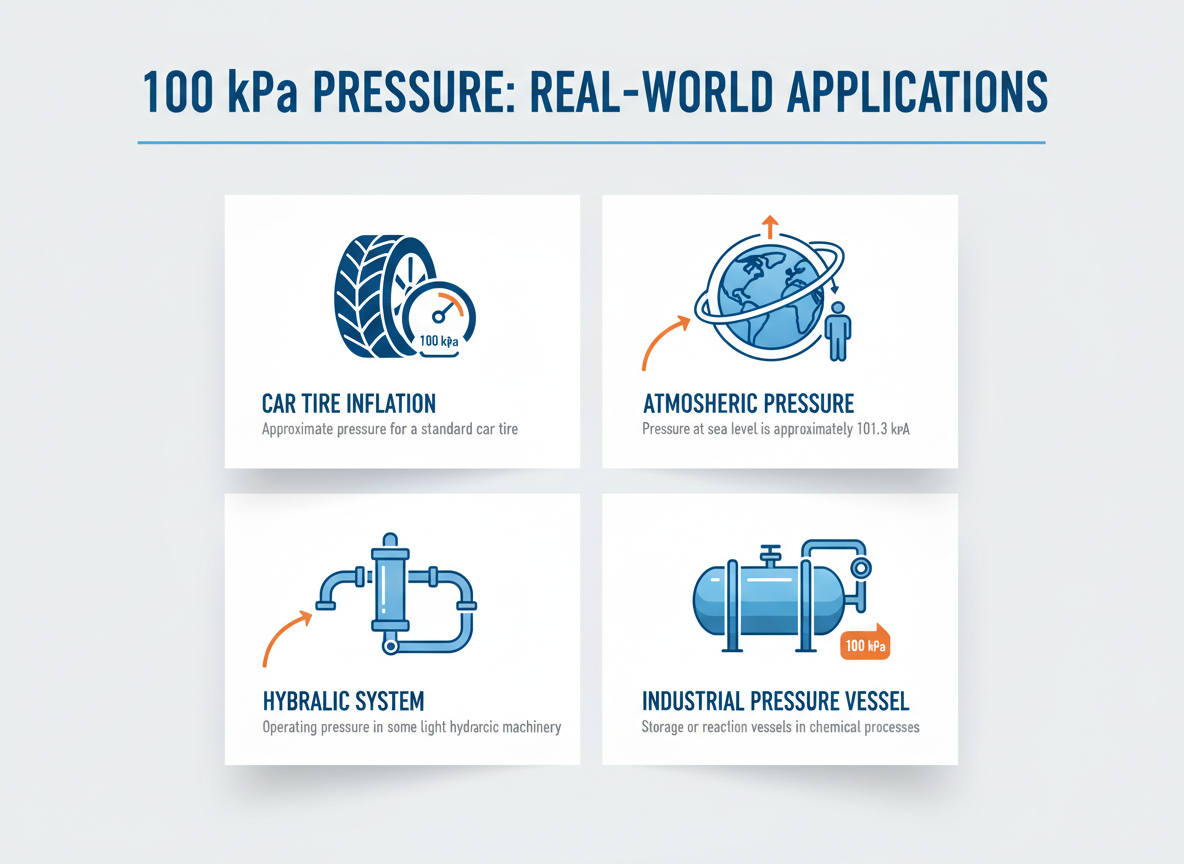
You’ll encounter 0.1 MPa more often than you think. It’s almost exactly equal to one atmosphere (101.325 kPa), making it a familiar reference point across industries.
Car and bicycle tires operate in this range—typically between 200-250 kPa for cars and 400-800 kPa for bikes. HVAC systems rely on pressure differentials around 100 kPa to move air through buildings efficiently. Pneumatic tools and compressed air systems often spec components rated for pressures starting at 0.1 MPa.
Engineers use this pressure level for material testing, checking how substances behave under one atmosphere of additional force. If you’re working with pressure conversions between different units, you’ll find 0.1 MPa converts cleanly to 1 bar.
At this pressure level, standard safety equipment suffices—though proper sealing matters. Leaks waste energy, and sudden decompression can still surprise you.
MPa to kPa Conversion Table
Here’s a handy reference table for common MPa to kPa conversions. You’ll find 0.1 MPa right in the middle, along with other values you’re likely to encounter in everyday calculations.
| MPa | kPa |
|—–|—–|
| 0.01 | 10 |
| 0.02 | 20 |
| 0.05 | 50 |
| 0.1 | 100 |
| 0.2 | 200 |
| 0.3 | 300 |
| 0.4 | 400 |
| 0.5 | 500 |
| 0.6 | 600 |
| 0.7 | 700 |
| 0.8 | 800 |
| 0.9 | 900 |
| 1.0 | 1,000 |
Bookmark this table for quick lookups—it’s especially useful when you’re working through multiple pressure calculations and need instant answers without pulling out your calculator every time.
Using Unit Genie’s MPa to kPa Calculator
Ready to convert 0.1 MPa to kPa instantly? Head to Unit Genie and search for “MPa to kPa” in the converter. Simply enter 0.1 in the MPa field, and you’ll see 100 kPa appear immediately—no waiting, no ads cluttering your screen.
The calculator works in both directions, so you can flip between units effortlessly. Beyond basic conversions, you’ll find interactive visualizations that put pressure values in perspective and real-world comparisons that make abstract numbers meaningful. Need to convert other measurements? The platform handles everything from precision conversions like 0.1 mm to micron to dozens of pressure units including bar, psi, and atmospheres. It’s all there, ready when you need it.
When to Use MPa vs kPa in Professional Settings
Choosing between MPa and kPa isn’t just about math—it’s about matching your industry’s expectations. Engineers working with high-strength materials like concrete (typically 20-40 MPa) or hydraulic systems naturally gravitate toward MPa because it keeps the numbers manageable. Meanwhile, HVAC technicians and meteorologists prefer kPa since their pressure readings (like tire inflation at 240 kPa or atmospheric measurements) sit comfortably in that range.
Manufacturing specs often dictate your choice. Structural engineering drawings default to MPa, while pneumatic system schematics use kPa. International standards like ISO documentation typically specify which unit to use for each application, and scientific journals have their own preferences—physics papers might use MPa for material properties, while environmental studies lean toward kPa for atmospheric data. When in doubt, check your industry’s standard practices or regulatory requirements.
Frequently Asked Questions
How many kPa are in 0.1 MPa?
There are 100 kPa in 0.1 MPa. Since 1 MPa equals 1,000 kPa, you just multiply by 1,000.
What is 0.1 MPa in PSI?
0.1 MPa equals approximately 14.5 PSI. If you’re also curious about bar conversions, 0.1 MPa is exactly 1 bar.
Is 0.1 MPa the same as atmospheric pressure?
Pretty close! Standard atmospheric pressure is 101.325 kPa, so 0.1 MPa (100 kPa) is slightly less—about 99% of normal atmospheric pressure.
How do you convert MPa to kPa quickly?
Move the decimal point three places to the right or multiply by 1,000. That’s it!
What does 0.1 MPa represent in real life?
You’ll find 0.1 MPa in residential water systems, HVAC applications, and light industrial equipment. It’s a common working pressure for everyday systems.
Why use kPa instead of MPa?
Smaller measurements look cleaner in kPa. Writing “250 kPa” feels more natural than “0.25 MPa” for many applications.
How accurate should pressure conversions be?
For most applications, two decimal places work fine. Critical engineering work might need more precision.
Can I use this conversion for tire pressure?
Absolutely! Though tire pressure often appears in PSI, you can convert from MPa to kPa first, then to PSI if needed.