0.1 MPa to PSI Conversion: Quick Answer
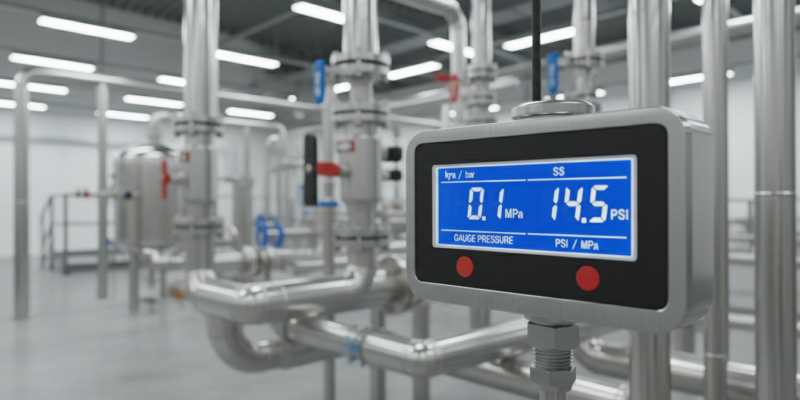
0.1 MPa equals 14.5038 PSI (pounds per square inch). This conversion comes up often when you’re working with pressure measurements across different systems. MPa, or megapascal, belongs to the metric system and represents one million pascals. PSI measures pressure using the imperial system. You’ll encounter 0.1 MPa frequently in tire pressure specifications (especially for bicycles and motorcycles), residential water systems, and various low-pressure industrial applications. If you’re also working with kilopascals, check out our 0.1 MPa to kPa conversion guide for additional context.
Understanding the Conversion Formula
Converting 0.1 MPa to PSI is straightforward once you know the basic formula: 1 MPa equals 145.038 PSI. To find our answer, we’ll multiply 0.1 by 145.038, which gives us 14.5038 PSI (or 14.5 PSI when rounded).
Here’s the math: 0.1 MPa × 145.038 = 14.5038 PSI
For everyday use, rounding to one or two decimal places works perfectly fine. You’ll find that most pressure gauges and applications don’t need precision beyond that level. If you’re also working with bar units, check out our guide on converting 0.1 MPa to bar for similar applications.
What Does 0.1 MPa Mean in Real Life?
Here’s something interesting: 0.1 MPa is roughly equal to atmospheric pressure at sea level (0.101325 MPa). That’s the invisible force of air pushing on you right now.
In practical terms, it’s fairly low pressure. Your bicycle tires need 0.4-0.8 MPa to ride smoothly—anything around 0.1 MPa would feel noticeably flat. Normal residential water pressure runs between 0.3-0.6 MPa, which means 0.1 MPa would give you a disappointing trickle from your showerhead.
Think of 0.1 MPa as barely above “no pressure at all.” It’s useful as a baseline measurement, but for most applications requiring actual force—whether inflating sports equipment, running household plumbing, or operating machinery—you’ll need significantly more pressure to get the job done effectively.
Frequently Asked Questions
Is 0.1 MPa the same as 1 bar?
Almost! 0.1 MPa equals 14.5038 PSI, while 1 bar equals 14.5038 PSI. They’re so close that many engineers treat them as equivalent for practical purposes, though technically 1 bar = 0.1 MPa exactly.
What is 0.1 MPa in PSI exactly?
0.1 MPa converts to 14.5038 PSI. If you need precision for engineering calculations, use 14.504 PSI. For everyday use, 14.5 PSI works perfectly fine.
Which unit should I use: MPa or PSI?
It depends on your location and industry. North American mechanics and HVAC techs typically use PSI, while engineers worldwide prefer MPa. Material scientists often work in MPa because it’s the SI standard. Use whatever your industry or region expects.
How accurate does my conversion need to be?
For tire pressure or home projects, rounding to 14.5 PSI is fine. Engineering specs or safety-critical applications? Stick with 14.5038 PSI or more decimal places. Context matters.
Where is MPa commonly used vs PSI?
MPa dominates in scientific research, material testing, and countries using the metric system. You’ll see it on European pressure gauges and technical datasheets. PSI remains standard in U.S. automotive, plumbing, and compressed air systems.