Quick Answer: 0.1 mm to um Conversion
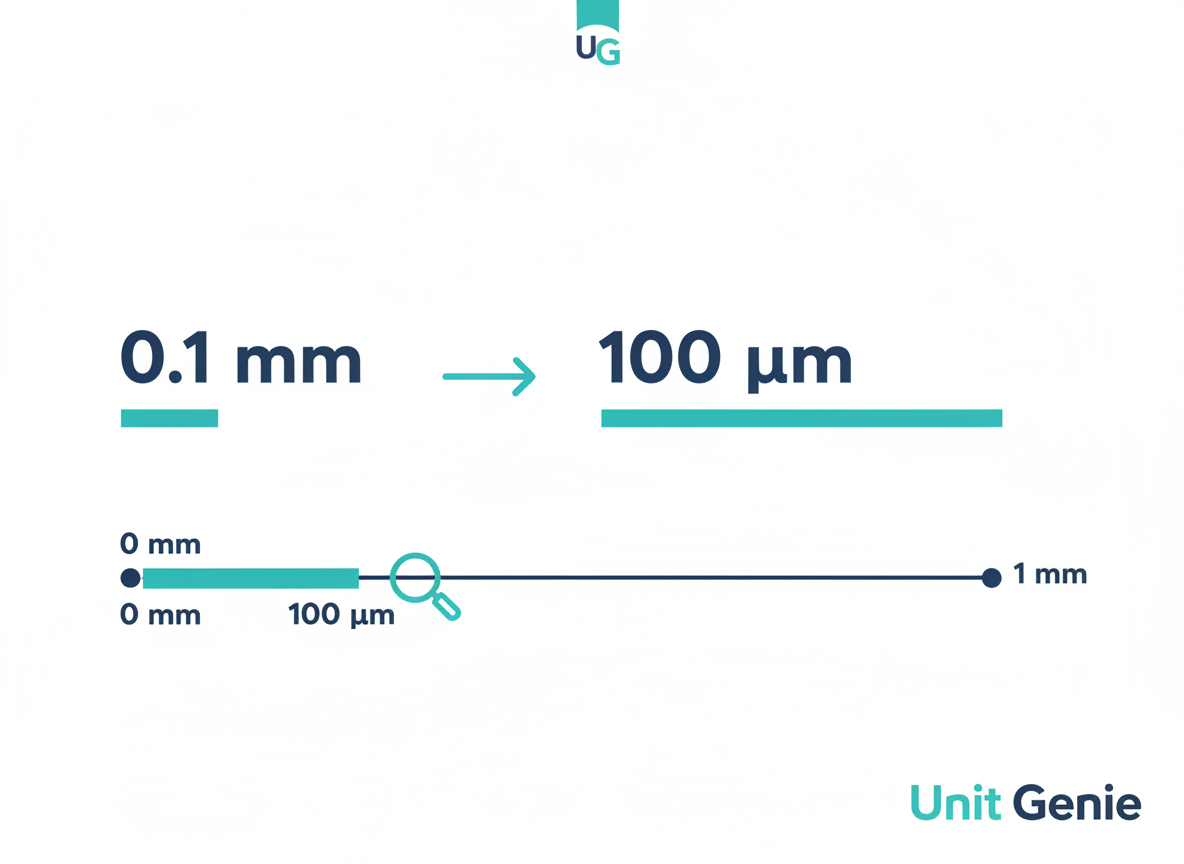
0.1 millimeters equals exactly 100 micrometers (μm). The conversion’s straightforward—just multiply millimeters by 1,000. This precision matters when you’re working with microscopy, manufacturing tolerances, or medical imaging where tiny measurements make all the difference. Whether you’re examining cellular structures or calibrating equipment, understanding this conversion helps you communicate measurements accurately across different scales.
Understanding Millimeters and Micrometers
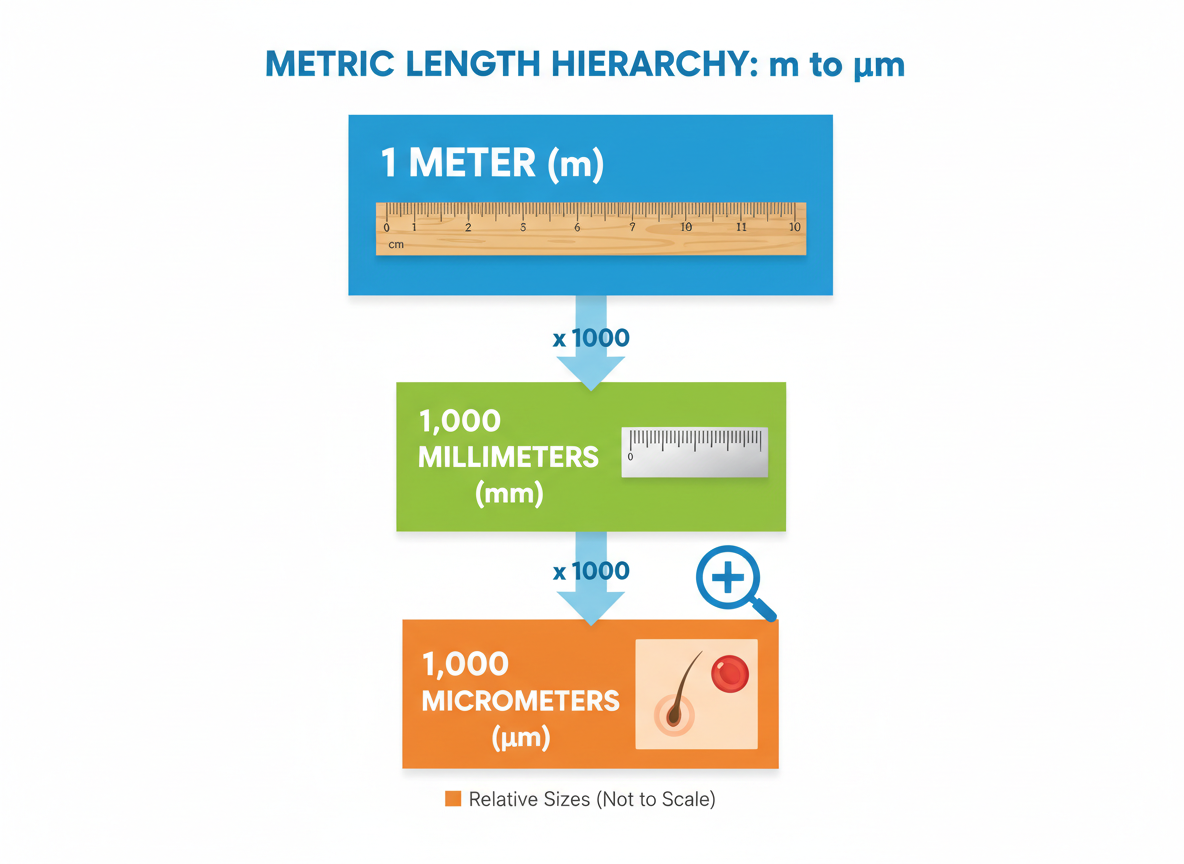
A millimeter equals one-thousandth of a meter (0.001 m), while a micrometer represents one-millionth of a meter (0.000001 m). This means 1 mm contains exactly 1,000 μm. The metric system’s beauty lies in these clean, decimal-based relationships. Micrometers become essential when measuring bacteria, cell structures, precision-machined parts, or thin coatings—things too small for millimeter measurements to capture accurately.
The Conversion Formula and How It Works
Converting 0.1 mm to um uses a simple formula: μm = mm × 1,000. For our example, that’s 0.1 × 1,000 = 100 micrometers.
We multiply by 1,000 because each millimeter contains exactly 1,000 micrometers—it’s how metric prefixes work. Going backward? Just divide: mm = μm ÷ 1,000. If you’re working with other precision measurements like mils, the same logical approach applies.
Real-World Applications of 0.1 mm Measurements
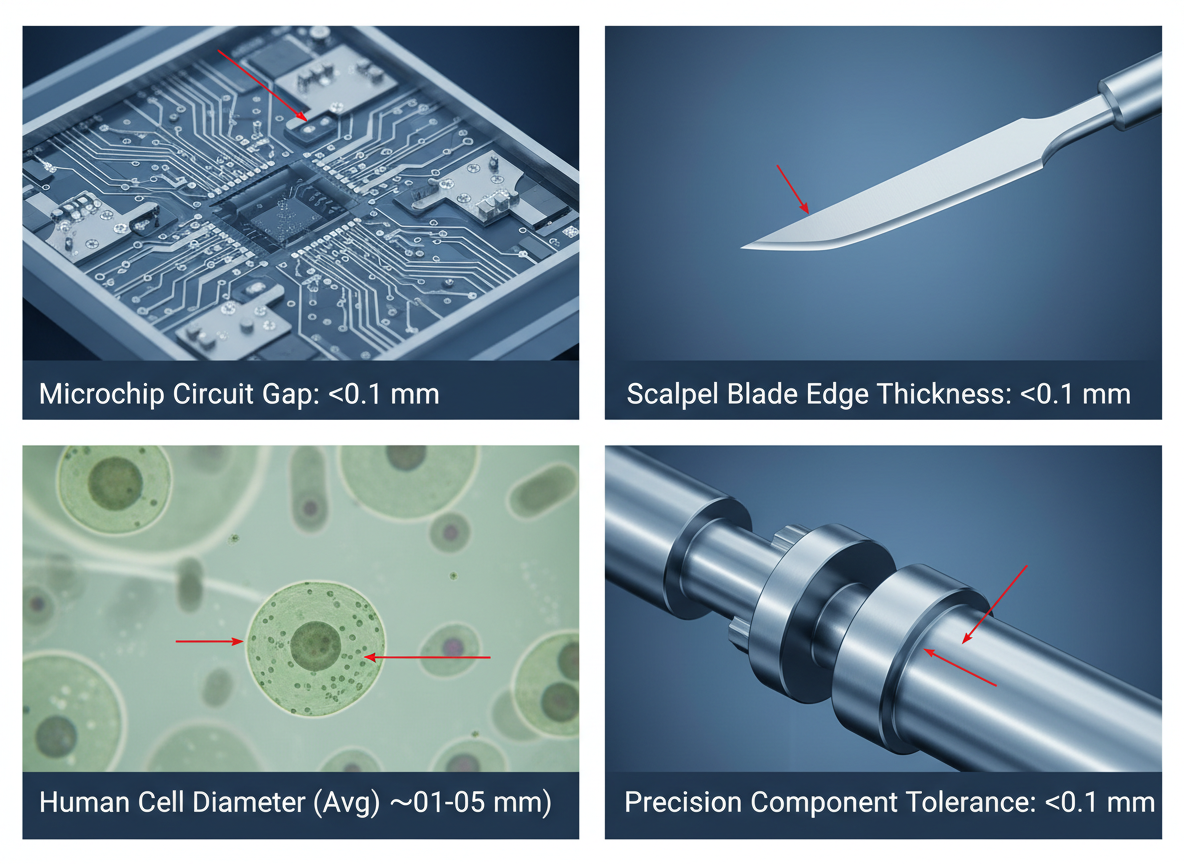
This 100-micrometer precision matters everywhere. Engineers rely on it for machining parts that fit perfectly together. Semiconductor fabricators use it to create microchips—each transistor measures just fractions of this scale. Surgeons depend on instruments calibrated to these tolerances, while biologists studying cells work at similar dimensions. Aerospace and automotive quality control teams verify components meet these exact specifications daily.
Size Comparison: Putting 100 Micrometers in Perspective
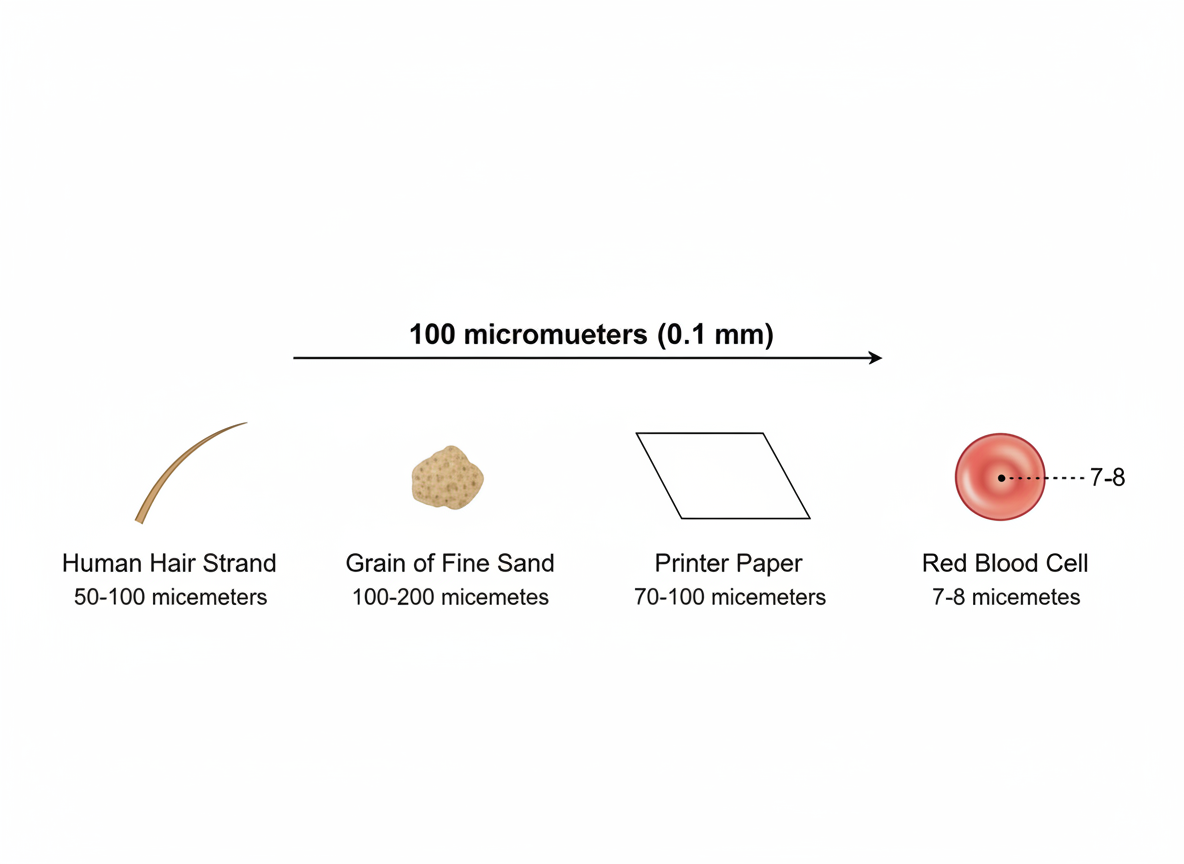
At 100 micrometers, you’re looking at something roughly the width of a human hair—most people’s strands measure between 70-100 μm. It’s right at the edge of what your naked eye can barely detect as a tiny speck. A grain of fine sand? That’s about 90 μm. The thickness of a sheet of paper sits around 100 μm too. You won’t see individual cells (those are typically 10-30 μm), but you might notice a thick pollen grain. This dimension matters when you’re working with precision measurements like mils, especially in manufacturing. Think of 0.1 mm as the sweet spot between what’s microscopic and what’s just barely visible—small enough to require precision tools, yet large enough to matter in everyday engineering.
Frequently Asked Questions
How many micrometers are in 0.1 millimeters?
There are exactly 100 micrometers (μm) in 0.1 millimeters. Just multiply by 1,000—so 0.1 × 1,000 = 100 μm.
Is 0.1 mm the same as 100 microns?
Yes, absolutely! The terms “micrometers” and “microns” mean the same thing. So 0.1 mm equals 100 microns or 100 micrometers—they’re interchangeable.
What tools can measure 0.1 mm accurately?
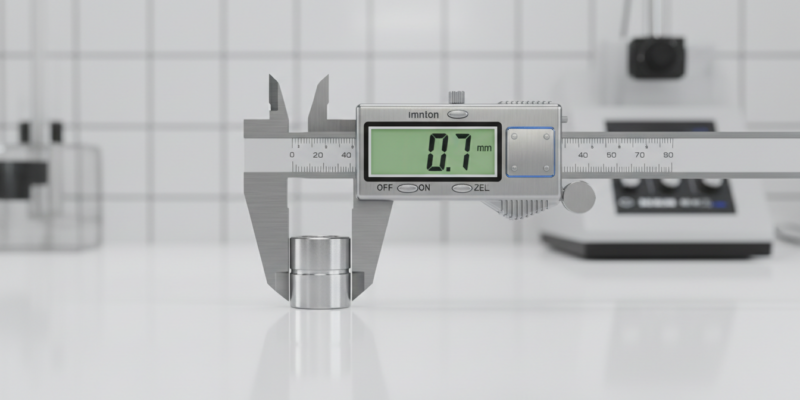
Digital calipers, micrometers (the measuring tool, not the unit!), and optical comparators can all measure 0.1 mm with precision. For lab work, microscopes with calibrated stages work great. High-quality digital calipers typically have 0.01 mm resolution, which makes them perfect for this range.
When should I use micrometers instead of millimeters?
Switch to micrometers when you’re working with really small measurements—think cell biology, semiconductor manufacturing, or coating thickness. If your numbers get cluttered with decimals (like 0.025 mm), expressing them as 25 μm keeps things cleaner and easier to compare. Similar to how you’d use microliters instead of milliliters for tiny liquid volumes, micrometers make sense for tiny distances.
How do I convert other mm values to micrometers?
Simple: multiply any millimeter value by 1,000. For 0.5 mm? That’s 500 μm. For 2.3 mm? That’s 2,300 μm. Going backwards? Just divide by 1,000. The Unit Genie calculator handles these conversions instantly if you need a quick answer without the math.