Quick Answer: 1/2 Cup Equals How Many Liters?
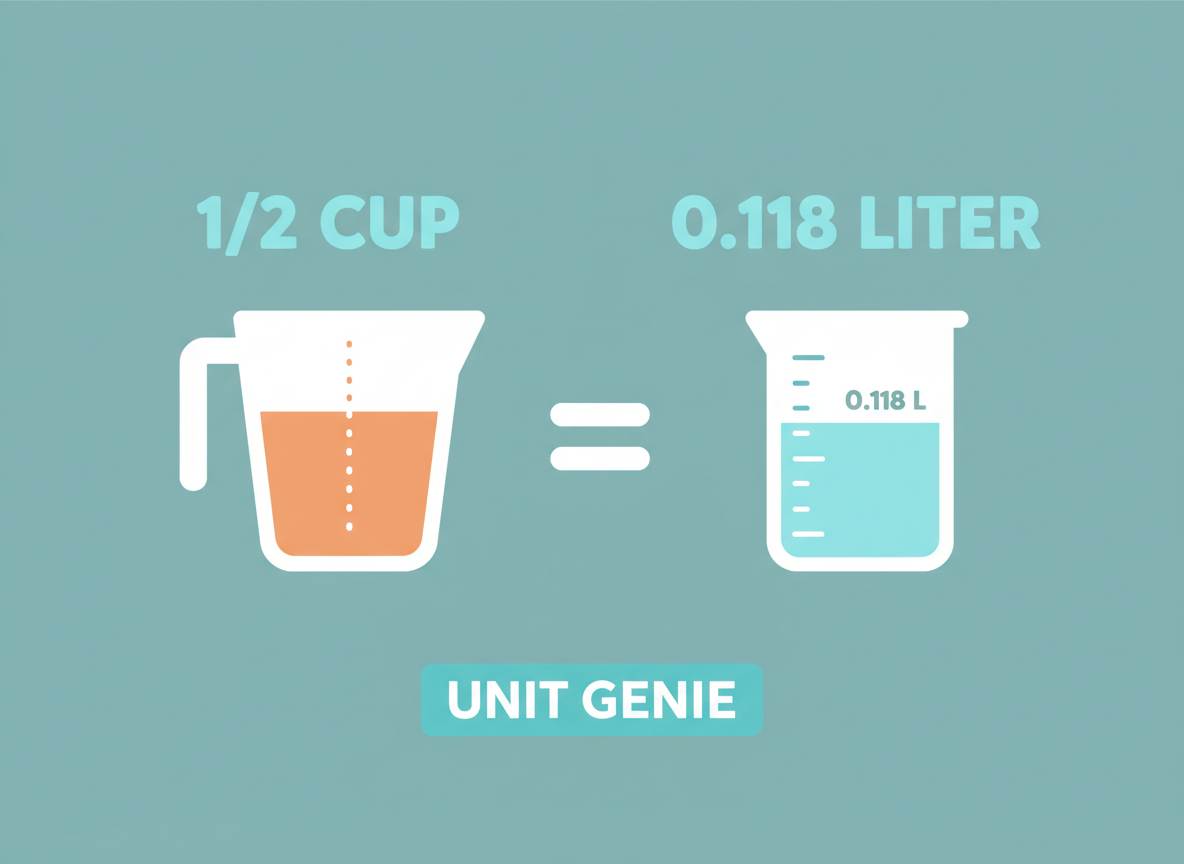
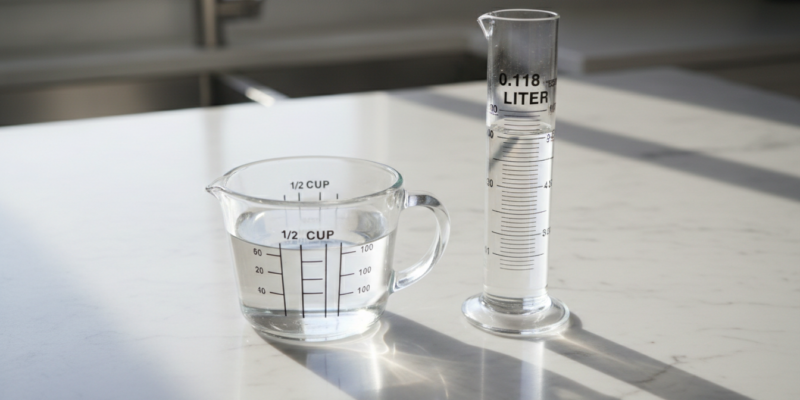
1/2 cup equals 0.118294 liters, or roughly 0.12 liters when you round it for everyday cooking. That’s about 118 milliliters if you’re working with metric measuring tools.
This conversion uses the standard US cup measurement (236.588 milliliters). When you’re following recipes from different countries or working with metric kitchen tools, knowing this conversion saves you from guessing games. Whether you’re baking precise pastries or adapting an American recipe to European measurements, understanding these equivalents keeps your cooking on track. Need to convert other measurements? Check out our guide on 1 1/3 cup to liters for more kitchen conversions.
Understanding the Conversion Formula
The math behind this conversion is straightforward: 1 US cup equals 0.236588 liters. To find half a cup, you’ll divide that by two, giving you 0.118294 liters—though 0.12 liters works perfectly for most kitchen tasks.
This conversion factor exists because the US uses the imperial system while most of the world relies on metric measurements. If you’re working with larger volumes or other measurements, our 1 Liter Conversion Guide breaks down everything you need to know about volume conversions.
Quick Reference Conversion Table
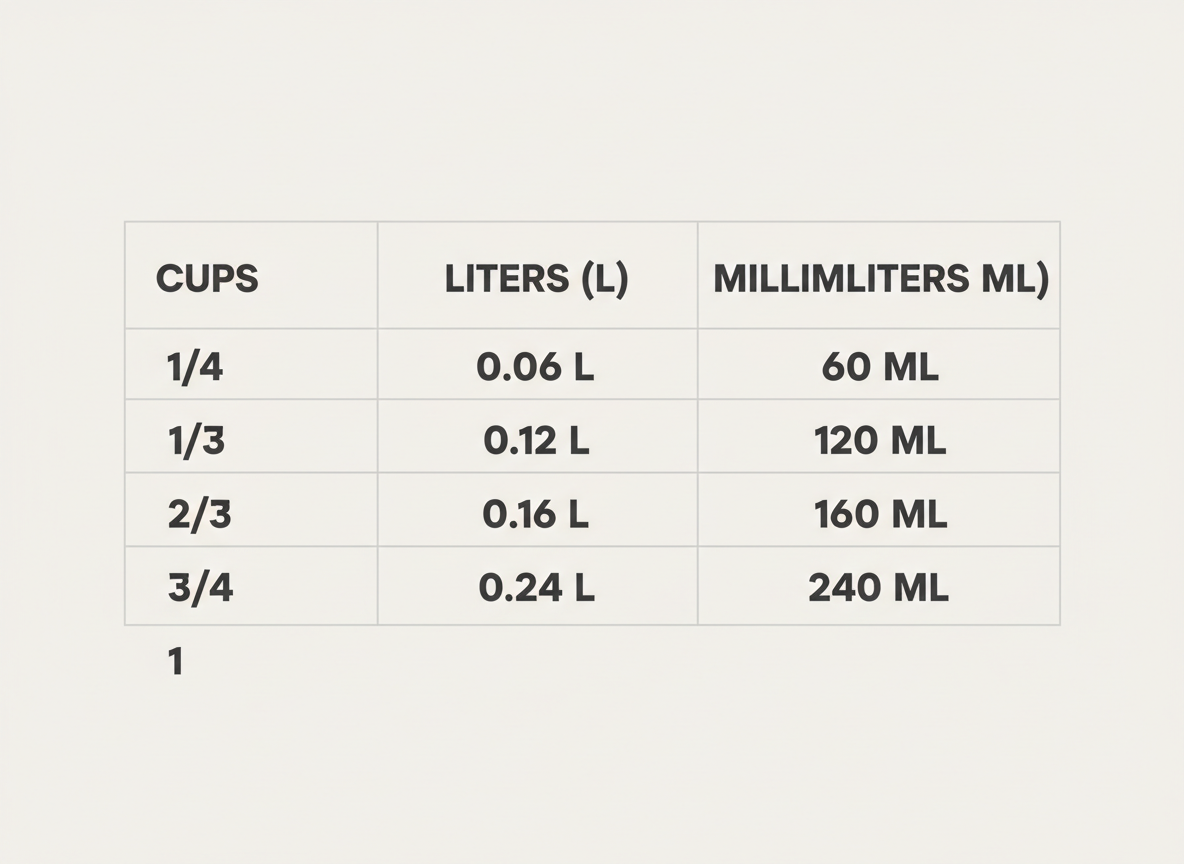
Here’s your go-to chart for converting cups to liters. We’ve included both exact measurements and practical rounded values you’ll actually use in the kitchen.
| Cup Measurement | Exact Liters | Rounded Liters | Milliliters |
|—————–|————–|—————-|————-|
| 1/4 cup | 0.0591 L | 0.06 L | 59 ml |
| 1/3 cup | 0.0788 L | 0.08 L | 79 ml |
| 1/2 cup | 0.1183 L | 0.12 L | 118 ml |
| 2/3 cup | 0.1577 L | 0.16 L | 158 ml |
| 3/4 cup | 0.1774 L | 0.18 L | 177 ml |
| 1 cup | 0.2366 L | 0.24 L | 237 ml |
Need to scale up your recipe? Check out our 1 1/2 Cups to Liters conversion guide for larger measurements. Bookmark this table for those moments when you’re converting recipes on the fly—no calculator required.
Real-World Kitchen Applications
You’ll find 1/2 cup measurements everywhere in cooking. That’s about 118 mL or 0.118 L—perfect for measuring flour in chocolate chip cookies, milk in pancakes, or sugar in marinades. International recipes often list these in metric, so knowing this conversion saves you from squinting at measuring cup lines. If you’re following a European recipe calling for 120 mL of cream, your 1/2 cup measure works perfectly. For slightly different amounts, like 1 1/3 cup in mL, the same logic applies—just adjust your math accordingly.
Measuring Tips for Accuracy
No measuring cup? Fill a standard tablespoon eight times—that’s your 1/2 cup. For liquids, place your measuring cup on a flat surface and check at eye level to avoid overfilling. With dry ingredients like flour, spoon it into the cup and level off with a knife’s edge. Don’t scoop directly from the bag—you’ll pack in 25% more than intended.
Kitchen scales solve most measuring headaches. That 1/2 cup equals roughly 120g for flour or 118g for water. Professional bakers weigh everything for consistency, while home cooks can round to the nearest 5ml without issues. The biggest mistake? Using a liquid measuring cup for flour or vice versa—they’re designed differently for good reason. Need precise conversions for other measurements? Check out our 1 1/8 Cup to mL guide for similar measuring strategies.
US Cups vs Metric Cups: What’s the Difference?
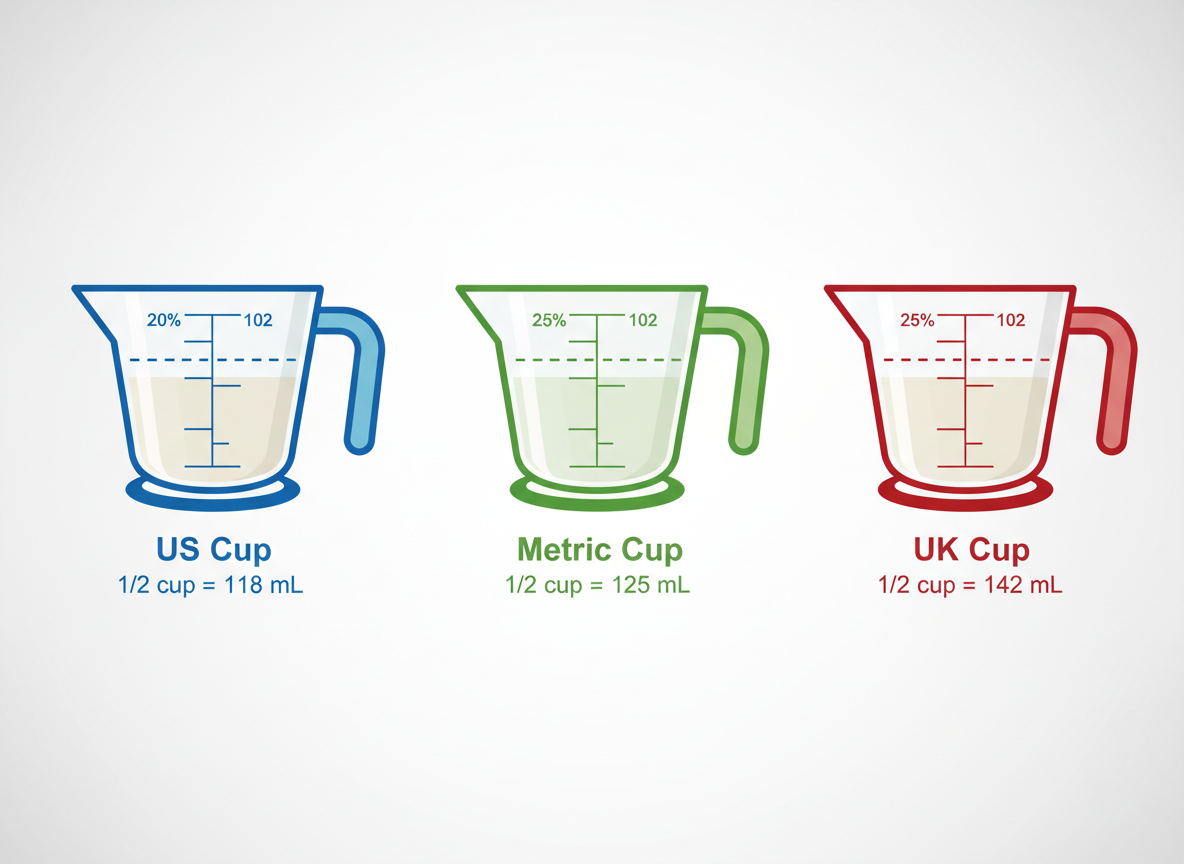
Here’s where things get interesting. A US cup equals 236.588 mL (the legal standard), while a metric cup used in Australia and New Zealand measures exactly 250 mL. That’s about a tablespoon difference! The historical UK imperial cup was even larger at 284 mL. So 1/2 cup varies: it’s 118.294 mL (US), 125 mL (metric), or 142 mL (UK imperial). When you’re following an Australian recipe with US measuring cups, you’ll end up with slightly less than intended—which matters for baking. Need to work backwards? Check out our guide on converting 1 1/2 liters to cups for larger measurements.
Frequently Asked Questions
How many milliliters is 1/2 cup?
It’s 118.294 mL, though you’ll typically round to 118 mL for cooking. Most recipes won’t suffer from the tiny difference.
Is 1/2 cup closer to 0.1 or 0.12 liters?
It’s closer to 0.12 liters (specifically 0.118 L). For practical kitchen purposes, think of it as 0.12 liters.
Can I use 120 mL instead of 1/2 cup?
Absolutely! The 2 mL difference won’t affect most recipes. It’s like being off by half a teaspoon—barely noticeable.
What kitchen items equal 1/2 cup if I don’t have measuring cups?
A standard coffee cup is usually close to 1/2 cup. You can also use 8 tablespoons or fill a typical yogurt container halfway. Need help with other cup measurements? Check out our 1 1/3 cup to liters conversion guide.
Does 1/2 cup of water weigh the same as 1/2 cup of flour?
No—volume isn’t the same as weight. Half a cup of water weighs about 118 grams, while flour is roughly 60 grams because it’s less dense.
Why do American recipes use cups while European recipes use liters?
The US stuck with imperial measurements while most of the world adopted the metric system in the 1960s-70s. It’s just different historical paths.