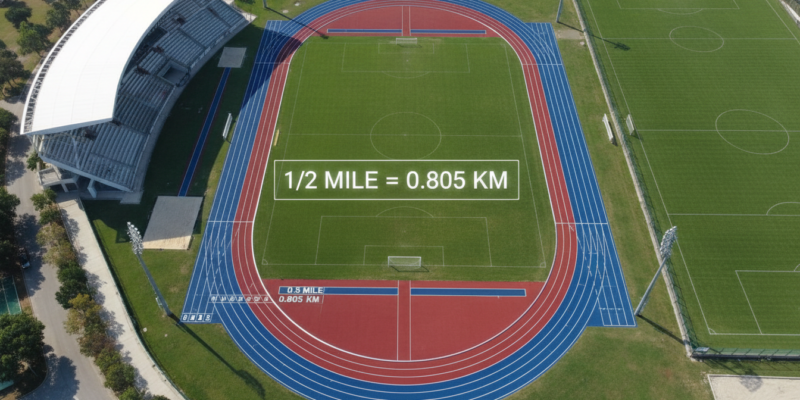
Quick Answer: 1/2 Mile Equals 0.805 Kilometers
Half a mile converts to 0.80467 kilometers, typically rounded to 0.805 km for everyday use.
This conversion matters more than you’d think. Runners tracking lap distances, parents checking school zone boundaries, and students tackling physics homework all need this number. The half-mile sits right in that sweet spot—it’s long enough to measure meaningful distances but short enough to visualize. Whether you’re planning a neighborhood walk or understanding metric road signs abroad, knowing this conversion saves you from mental math gymnastics. Unit Genie handles these conversions instantly, so you’ll never second-guess distance measurements again. And if you’re juggling other conversions, check out how 1/2 meter compares to yards for another common measurement puzzle.
The Conversion Formula: Miles to Kilometers
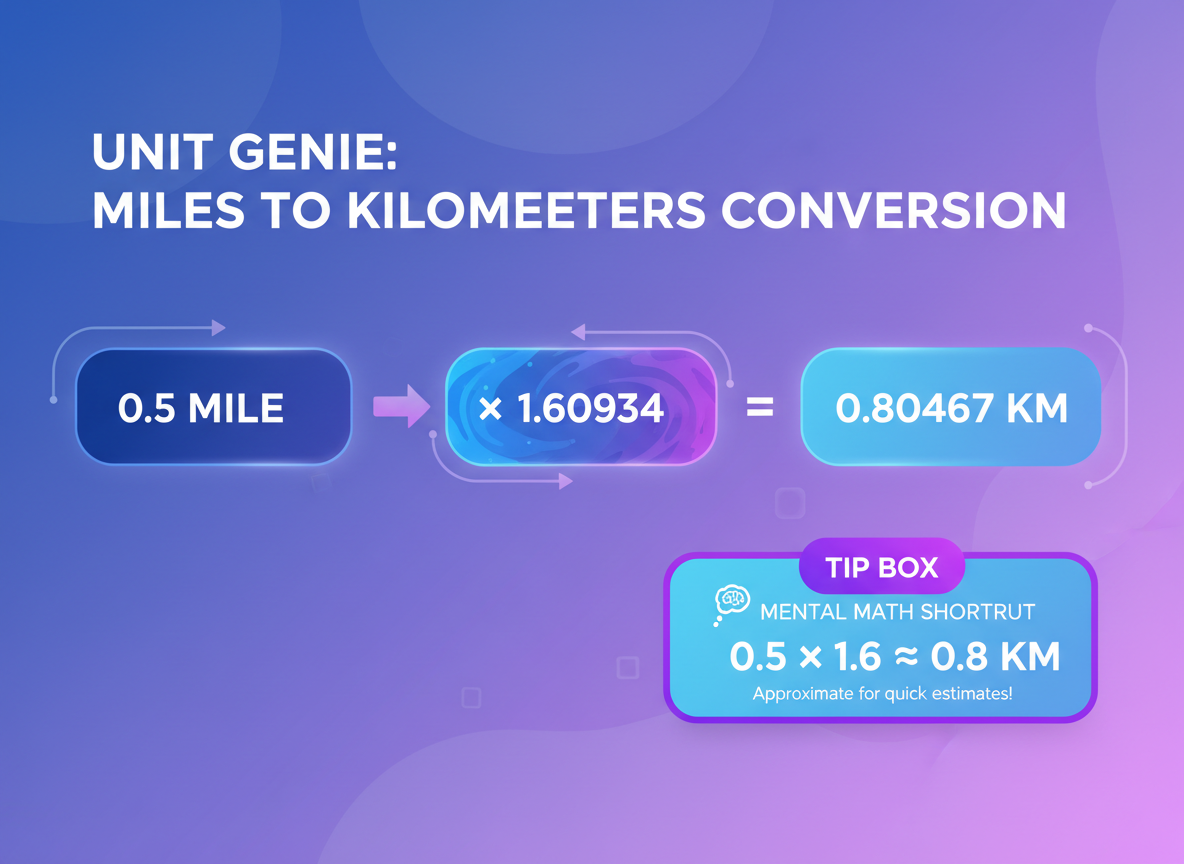
Converting miles to kilometers is straightforward once you know the magic number: 1.60934. The universal formula is:
Miles × 1.60934 = Kilometers
For half a mile, here’s how it works:
0.5 × 1.60934 = 0.80467 km
In everyday situations, you’ll typically see this rounded to 0.805 km or simply 0.8 km—much like when you’re converting 1/2 pound to kilograms, precision depends on your needs.
Here’s a handy memory trick: half a mile is about four-fifths of a kilometer. If you need a quick mental calculation, multiply by 1.6 instead of 1.60934. It’s not perfectly precise, but it’ll get you close enough for most situations:
0.5 × 1.6 = 0.8 km
Whether you’re planning a morning jog or calculating distances for a school project, this simple formula makes the conversion painless.
Half-Mile vs 800 Meters: Are They the Same?
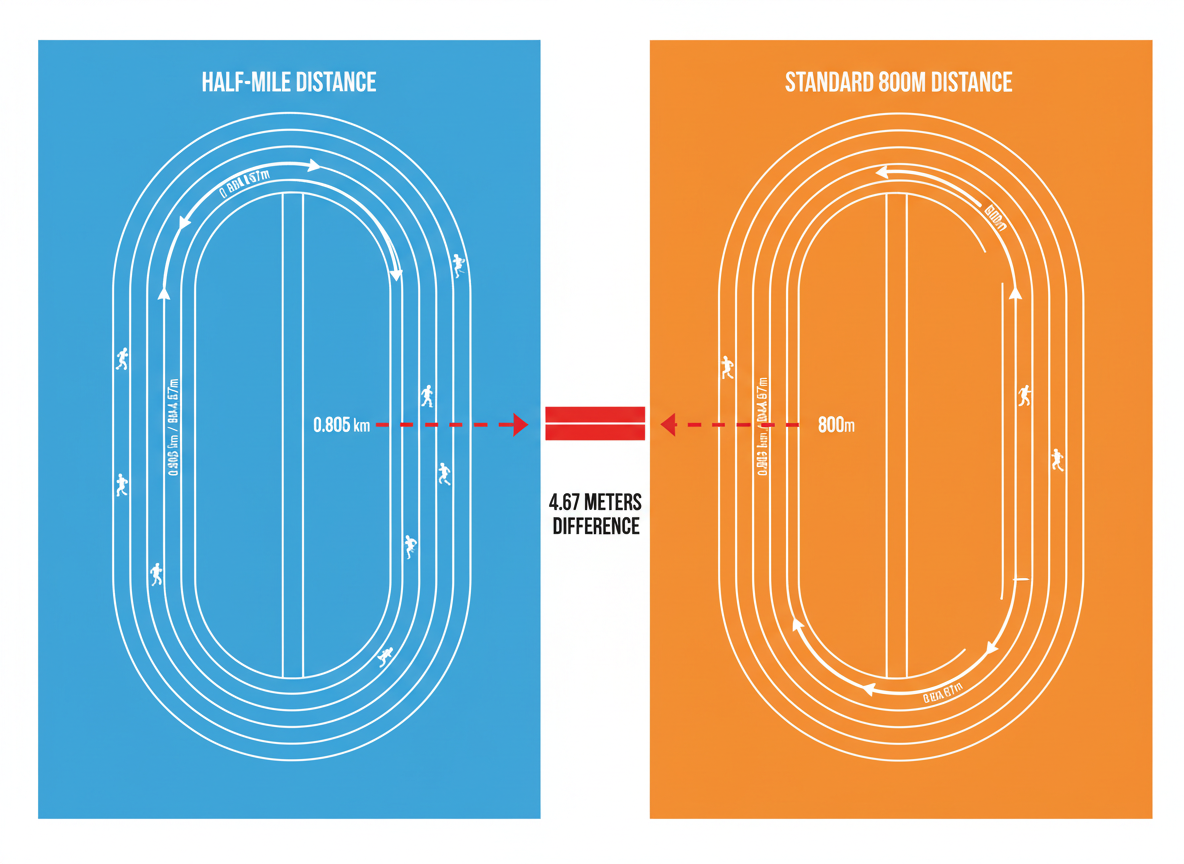
Here’s something that confuses a lot of runners: a half-mile isn’t exactly 800 meters. It’s actually 804.67 meters—nearly 5 meters longer. That might not sound like much, but in competitive running, those extra 4.67 meters can mean the difference between a personal record and just another race.
So why is the 800m event standard in international competition while the half-mile has largely disappeared? Simple: the metric system dominates global athletics. Most countries use kilometers and meters (much like how precision matters in smaller conversions like 1 1/2 cm to mm), making 800m the natural choice for track events.
For everyday fitness tracking though? The difference is basically negligible. Whether you’re jogging a half-mile or 800 meters around your neighborhood, you’re getting nearly the same workout. Competitive athletes care about those 4.67 meters—casual runners probably won’t notice.
Real-World Uses for Half-Mile Measurements
You’ll encounter half-mile measurements more often than you’d think. Schools commonly enforce reduced speed limits within a half-mile radius, protecting kids during drop-off and pickup times. Runners often use the half-mile as a beginner’s benchmark or warm-up distance—it’s challenging enough to matter but manageable for most fitness levels.
Urban planners love the half-mile metric too. They use it to measure walkability around transit stops and access to parks or grocery stores. A half-mile typically takes about 10 minutes to walk, making it the sweet spot for neighborhood convenience.
Before metrication took over, half-mile track races held historical significance in athletics. Today, fitness apps let you set half-mile interval alerts during workouts. Speaking of time measurements, if you’re tracking longer durations, check out our guide on converting days to minutes for workout planning.
Quick Reference: Half-Mile Conversion Table
Here’s your go-to reference for half-mile conversions across the units you’ll actually use:
| Distance | Kilometers | Meters | Feet | Yards |
|———-|————|——–|——|——-|
| 1/4 mile | 0.402 km | 402.34 m | 1,320 ft | 440 yd |
| 1/2 mile | 0.805 km | 804.67 m | 2,640 ft | 880 yd |
| 3/4 mile | 1.207 km | 1,207.01 m | 3,960 ft | 1,320 yd |
| 1 mile | 1.609 km | 1,609.34 m | 5,280 ft | 1,760 yd |
Note: Kilometer and meter values are rounded to practical decimal places. The conversion factor (1 mile = 1.609344 km exactly) means you’ll see slight variations depending on rounding. For precision work—similar to exact volume conversions in cooking—use the full decimal value.
Frequently Asked Questions
How many kilometers is exactly 1/2 mile?
The precise conversion is 0.80467 km, but you’ll typically see 0.805 km or just 0.8 km in everyday use.
Is 800 meters the same as half a mile?
Not quite. Half a mile equals 804.67 meters, so there’s a 4.67-meter difference. Close, but not identical.
How long does it take to walk half a mile?
Most people walk it in 10-12 minutes at an average pace. Brisk walkers might knock it out in 8 minutes.
How do I convert 1/2 mile to km in my head?
Just multiply by 1.6: 0.5 × 1.6 = 0.8 km. Quick and easy.
Why do some countries use miles and others kilometers?
It comes down to the imperial system (used by the U.S. and a few others) versus the metric system (adopted by most of the world for its simplicity). If you’re working with different measurement systems, check out our precision conversion guide for technical units.
What’s the half-mile time for an average runner?
Recreational runners typically cover it in 4-5 minutes.