Quick Answer: 1/4 oz to Grains Conversion
1/4 oz equals exactly 109.375 grains. This conversion matters whether you’re measuring gunpowder for ammunition reloading, weighing precious metals like gold and silver, or calculating pharmaceutical dosages. The relationship between ounces and grains has been standardized for centuries, making it reliable across industries. We’ll show you the simple formula behind this conversion and walk through real-world examples so you can confidently convert any fraction of an ounce. Looking for other conversions? Check out our 1 1/8 oz to grains calculator for similar measurements.
The Conversion Formula Explained
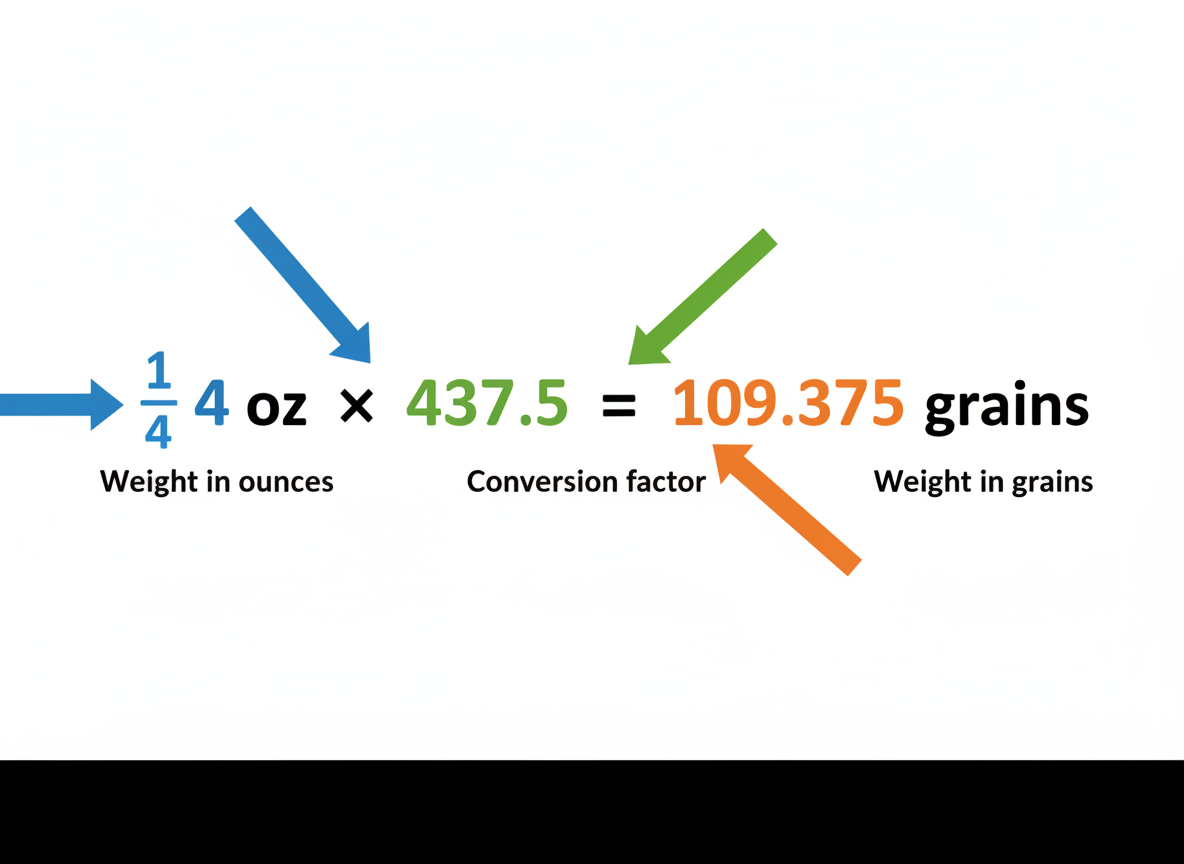
Converting 1/4 oz to grains is straightforward once you know the base rate: 1 ounce equals 437.5 grains. To find your answer, multiply 0.25 by 437.5, giving you 109.375 grains.
Here’s the breakdown:
- Start with the fraction: 1/4 oz = 0.25 oz
- Apply the conversion factor: 0.25 × 437.5 = 109.375 grains
- Done!
One quick note: we’re using the avoirdupois ounce here (the standard measurement for everyday weight). If you’re working with precious metals, you’d use troy ounces instead, which convert differently. For smaller measurements, check out our guide on converting 1/4 grain to mg for related calculations.
Real-World Use Cases for 1/4 oz in Grains
Ammunition reloaders rely on grain measurements for precise powder charges—109.375 grains falls within common rifle cartridge ranges. Jewelers weigh small gemstones and findings in grains for accurate pricing. In precious metals trading, dealers use grains to price fractional gold and silver portions. Historical pharmaceutical texts reference grains for dosages, though modern medicine has shifted to metric units. If you’re working with even smaller measurements, check out our 1/2 grain to mg conversion guide for pharmaceutical precision.
Frequently Asked Questions
Why are grains still used as a measurement unit?
Grains remain the standard in ammunition and pharmaceuticals because of historical precedent and precision. It’s one of the oldest units, dating back to the weight of a single grain of barley. Changing now would mean recalibrating millions of formulas and specifications.
Is this conversion for troy ounces or avoirdupois ounces?
This conversion uses avoirdupois ounces—the standard system for most everyday measurements. Troy ounces (used for precious metals) are actually heavier. If you’re working with weight conversions like 1.2 kg to lbs, you’re also using the avoirdupois system.
How accurate does my grain measurement need to be?
For ammunition reloading, accuracy within 0.1 grains matters significantly. For cooking or general use, rounding to the nearest grain works fine. Medical applications demand the highest precision.
What other fractional ounce conversions are common?
You’ll frequently see 1/8 oz (54.69 grains), 1/2 oz (218.75 grains), and 1 oz (437.5 grains) in reloading manuals and recipes.